By Joseph Erunke, Abuja
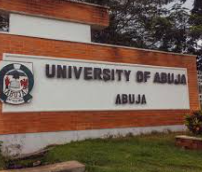
The University of Abuja, now officially renamed Yakubu Gowon University, is set to graduate 12,624 students, with 48 bagging First Class honours, as it unveils sweeping reforms and incentives aimed at boosting academic excellence.
Vice-Chancellor, Hakeem Babatunde Fawehinmi, disclosed this on Monday during a pre-convocation press briefing at the institution’s main campus in Abuja, ahead of its combined 29th and 30th convocation ceremonies.
He described the event as historic—his first as Vice-Chancellor—covering graduates from the 2022/2023 and 2023/2024 academic sessions.
A breakdown shows that 7,158 students will graduate from the 2022/2023 session, including 48 First Class graduates, while 5,466 students will graduate from the 2023/2024 session, with 29 First Class degrees recorded.
In a major boost for academic excellence, Fawehinmi announced that the overall best graduating students from both sessions would be offered automatic employment by the university.
“This is part of our commitment to nurturing not just knowledge and skills, but also career growth and institutional continuity,” he said.
The eight-day convocation began with religious services and will feature a series of academic and public engagement events, including a lecture by Chairman of the National Drug Law Enforcement Agency, Buba Marwa, on drug abuse, as well as a convocation lecture by Olugbenga Agboola, Chief Executive Officer of Flutterwave, focusing on opportunities in an AI-driven fintech ecosystem.
The university will also confer honorary doctorate degrees on three distinguished Nigerians: Yusuff Olaolu Ali (SAN), Paul Odili, and Emmanuel Ayuba Iza.
Beyond the convocation, the Vice-Chancellor painted a picture of an institution undergoing rapid transformation after what he described as a turbulent leadership crisis marked by the appointment of three acting Vice-Chancellors within a short period.
“The storm is over,” he declared, crediting the Minister of Education, Tunji Alausa, Minister of State for Education, Suwaiba Ahmad, and the Governing Council for restoring stability and fostering harmony with academic unions.
Fawehinmi revealed that long-standing staff stagnation had been addressed, with over 100 academics recently promoted to professorial ranks, many with backdated benefits.
On infrastructure, he listed completed projects including a new Senate Chamber, a Computer-Based Test Centre, expanded laboratories and upgraded digital facilities, alongside ongoing projects such as a 1,500-bed student hostel under a public-private partnership.
The institution has also secured about ₦4 billion in support from the Tertiary Education Trust Fund (TETFund) for its College of Health Sciences, while strengthening its research profile through specialised centres focused on cardiovascular health and sickle cell disease.
Fawehinmi further highlighted the university’s growing international presence, with partnerships spanning institutions in Portugal, China, Russia and the United Kingdom, as well as collaborations with organisations such as PLAN International and the Bureau of Public Procurement.
He noted that students of the university are gaining global recognition, with a team set to represent Nigeria at the World Food Forum in Rome later this year.
Despite the progress, the Vice-Chancellor identified challenges including inadequate infrastructure, funding constraints and land encroachment threatening expansion plans.
With a student population nearing 40,000 and projected to reach 50,000 by 2030, he stressed the need for significant investment to position the institution as a “modern university of first choice.”
Fawehinmi also underscored a strict disciplinary stance, revealing that 28 students were recently expelled over offences including examination malpractice and drug-related issues.
“We have zero tolerance for indiscipline. This university is for serious-minded individuals committed to learning and character,” he said.
He called on the Federal Government, private sector and development partners to support the university’s expansion, noting its strategic importance as the only conventional public university in the Federal Capital Territory.
“As a federal university in the nation’s capital, we deserve special consideration,” he added.
The Vice-Chancellor reaffirmed the institution’s commitment to academic excellence, research innovation and global competitiveness, expressing confidence that ongoing reforms will position Yakubu Gowon University as a world-class institution.
Disclaimer
Comments expressed here do not reflect the opinions of Vanguard newspapers or any employee thereof.