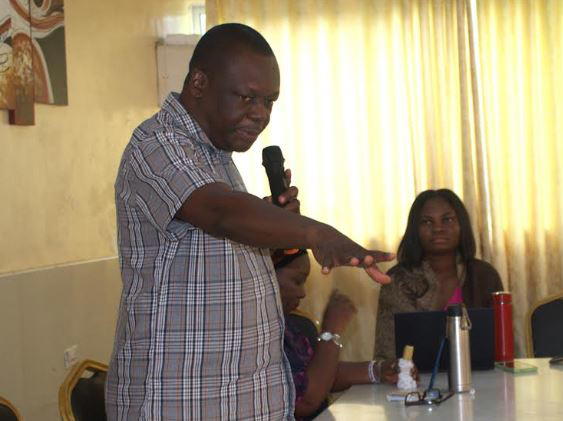
Philip Jakpor, Executive Director of RDI, making a point at the workshop.
Researchers from universities in the United Kingdom, UK, in partnership with advocacy groups in Nigeria organised a workshop on environmental impact assessment, EIA, on Tuesday in Lagos, where a new environmental justice framework was explored.
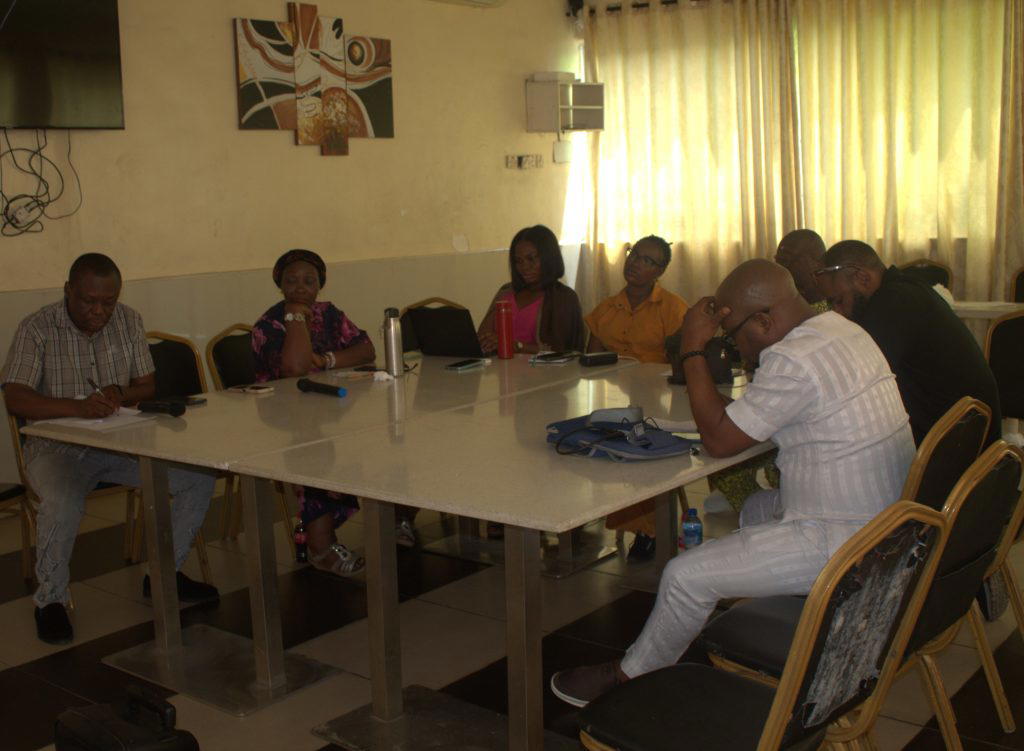
Participants at the hybrid workshop put together by the University of Derby, Renevlyn Development Initiative, RDI, and the Environmental Defenders Network, EDEN, include stakeholders, policymakers, community groups, media practitioners and a representative of the Federal Ministry of Environment.
The team of researchers, led by Prof. Chantal Davies, include Dr Holly White, Dr Kim Ross, all from the University of Chester, and Dr Eghosa Ekhator from the University of Derby, came up with the framework after a 12-month research on behalf of Sustainable and Inclusive Growth Commission from the univeristies.
Dr. Ekhator, Associate Professor of International Environmental Law and co-lead for the International Law, Environmental and Human Rights Research Cluster, University of Derby Law School, explained the inclusive environments research, toolkit, and interactive web tool development that put the people and host communities at the centre of EIA processes.
Other speakers were Barrister Chima Williams, an environmental lawyer and Executive Director of EDEN; Chief Constance Meju, a journalist, environmentalist and women rights advocate; Philip Jakpor, Executive Director of RDI, and Chief Eric Dooh, community leader and farmer from Goi in Gokana Local Government, Ogoniland, Rivers State, among others.
Also, participants explored domestication and adaptation of the inclusive environments framework to the Nigerian context.
Ogoniland
For Chief Dooh, the struggle for justice over Ogoniland’s despoilation notwithstanding, the people will welcome projects as long as the right things are done.
Dooh said proper EIA should be conducted; all legal matters pending in court settled; an all-inclusive meeting of impacted and host community called, and proper needs assessment of projects carried out before commencement of projects – whether by international oil companies, IOCs, or local ones, DOCs.
For Chima, the framework is a welcome development given the experience of the tedious path to justice for Ogoni people vs Shell, which took 18 years.
He listed the hurdles they overcame to include lack of EIA, jurisdiction matters, manipulations by lawyers, judges’ atittude, alienation from the communities and external influence.
Earlier in his welcome remarks, Jakpor said the subject matter remained a sore spot for many local communities that host “so-called development projects, be they oil and gas or solid minerals mining or even projects like road construction”.
“Unfortunately, what we see in Nigeria is limited or no community involvement in the EIA processes and total lack of transparency on the part of project implementors. There are many projects whose so-called EIA cannot even be found,” stated.
Disclaimer
Comments expressed here do not reflect the opinions of Vanguard newspapers or any employee thereof.