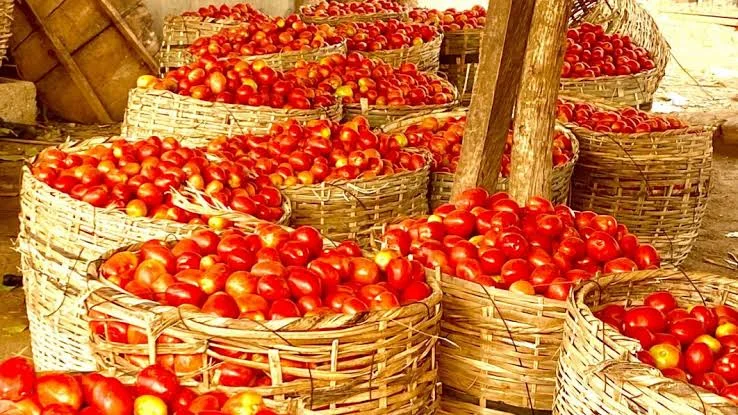
Tomato
By Efe Onodjae
As Nigerians brace for the upcoming Ileya festival amid biting economic realities, stakeholders in the agricultural sector have assured citizens of steady supply of key food items, particularly onions and tomatoes, even as rising transportation and input costs continue to exert pressure on market prices.
Speaking in a telephone interview with Vanguard, President of the National Onion Producers, Processors and Marketers Association of Nigeria (NOPPMAN), Aliyu Maitasamu, dismissed fears of scarcity, declaring that onion production for the 2025/2026 season remains strong despite insecurity concerns in parts of the North.
He urged Nigerians to “write it boldly” that onion prices will remain largely stable, attributing this to the resilience of farmers who, according to him, have defied odds to sustain production.
“There is enough onion across the northern part of Nigeria. We have what we call onion banks, and we will continue to release supplies from March through July. Nigerians should expect stable prices, though there may be slight increases due to logistics,” he said.
Maitasamu acknowledged that while insecurity exists, it has not significantly disrupted onion farming, as agriculture remains the primary livelihood for many northern communities.
“Our farmers have no alternative. They have broken barriers and continued farming because that is their only means of survival,” he added.
However, he noted that the rising cost of fuel is beginning to reflect in transportation expenses, pushing up the cost of moving onions from the North to other parts of the country.
According to him, the cost of transporting a bag of onions has risen from about N10,000 to between N13,000 and N16,000 depending on destination, a development that ultimately affects consumer prices.
“When transportation cost rises, it impacts the final market price. Even if the produce is available, the landing cost becomes higher for traders and consumers,” he explained.
On his part, the National Secretary of the National Tomato Growers, Processors and Marketers Association of Nigeria (NATPAN), Sani Yadakwari, said reports linking tomato scarcity primarily to insecurity are exaggerated.
He clarified that tomato production is ongoing in major producing states, particularly in the North-West, and that insecurity has not significantly halted farming activities.
“The real issue is not insecurity but the high cost of transportation and farm inputs. These are the factors driving up the price of tomatoes in the market,” Yadakwari stated.
He explained that farmers are increasingly concerned about unpredictable pricing and rising production costs, which have forced some to scale back operations.
“Inputs are expensive, and without price guarantees, farmers risk losses. This is discouraging some of them from continuing production,” he said.
Yadakwari also pointed to seasonal challenges between May and July, when high temperatures typically reduce yields, potentially causing temporary supply gaps. Despite this, he maintained that there is no cause for alarm, assuring that tomatoes will remain available across the country.
Disclaimer
Comments expressed here do not reflect the opinions of Vanguard newspapers or any employee thereof.