By Joseph Erunke, Abuja
Government officials, health experts, civil society organisations, and development partners have identified funding shortfalls, weak policy implementation, and poor coordination as major challenges undermining Nigeria’s fight against non-communicable diseases (NCDs).
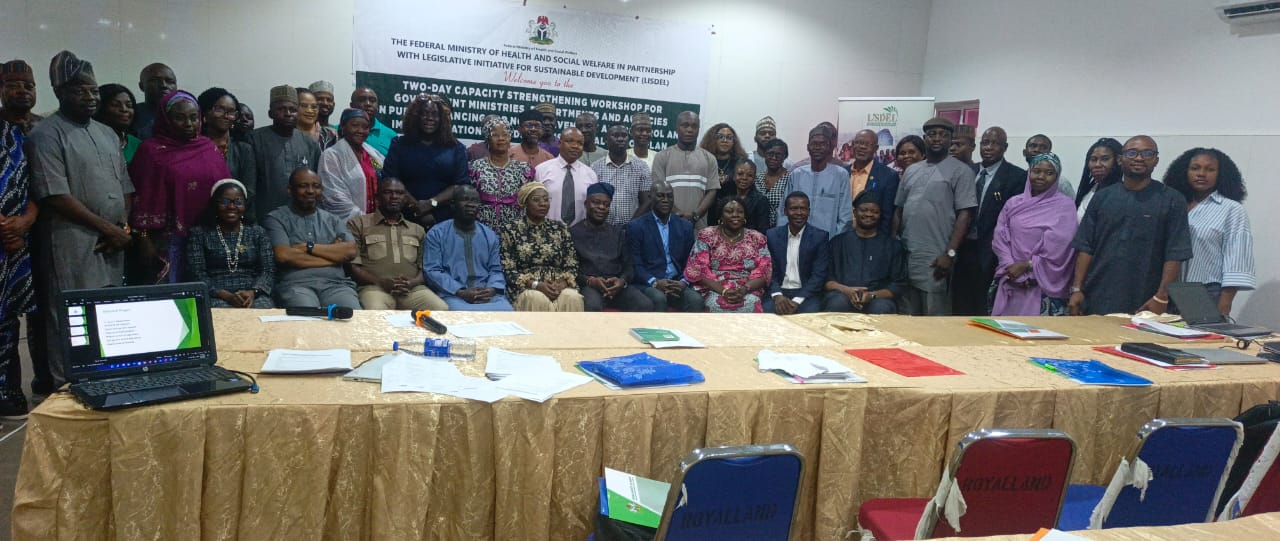
The concerns were raised at a two-day capacity strengthening workshop on public financing for NCD prevention and control, where participants called for urgent, coordinated action to address the growing health burden.
The event was organised by the Federal Ministry of Health and Social Welfare in collaboration with Resolve to Save Lives, the Legislative Initiative for Sustainable Development (LISDEL), and the Global Health Advocacy Incubator.
Declaring the workshop open, the Director of Public Health in the ministry, Dr. Charles Nzelu, said the meeting also provided an opportunity to review the outgoing National Multisectoral Action Plan (MSAP) and begin developing a more cost-effective and inclusive framework for the next five years.
From the civil society perspective, LISDEL highlighted gaps between government commitments and actual budgetary allocations. Its Policy and Advocacy Officer, Olympus Adebanjo, disclosed that assessments of Ministries, Departments, and Agencies (MDAs) budgets showed alignment with the MSAP was as low as 23 percent in some cases.
“About 45 percent of MSAP activities receive no allocation at all, and even where funds are budgeted, they are often not clearly identifiable,” he said, noting that this lack of clarity undermines accountability and effective implementation.
He added that low fund releases—sometimes as little as 17 percent—further weaken key interventions such as screening, awareness campaigns, and preventive programmes. Adebanjo urged sectors beyond health, including finance, education, environment, and infrastructure, to play active roles in tackling NCDs.
Providing a health systems perspective, Prof. Emmanuel Alhassan of Nasarawa State University and Country Lead for Health Systems Strengthening at the Global Health Advocacy Incubator, described the situation as concerning.
“NCDs now account for about one-third of deaths in Nigeria. This trend requires urgent attention,” he said.
While acknowledging some government efforts, including the distribution of diagnostic tools to primary healthcare centres, he noted that interventions remain insufficient relative to the scale of the challenge. He also called for improved capacity among MDAs to not only budget but ensure effective fund utilisation.
From the government side, the Director and National Coordinator of NCDs at the Federal Ministry of Health and Social Welfare, Dr. Alayo Sopekan, acknowledged that funding for NCDs remains limited compared to communicable diseases.
He attributed this partly to competing health priorities and lower levels of donor funding but noted that measures such as taxes on tobacco, alcohol, and sugar-sweetened beverages have been introduced to address both prevention and financing.
He, however, stressed the need for better utilisation of such revenues.
“These taxes are designed to reduce consumption and generate funds, but more attention is needed to ensure that the resources support NCD prevention and control,” he said.
Dr. Sopekan also highlighted the rising burden of NCDs, citing prevalence rates of hypertension and diabetes, as well as the widespread presence of the sickle cell gene in the population. He emphasised that early detection and prevention remain critical but require sustained funding.
Development partners, including the Clinton Health Access Initiative and the World Health Organisation, reiterated their commitment to supporting Nigeria’s response.
They described NCDs as a growing global health challenge and pledged continued technical and programmatic support, particularly in strengthening the next phase of the national action plan.
Participants also pointed to systemic gaps in the implementation of the 2019–2025 MSAP, including weak ownership among non-health MDAs, poor budget tracking systems, and limited integration of NCD priorities into sectoral plans.
They stressed that addressing NCDs requires a multisectoral approach, noting that key risk factors—such as unhealthy diets, tobacco use, alcohol consumption, and physical inactivity—cut across multiple sectors.
Organisers said the workshop aimed to strengthen institutional capacity, improve budget advocacy and accountability, and foster the collaboration needed to ensure sustainable financing for NCD prevention and control in Nigeria.
Disclaimer
Comments expressed here do not reflect the opinions of Vanguard newspapers or any employee thereof.