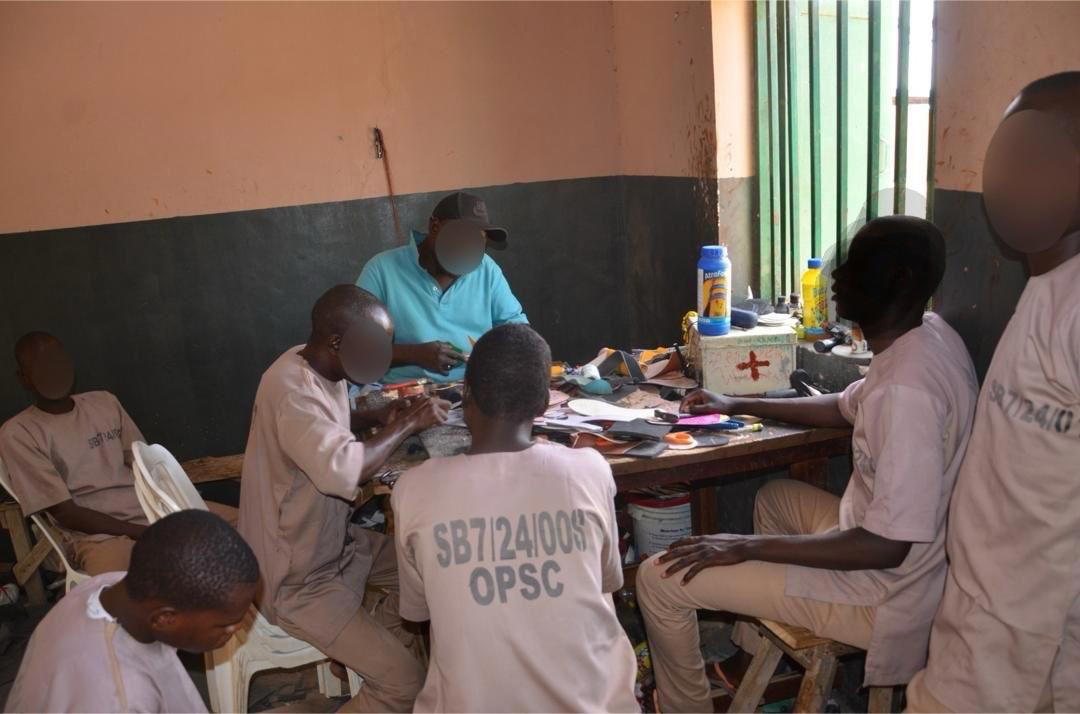
…as authorities say programme is misunderstood, call for stronger funding and community support
By Favour Ulebor, Abuja
When Nigeria introduced Operation Safe Corridor in 2016 under the administration of President Muhammadu Buhari, it marked a significant shift in the country’s counterinsurgency strategy.
At the peak of Boko Haram’s violence between 2014 and 2015, military operations intensified across the North East.
However, authorities began to acknowledge a critical limitation; force alone could not end the conflict.
The deradicalisation programme emerged as part of a broader response led by the Defence Headquarters, designed to complement battlefield operations with a structured non kinetic approach.
It aimed not only to weaken insurgent capacity but also to provide a pathway for individuals willing to disengage.
Nearly a decade later, the initiative remains one of Nigeria’s most debated security policies, particularly amid growing public scrutiny and widespread commentary on social media.
In recent years, online platforms have amplified concerns about reintegrating former insurgents, with many questioning the sincerity of participants and the safety of host communities.
This digital backlash reflects a deeper trust deficit that continues to shape public perception.
Against this backdrop, Operation Safe Corridor remains central to Nigeria’s effort to balance security, justice and long term peace.
OPERATION SAFE CORRIDOR: STRUCTURE, PURPOSE AND FUNDING REALITIES
Coordinator of the programme, Yusuf Ali, said the initiative was developed in response to operational realities observed during military campaigns.
He explained that insurgent camps often contained a mix of individuals with varying levels of involvement, including those who were abducted or forced into participation. According to him, this complexity made a purely military response insufficient.
He said, “Not everyone captured or found in camps was a committed fighter; many had been abducted or forcibly conscripted. A purely kinetic approach could degrade insurgent capacity but would not stop recruitment or provide an exit pathway.”
Ali explained that the programme was designed to separate low risk individuals from hardened fighters and subject them to structured rehabilitation and reintegration processes.
Entry into the programme, he noted, follows a strict screening system managed by security and intelligence agencies. Individuals who surrender or are captured undergo profiling, including biometric registration and background checks to determine their level of involvement.
He said only those classified as low risk are admitted, while others are referred for prosecution.
“Individuals who surrender or are captured undergo profiling; Only those classified as low risk are admitted, while others face prosecution,” he said.
Ali also addressed public misconceptions, particularly claims that rehabilitated individuals are absorbed into the Nigerian security forces.
“There is no such integration. The processes are completely different,” he said.
On incentives, he clarified that the programme focuses on rehabilitation rather than material reward.
He said, “The programme emphasises rehabilitation, skills acquisition and community reintegration rather than material incentives.”
Beyond individual rehabilitation, Ali noted that the programme contributes to broader security outcomes.
According to him, defections weaken insurgent groups, reduce recruitment and generate intelligence that supports ongoing operations.
However, he identified funding as one of the programme’s most significant challenges.
He explained that financing has largely been handled by Defence Headquarters and is mainly limited to in camp activities such as accommodation, feeding, healthcare and training.
“Funding has largely been borne by Defence Headquarters, primarily for deradicalisation and rehabilitation within the camp,” he said.
He stressed that reintegration, which takes place after participants leave the camp, remains the most critical yet least funded phase.
According to him, this stage requires resources for transportation, community engagement, livelihoods, monitoring and long term support, none of which currently have a sustainable funding structure.
“There is no dedicated funding structure for reintegration. This gap is the core challenge,” he said.
Ali warned that without proper reintegration support, gains made during rehabilitation could be reversed once individuals return to society.
He added that while some support has come from development partners, it remains inconsistent and insufficient.
Despite these challenges, he said the programme has recorded measurable progress, with over 2,600 individuals rehabilitated and reintegrated.
He also highlighted community support mechanisms, noting that for every reintegrated individual, additional vulnerable persons in the community receive support to reduce tension and promote acceptance.
COMMUNITY RESPONSE: BETWEEN ACCEPTANCE AND CONCERN
At the grassroots level, traditional institutions play a key role in implementing reintegration efforts.
A traditional leader in Borno State said community leaders have become central to bridging the gap between government policy and local realities.
He explained that they work closely with authorities and organisations to promote acceptance and peaceful coexistence, while also managing tensions within communities.
“We are playing a critical role supporting reintegration and promoting peaceful coexistence. We engage communities to foster understanding and forgiveness,” he said.
He noted that this approach has been strengthened through what is known as the Borno model, which integrates traditional leadership into counter insurgency and humanitarian responses.
However, he raised concerns about unresolved issues affecting community acceptance.
According to him, many victims of insurgency have not been adequately compensated, while some returnees display attitudes that create tension.
He also warned that poor coordination of reintegration could increase the risk of relapse.
“The government did not compensate victims, some repentant individuals are sometimes arrogant, if they are not properly coordinated, they may return to the bush,” he said.
IPCR: TRUST, RECONCILIATION AND THE MISSING LINK
Director General of the Institute for Peace and Conflict Resolution, Mr Joseph Ochogwu, said the debate around reintegration is largely driven by fear and uncertainty.
He explained that many Nigerians remain concerned about whether reintegrated individuals could pose future threats, especially in communities that have experienced prolonged violence.
At the same time, he noted that many of those processed through the programme are themselves victims.
“These people are actually victims, some were abducted, and their parents or siblings held hostage to force them into violence,” he said.
Ochogwu described Operation Safe Corridor as a necessary shift from a purely military approach to a more balanced strategy that includes rehabilitation.
However, he pointed to structural gaps in its design, particularly the absence of peacebuilding institutions at the early stages.
“At the point of conception, the Institute was not involved and I think that was a major gap,” he said.
He stressed that reconciliation remains a critical but underdeveloped component of the programme.
According to him, rebuilding trust requires deliberate engagement, dialogue and sustained effort, especially in conflict affected areas.
He also warned that without addressing the root causes of radicalisation, the risk of relapse remains.
“If all the things that give vent to radicalization are still present, the tendency will always be there,” he said.
Ochogwu emphasised that peacebuilding is not a one time effort but a continuous process requiring commitment and resources.
“Peace is a continuous thing, it has to be well resourced, and people have to be intentional and deliberate about it,” he said.
CDD: STIGMA, FEAR AND COMMUNICATION GAPS
From a research perspective, the Centre for Democracy and Development, CDD, identified stigma and lack of trust as major barriers to reintegration.
CDD Research Analyst Dengiyefa Angalapu said many communities are still dealing with trauma, which affects how they perceive returnees.
He explained that unresolved grievances and the absence of visible reconciliation have made acceptance difficult.
“The greater challenge is stigmatization and the anger that comes with the absence of genuine reconciliation,” he said.
According to him, trust remains fragile, with many residents unsure whether returnees have genuinely changed.
This uncertainty, he noted, has in some cases led to hostility.
Despite this, Angalapu said dialogue remains a practical solution.
He explained that platforms such as radio programmes and community engagements have allowed former insurgents to share their experiences, including accounts of abduction and forced participation.
Citing research findings, he said a significant number of insurgents were not voluntary actors.
“Over 85% of Boko Haram members are forcefully conscripted,” he said.
He noted that hearing such accounts can help shift perceptions and encourage empathy within communities.
However, he stressed that communication gaps remain a major weakness in the programme.
“Safe Corridor needs to communicate properly with the communities,” he said.
He also called for better coordination among government agencies, noting that gaps in implementation have affected outcomes.
THE ROAD AHEAD
Across all perspectives, a common theme emerges: Operation Safe Corridor is a necessary but incomplete solution.
While authorities highlight its role in reducing violence and supporting disengagement, communities continue to express concerns about trust, fairness and safety.
At the same time, experts emphasise that without proper funding, effective communication and sustained reconciliation efforts, reintegration will remain fragile.
There is a need to strengthen coordination across government institutions, scale up funding for reintegration, and deepen community engagement to rebuild trust.
Without aligning policy, resources and public understanding, the gap between rehabilitation efforts and community acceptance may persist, limiting long term impact.
Ultimately, sustainable peace will depend on a balanced approach that combines security measures with inclusive, well funded reintegration strategies that address both the needs of returnees and the concerns of affected communities.
Disclaimer
Comments expressed here do not reflect the opinions of Vanguard newspapers or any employee thereof.