By Esther Onyegbula
A Nigerian physician-scientist, Dr. Chimezie Godswill Okwuonu, is spearheading a global initiative aimed at addressing the widening gap in kidney care, with a focus on empowering non-physician healthcare workers to improve early detection and management of chronic kidney disease.
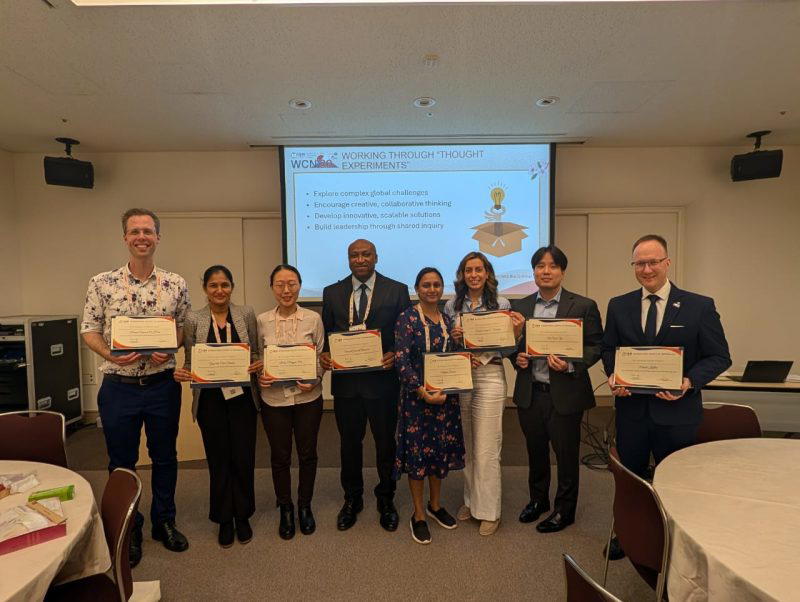
Okwuonu, an Associate Professor of Medicine and Nephrology and Fellow of the International Society of Nephrology, emerged as one of 10 medical professionals who graduated from the International Society of Nephrology (ISN) Emerging Leaders Programme on March 28, marking a significant step in efforts to strengthen healthcare systems, particularly in low- and middle-income countries.
The two-year programme, which drew participants from across continents, focused on bridging disparities in access to kidney care and enhancing health literacy in underserved populations.
At the global stage, the Nigerian nephrologist also featured prominently at the World Congress of Nephrology 2026 held in Yokohama, Japan, where he canvassed support for a scalable, community-driven approach to kidney care.
Addressing stakeholders at the congress, Okwuonu underscored the urgent need to expand the role of non-physician healthcare workers in the diagnosis and management of chronic kidney disease, especially in regions with a shortage of specialists.
He said, “The goal is to democratise life-saving knowledge. By empowering community health workers, we are creating a frontline defence that ensures early identification, which remains the most sustainable way to reduce the burden of kidney disease in Nigeria.”
He further highlighted insights from Nigeria, noting that community-based health workers could play a critical role in early detection and timely referral of patients in hard-to-reach areas.
As part of the initiative, Okwuonu led a spotlight session on the application of artificial intelligence in kidney care, exploring how digital tools could complement clinical expertise and improve diagnostic accuracy in underserved settings.
In a move to tackle workforce shortages, Okwuonu and his colleagues have developed a framework designed to train and empower non-physician healthcare providers, including nurses and community health practitioners, to support early detection and referral systems.
The framework has since been integrated into an educational curriculum hosted on the ISN Academy, providing structured training and contributing to what experts describe as an emerging global standard in renal care delivery.
At the national level, Okwuonu is driving implementation of the initiative in his capacity as Chief Medical Director of Abia Specialist Hospital and Diagnostic Centre, Umuahia.
A pilot programme is currently underway across 10 primary healthcare centres in Abia State, spanning the three senatorial districts, with a focus on identifying individuals at risk of kidney disease, providing counselling, and facilitating prompt referrals.
Findings indicate that the programme prioritises early detection, a strategy health experts say is critical to reducing the growing burden of kidney failure in Nigeria.
Okwuonu’s work also extends to policy and research. He serves on committees of the International Society of Nephrology and its African Regional Board, contributing to the development of strategies aimed at improving kidney care across the continent.
He has also undergone advanced training at the Harvard Implementation Research Course, where he developed analytical frameworks to support the practical application of health interventions.
Health experts believe that the success of the Abia pilot could serve as a model for nationwide adoption, with the potential to shape policies of the Federal Ministry of Health in expanding access to kidney care.
They noted that the initiative reflects a broader shift towards locally driven, innovative solutions to longstanding healthcare challenges in Nigeria, particularly in addressing critical workforce shortages and improving outcomes for patients with chronic diseases.
Disclaimer
Comments expressed here do not reflect the opinions of Vanguard newspapers or any employee thereof.