…US blames Iran’s refusal to end nuclear enrichment for failed negotiations
…Iran blames excessive demand by Washington
By Nkiruka Nnorom with agencies report
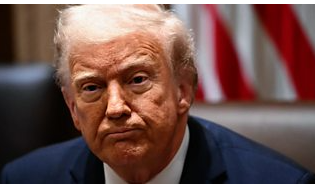
US President, Donald Trump, yesterday, said the US Navy would immediately start blockading the Strait of Hormuz and also stop every vessel in international waters that had paid toll to Iran after the peace talk between both countries failed.
Trump, who also reiterated his threat to destroy Iran’s power plants and other civilian energy infrastructure, said: “I could take out Iran in one day. I could have their entire energy, everything, every one of their plants, their electric generating plants, which is a big deal.”
The fresh threat came after the initial talk between the US and Iran to find permanent end to the Middle East war deadlocked, following the refusal by Tehran to abandon its uranium enrichment and insistence on exercising sovereignty in Strait of Hormuz.
The issue of uranium enrichment had been central to Western relations with Iran for more than two decades, with US and its allies accusing the country of developing atomic weapons, while Iran had always insisted its programme was for civilian purposes only. This concern was at the core of the war, which started in the middle of negotiations with US.
Moreso, since the outbreak of the war on February 28, Iran has used the blockage of Strait of Hormuz as a bargaining chip, maintaining, among other things, that it must establish a new regime in the oil channel and toll ships transiting the strait, a demand the United States has rejected.
The opening of the strait for all vessels (not just those deemed friendly by Iran) is a primary demand of the US to end the war and formed a key part of the conditional two-week ceasefire plan agreed with Iran last week upon which the peace talk was scheduled.
Vance blames Iran’s refusal to discontinue nuclear programme
Coming off the peace talk yesterday, US Vice-President, JD Vance, who led the US delegation blamed the failure of marathon negotiations with Iran on the country’s refusal to abandon its nuclear weapons programme, while Iranian sources hit back, saying excessive demands from Washington had hindered positive outcome.
Vance said his team had been very clear on its red lines, arguing that one of the most significant points of difference between the two sides was on Iran’s nuclear programme.
Vance, who said he spoke with Donald Trump at least half a dozen times during the talks, said: “We need to see an affirmative commitment that [Iran] will not seek a nuclear weapon, and they will not seek the tools that would enable them quickly achieve a nuclear weapon.
“That is the core goal of the president of the United States, and that’s what we’ve tried to achieve through these negotiations.”
Vance added that while the failure to reach an agreement in Islamabad was bad news, noted that it was “bad news for Iran much more than it’s bad news for the United States of America.”
However, Iran’s foreign ministry downplayed the apparent breakdown, saying no one had held any expectation that the talks with the US would reach an agreement within one session.
“Naturally, from the beginning we should not have expected to reach an agreement in a single session. No one had such an expectation,” the ministry’s spokesperson, Esmaeil Baghaei, said, according to the state broadcaster, IRIB.
He said Tehran was “confident that contacts between us and Pakistan, as well as our other friends in the region, will continue”.
US failed to gain trust of Iranian delegation, parliamentary speaker says
Disagreeing with Vance, Iran’s Parliamentary Speaker, Mohammad Bagher Ghalibaf, said the US delegation failed to gain the trust of the Iranian delegation in this round of negotiations.
In a lengthy post on X, Ghalibaf said he stressed before the talks that Iran had no trust in the opposing side after the experiences of the two previous wars.
Ghalibaf, who led the Iranian delegation for the Pakistani mediated talks, added that his country’s delegation negotiated in good faith and raised “forward-looking initiatives”, without specifying what these were.
“America has understood our logic and principles, and now it’s time for it to decide whether it can earn our trust or not?” he wrote on social media, as he thanked Pakistan for its mediation efforts.
Speaking in the same vein, Javad Zarif, a former Iranian foreign minister, said in a post on X yesterday that the Pakistan talks failed because Iran was not going to accept terms dictated to it by the US.
He said: “No negotiations – at least with Iran – will succeed based on your terms. The US must learn: you can’t dictate terms to Iran. It’s not too late to learn. Yet.”
Zarif, who was Iran’s top diplomat between 2013 and 2021 in the government of the ‘moderate’ president, Hassan Rouhani, was in office when the US reached its nuclear deal with Iran in 2015 under Barack Obama.
Disclaimer
Comments expressed here do not reflect the opinions of Vanguard newspapers or any employee thereof.