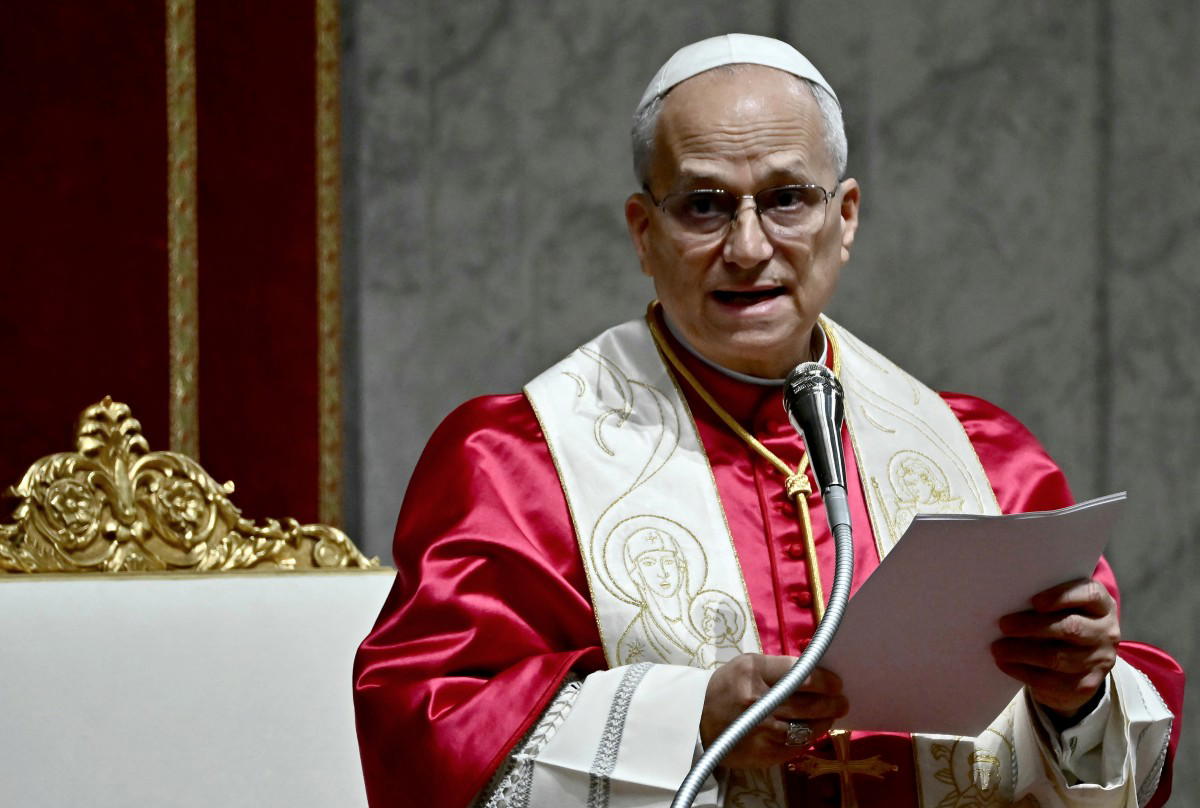
Pope Leo XIV. Photo by Filippo MONTEFORTE / AFP.
By Victor Ahiuma-Young
Organised labour across Africa has thrown its weight behind the Apostolic visit of Pope Leo XIV, describing it as a timely intervention amid worsening economic hardship, rising inequality, and governance challenges confronting the continent. Speaking on behalf of millions of workers, the African Regional Organisation of the International Trade Union Confederation (ITUC-Africa) said the visit offers a unique moral platform to address issues undermining workers’ dignity and livelihoods.
The labour body noted that while Africa remains resilient and hopeful, deepening poverty, job insecurity, and systemic corruption continue to erode the well-being of citizens, particularly women and young people.
It called on the Pope to use his global influence to challenge unjust economic systems and advocate for inclusive policies that prioritise the common good.
In an open letter to the Pope, ITUC-Africa General Secretary, Akhator Joel Odigie, said “With deep respect and solidarity, we welcome your Apostolic Visit to Africa on behalf of over 18 million workers across 52 countries, represented by the African Regional Organisation of the International Trade Union Confederation (ITUC-Africa).
“Your presence among the people of Africa comes at a critical moment—one marked not only by resilience and hope, but also by deepening inequality and systemic injustice that continue to weigh heavily on workers and their families. As you have consistently reminded the world, the Church must stand with the poor and the excluded—those whose dignity is too often denied by the structures that govern our economies and societies.
“Across our continent, inequality is widening at an alarming pace. The 2026 Oxfam Inequality Report highlights the growing concentration of wealth in the hands of a few, while millions struggle to meet basic needs. For African workers, this reality is lived daily through precarious employment, stagnant wages, and limited access to social protection. This is not merely an economic condition—it is a moral crisis. As you warned in Evangelii Gaudium, “such an economy kills.”
“This crisis is even more pronounced for women and youth, who remain structurally disadvantaged by current economic and political systems. Young people entering the labour market are often trapped in cycles of unemployment, underemployment, and informality, with limited pathways to decent work. Women, despite their central role in sustaining households and economies, continue to face wage disparities, insecure work, unequal access to property and finance, and systemic exclusion from decision-making.
“In many cases, these systems are not neutral—they actively set traps that reproduce inequality across generations. From discriminatory labour markets and unequal access to education and assets, to social norms and legal frameworks that undermine women’s economic agency, the result is a persistent marginalisation of those who should be at the centre of Africa’s development.
At the same time, Illicit Financial Flows, debt burdens, kleptocracy and corruption continue to undermine development across the continent. Public resources meant for the common good are too often ringfenced to service debts, diverted to private gain, thus undermining the state’s capacity to care. These actions also weaken institutions and erode trust. These effects deprive communities, families and workers—especially women and youth—of essential services such as healthcare, housing, and education, and reinforce cycles of poverty and exclusion. In Fratelli Tutti, you remind us that politics must serve the common good, yet narrow interests have too often captured it.
“Your Holiness, the dignity of work must remain at the centre of our collective conscience. African workers—particularly women, youth, and migrants—continue to labour under conditions that fall short of the principles upheld in Catholic Social Teaching. Meanwhile, Africa’s vast natural wealth, including critical minerals, continues to benefit external actors more than local communities, echoing your call in Laudato Si’ to hear both “the cry of the earth and the cry of the poor.”
“In this context, your voice carries profound moral authority. We humbly urge you, during your visit, to speak boldly against inequality and unjust economic systems; to denounce corruption in the private and public sectors and kleptocratic governance; and to call for accountable leadership rooted in the common good. “We also invite you to reaffirm the centrality of social dialogue as a pathway to peace, justice, and inclusive development—ensuring that workers, including women and youth, have a meaningful voice in shaping the policies that affect their lives.
“Africa remains a continent of hope, sustained by the resilience, creativity, and solidarity of its people. Workers and their organisations continue to organise, to resist injustice, and to build alternatives grounded in dignity and fairness. Your visit offers a historic opportunity to amplify these efforts and to inspire a renewed global commitment to justice.
“We entrust this appeal to your pastoral care, confident in your unwavering commitment to people with low incomes, the excluded, and the dignity of all workers and people.
“May your journey to Africa be a beacon of hope and a prophetic call for justice in our time. Welcome to Africa, Pope Leo!”
Disclaimer
Comments expressed here do not reflect the opinions of Vanguard newspapers or any employee thereof.