By Demola Akinyemi, Ilorin
Communities in Kwara State are increasingly taking ownership of the fight against Gender-Based Violence (GBV), with residents now reporting cases through structures they established themselves, the Brain Builders Youth Development Initiative (BBYDI) has said.
The Global Director of BBYDI, Olasupo Abideen, disclosed that in Alalubosa community in Ilorin, 12 GBV cases have been formally reported through a community GBV desk created about 18 months ago, with 10 of the cases already resolved.
He explained that the desk, chaired by the community’s Mogaji, is one of several community-led structures established under a two-year GBV prevention programme implemented by BBYDI with support from the Ford Foundation.
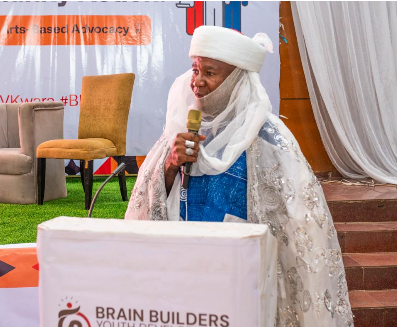
Abideen spoke on the sidelines of the second GBV Prevention Statewide Event held at the Kwara State Banquet Hall, which brought together over 200 participants, including 17 traditional rulers, to assess the impact of these interventions.
According to him, communities are now enforcing their own anti-GBV frameworks. In Alalubosa, a community-wide marriage agreement has been introduced with defined consequences for spousal violence, while communities such as Agbarere and Ganmo have developed and adopted social charters endorsed by religious, youth, and women leaders.
He noted that BBYDI conducted 16 targeted engagements with first-class traditional rulers across the state and organised workshops in the three senatorial districts, leading to the development of 20 GBV prevention messages in Yoruba, Nupe, and English, now widely used within communities.
BBYDI’s Community Engagement Officer, Ahmad Adebowale, said traditional leaders have moved beyond consultation to full ownership of the initiative, actively mobilising community structures and enforcing agreed standards.
The Emir of Ilorin had earlier endorsed the initiative as a “cultural and moral necessity,” a position reiterated at the event by Usman Atolagbe Abubakar Jos, who represented the monarch during a panel discussion.
A key highlight of the event was the launch of a Yoruba-language edition of the GBV Prevention Advocacy Toolkit, developed by BBYDI in response to requests from traditional leaders. Translations into other local languages are underway.
The programme also received government backing, with the Kwara State Commissioner for Social Development, Mariam Nnafatima Imam, in attendance.
Speaking at the event, Izeduwa Derex-Briggs of the Ford Foundation emphasised the organisation’s preventive approach. “We are invested in ensuring that GBV does not happen,” she said.
BBYDI Executive Director, Nurah Jimoh-Sanni, highlighted a case where a community rejected informal settlement in a sexual violence matter, opting instead to report the case, leading to the arrest and prosecution of the suspect.
She described the development as a sign of a deeper shift in attitudes towards accountability and protection.
In her keynote address, Saudat Salah Abdulbaqi, Dean of the Faculty of Communication and Information Sciences at the University of Ilorin, underscored the critical role of traditional leaders in shaping social norms.
“What leaders tolerate becomes culture; what they condemn begins to change,” she said.
BBYDI also showcased its efforts to address technology-facilitated GBV, including an AI-powered WhatsApp chatbot, KEMI, designed to provide real-time support to women and girls experiencing online abuse across West Africa.
The event concluded with participants signing a public commitment board and recording video pledges as part of an advocacy campaign, marking the end of one phase of the programme and the beginning of its expansion.
Disclaimer
Comments expressed here do not reflect the opinions of Vanguard newspapers or any employee thereof.