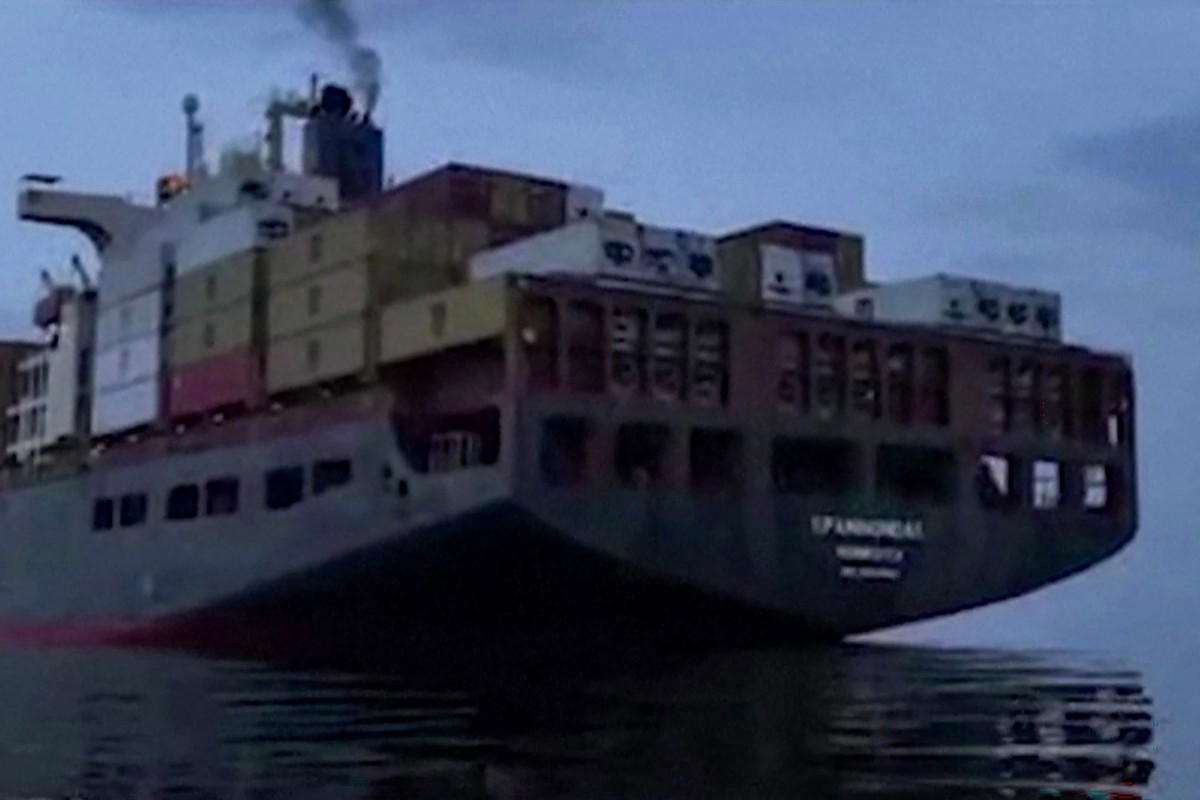
This screen grab taken from undated video footage released by Iran’s Revolutionary Guards (IRGC) and made available via Iran’s state broadcaster (IRIB) on April 23, 2026, shows a container ship attempting to cross the Strait of Hormuz in the midst of an operation to allegedly seize it by the IRGC’s naval forces. Iranian forces targeted three container ships on April 22, seizing two, global security monitors and the country’s Revolutionary Guards said, the latest incidents to threaten a crucial trade route in the Middle East war. (Photo by IRIB TV / AFP) / – Israel OUT / RESTRICTED TO EDITORIAL USE – MANDATORY CREDIT AFP – SOURCE: IRIB – NO MARKETING – NO ADVERTISING CAMPAIGNS – DISTRIBUTED AS A SERVICE TO CLIENTS – NO RESALE – NO ACCESS ISRAEL MEDIA/PERSIAN LANGUAGE TV STATIONS OUTSIDE IRAN/ STRICTLY NO ACCESS BBC PERSIAN/ VOA PERSIAN/ MANOTO-1 TV/ IRAN INTERNATIONAL/RADIO FARDA – AFP IS NOT RESPONSIBLE FOR ANY DIGITAL ALTERATIONS TO THE PICTURE’S EDITORIAL CONTENT ===Attention editors: AFP covers the war in the Middle East through its extensive regional network, including bureaus in Tehran, Jerusalem, and several neighboring countries. Since the start of the conflict, journalists have been working under increasingly restrictive conditions. Authorities in several countries have limited reporters’ movements, photo and live video coverage from sensitive locations. Some governments and armed groups have banned images of missile or drone strikes and other security-related sites. / BEST QUALITY AVAILABLE
A senior Iranian parliament official said on Thursday that Tehran has received the first revenue from tolls it imposed on the strategic Strait of Hormuz in its war with the United States and Israel.
“The first revenue received from the Strait of Hormuz tolls was deposited into the Central Bank account,” said deputy speaker of parliament Hamidreza Hajibabaei, according to Tasnim news agency.
Other Iranian media carried the same statement, without elaborating.
The Strait of Hormuz, a key energy chokepoint, has become a major flashpoint since the outbreak of the Middle East war on February 28.
Iran has allowed only a trickle of ships to pass through the waterway, a route that in peacetime accounts for a fifth of the world’s oil and gas flows, along with other vital commodities.
Before the announcement of revenue from tolls, Iran’s parliament had been deciding whether to impose them on shipping through the strait, with Iranian officials warning that maritime traffic through the strait would “not return to its pre-war status”.
On March 30, Iranian state media said the parliament’s security commission had approved plans to impose tolls, but it was not clear if a final parliamentary vote on the proposal had taken place.
US President Donald Trump has been pushing Iran to open the strait.
Britain, France and military planners from over 30 countries have held talks to protect navigation through the strait, with Paris and London saying they would lead a multinational mission as “soon as conditions allow”.
AFP
Disclaimer
Comments expressed here do not reflect the opinions of Vanguard newspapers or any employee thereof.