By Favour Ulebor, Abuja
As insecurity continues to threaten lives, education and development across Nigeria, the United Nations Educational, Scientific and Cultural Organization, UNESCO, alongside key stakeholders, has called for urgent adoption of youth led peace building as a practical solution to the country’s growing challenges.
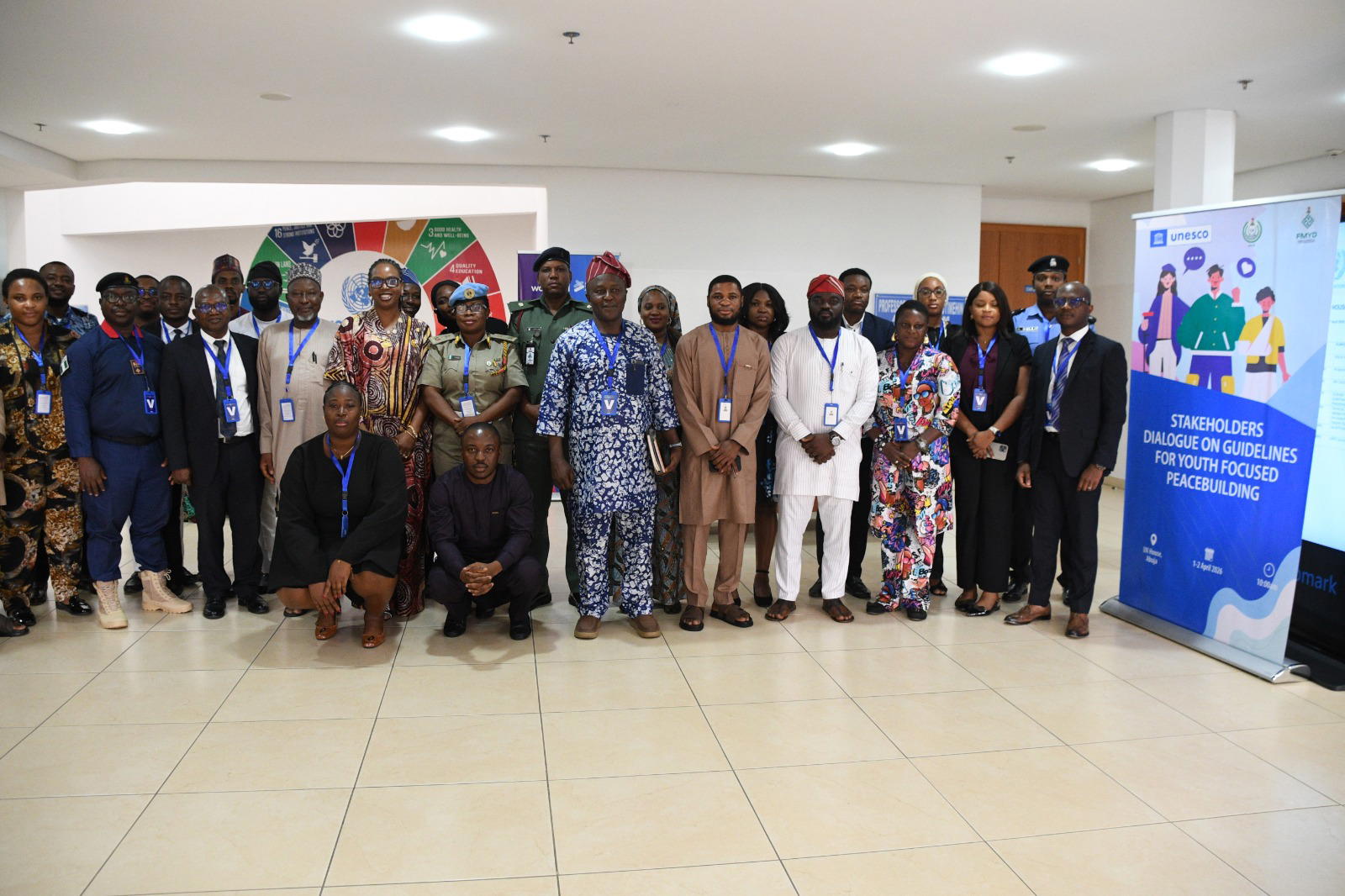
The call was made on Wednesday in Abuja during a Strategic Stakeholders Dialogue on Guidelines for Youth Focused Peacebuilding.
Speaking at the event, UNESCO Head of Office and Representative to Nigeria, Dr Jean Paul Abiaga Ngome, represented by Head of Sector, Social and Human Science, Nneka Okafor, said rising cases of violence, school closures, abductions and displacement show that more work is needed to achieve lasting peace.
She stressed that with about 60 percent of Nigeria’s population under 30, young people must be placed at the center of peace efforts, adding that stakeholders must work together and involve communities directly in finding sustainable solutions.
Also speaking, the Honourable Minister of Youth Development, Ayodele Olawande, represented by Deputy Director at the Ministry, Lami Bature, said young people remain critical to national stability and development.
He said, “With over half of our population under the age of 30, Nigeria’s youth are not just beneficiaries of peace, they are powerful agents of transformation.”
The Minister noted that challenges such as unemployment, limited access to education and social exclusion continue to expose young people to conflict, but said government is committed to policies that promote their inclusion in peacebuilding and governance.
Director General of the Institute for Peace and Conflict Resolution, IPCR, Dr Joseph Ochogwu, represented by Director, External Conflict Prevention and Resolution, Babatunde Olalekan, said the narrative about youth must change from being seen as risks to being recognised as partners.
He said, “We recognize that the youth are not merely the leaders of tomorrow; they are the architects of today.”
Ochogwu warned that unemployment remains a major issue, noting that about 40 percent of Nigerian youth are jobless, making them vulnerable to recruitment by extremist groups.
In a presentation on the political, economic, demographic and socio cultural dimensions of youth vulnerability to conflict, Dr Kingsley Udegbunam of the University of Nigeria, Nsukka, said delaying youth leadership weakens peace efforts.
He said, “Tomorrow is an endless time. When you say youth are leaders of tomorrow, you are postponing building their capacity. But if you acknowledge that they can start leading today, it keeps you on your toes.”
Disclaimer
Comments expressed here do not reflect the opinions of Vanguard newspapers or any employee thereof.