…Opens up on ‘Living in Bondage’
…Says, ‘My regret is not realizing the impact of what I created before leaving’
…Reveals how much he was paid for directing the film
By Benjamin Njoku
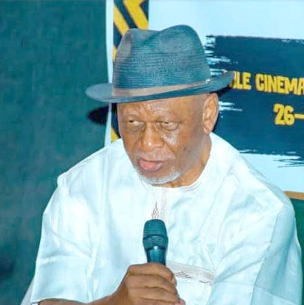
Chris Obi-Rapu, a pioneer in Nollywood’s evolution, is making a comeback after disappearing for many years. The veteran director’s influence on Nigeria’s film industry remains significant, particularly with his work on Kenneth Nnebue’s 1992 blockbuster “Living in Bondage”.
After directing other classics like “Circle of Doom”, “Evil Passion”, and “Taboo”, Obi-Rapu left for the US with his family in 1995 seeking knowledge. Now, with a PhD in sight from Gregory University, Abia State, he’s back to guide Nigerian filmmakers on low-budget filmmaking and create Nollywood’s unique aesthetics. “I’m here to demystify filmmaking and bring Nollywood to global standards,” he says.
Obi-Rapu’s mission includes showcasing Nigeria’s diverse stories, highlighting untouched tribes, and shaping the industry’s narrative. He served as the head of jury at the just concluded Coal City Film Festival, in Enugu, where he opened up on his role in the evolution of Nollywood and making of the pioneering movie, “Living in Bondage.”
Why I relocated to the US with my family
I went for studies. I worked with NTA from 1973 and rose to the position of Controller of Programme in 1992. In 1976, I directed “The Music Man” with Dr. Ola Balogun, and that was my transition to filmmaking. I assisted Ola Balogun in directing the movie, and he brought Hubert Ogunde into film. When I directed “Living in Bondage” in Igbo, NTA didn’t know I could shoot drama. I directed it to uphold the Igbo language, using my wife’s maiden name, Vicky Moore.
The movie’s success was a surprise, and I only revealed my involvement to the late Kalu Okpu, NTA’s Chief Script Writer. It was when I left for the United States that a foreign journalist later exposed me as the director of the movie. I remember that I was paid N10,000, and despite the film’s success, I haven’t received anything else. I was advised to take the matter to court, but I declined. If I hadn’t directed “Living in Bondage”, Nollywood as we know it wouldn’t exist today. Nigeria would be like French countries, relying on funding to shoot on 35mm.
My transition to filmmaking
Ola Balogun, who returned from Paris with a PhD in film, shot “Amadi” in Igbo and gave me the transition to film directing. I call him the grandfather of Nollywood, while I’m the father.
People often give credit to Hubert Ogunde, but it was Ola Balogun who started film production in Nigeria. Ogunde worked with him between 1975 and 1976, and his first film, “Ajani Ogun”, was produced in 1976. That was how Ade Love came into film production. But it was in 1979 that Ola shot a film with Hubert Ogunde. So, we need to correct the narrative, it wasn’t Ogunde who first started making films in Yoruba. So, if I didn’t direct “Living in Bondage” , the jobs the industry has created for young Nigerians wouldn’t have been possible. There was a time they wanted to confer National honours on me, during the administration of President Good luck Jonathan. I had been contacted and was expecting my letter, but before I knew what was happening, my name was dropped.
Despite the pioneering role I played in the creation of Nollywood, nothing has been done by the government to appreciate my contributions to the growth of the industry. When you mention Nigerian movies today, you must make reference to “Living in Bondage.” I shot the film to prove a point. It wasn’t that I was a hungry man, because I was already a Controller of Programme at NTA.
How I got involved in the production of ‘Living in Bondage’
I got involved in “Living in Bondage” through Okey Ogunjiofor, a student in my TV college lecture. I was hesitant when he approached me, but my late assistant, Henry Nkwerre, convinced me. I told Kenneth Nnebue, the executive producer, to release enough money, and he’d double it. I was paid N10,000, while others received minimal amounts.. Okey Ogunjiofor, who was the producer, was paid between N 300 and N500. It was only late Francis Agu who was paid N1000, Kenneth Okonkwo who played the lead character was paid N200.
I told Kenneth Nnebue that I wasn’t accepting N10,000 because it was my artist fees, but that when the movie becomes a commercial success he should remember to compensate me. That never happened. Unfortunately, while I was away, Kenneth Nnebue and Okey Ogunjiofor started taking credit for the film’s success. As a good storyteller, I learned filmmaking from Ola Balogun. My regret is not realizing the impact of what I created before leaving. I could’ve stayed to shape the industry’s pace, but I left for the US to gain more knowledge, believing I have seen it all. I’m not saying Nigeria had no film industry back then, but at what point did it start thriving?
My comeback mission
My first mission is to demystify filmmaking and elevate Nollywood to global standards. Though the industry has gone global, yet there is still a lot to be done to sustain its acceptance. Pursuing a PhD in film, I am determined to guide Nigerian filmmakers on making quality, low-budget films.
They don’t need to shop for N300 or N400 million to shoot a film, rather they can make a good film with a minimal budget. My goals include creating Nollywood’s unique aesthetics, showcasing Nigeria’s diverse stories, and highlighting the country’s 250 untouched tribes. I want to create a distinct Nollywood narrative.
Disclaimer
Comments expressed here do not reflect the opinions of Vanguard newspapers or any employee thereof.