
By Paul Lucky Okoku
A reflective examination of leadership decisions in African football—where preparation, pressure, and perception often collide at the edge of major tournaments.
In football, as in life, the most dangerous decisions are not always the wrong ones—but the rushed ones.
“A team may survive poor form, but it rarely survives uncertainty in leadership close to battle.”
Stability builds belief. Change tests it. Timing defines whether either succeeds.
There are moments in football when the game stops being about tactics.
It becomes about timing.
I remember, as a player, how fragile confidence can be—how quickly belief can rise, and how easily it can be shaken. Not by the opponent. Not by the scoreline. But by uncertainty.
Especially uncertainty from within.
Because when a tournament approaches, players are not just preparing physically—they are aligning mentally with a voice, a philosophy, a leader.
Remove that voice too late… and you don’t just change a coach.
You disturb a rhythm.
The Decision: Timing and Context
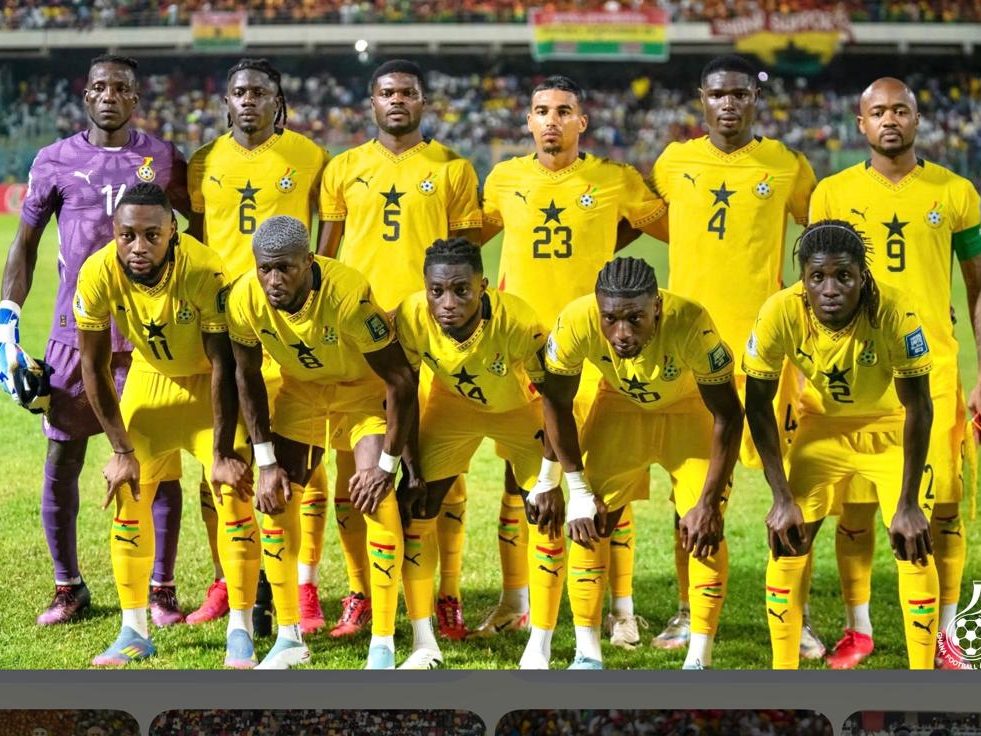
The decision by the Ghana Football Association to part ways with Otto Addo was confirmed on March 31, 2026—a move that came approximately two to three months before the start of the 2026 FIFA World Cup.
What makes the timing particularly significant is not just the proximity to the tournament, but the fact that the team had already secured qualification under his leadership. This was not a case of failure to qualify, but a response to preparatory performances in the build-up phase.
In football governance, decisions made close to major tournaments carry amplified consequences. At this stage, teams are no longer building identity—they are refining it. Any disruption, therefore, is not just technical, but psychological.
The decision came on the back of this run of results, which had intensified scrutiny around performance levels despite qualification already secured.
The Results That Triggered Concern
The decision followed a troubling sequence of results in international friendly matches played in the weeks leading up to March 31, 2026—fixtures intended to fine-tune the team ahead of the World Cup.
The sequence of results unfolded over successive international windows, gradually intensifying concern as the tournament approached:
Nov. 14, 2025. 0–2 loss to Japa
Nov. 18, 2025 0–1 loss to South Korea
Mar. 27, 2026. 1–5 defeat to Austria
Mar. 30, 2026 1–2 loss to Germany
These four consecutive defeats exposed concerns around defensive organization, cohesion, and overall match control against high-level opposition.
Beyond the immediate run of results, a broader look at Otto Addo’s second tenure reflects a mixed record. Across approximately 22 to 23 matches, the team recorded:
8 wins
5 draws
9 to 10 losses (depending on reporting variations)
While numbers alone do not always capture the full story of a team in transition, they often shape perception—and in football governance, perception can accelerate decision-making.
Yet, it must also be acknowledged that friendly matches are, by nature, experimental. Teams often rotate squads, test tactical variations, and prioritize long-term readiness over short-term results. This creates a tension between performance evaluation and preparation strategy—one that makes decisions like this both understandable and open to debate.
The Psychology of Late Change
In football, systems can be adjusted quickly.
But trust cannot.
A new coach brings:
New ideas
New expectations
New communication patterns
But players, especially at international level, are creatures of rhythm.
When a coach has taken a team through qualification, he has already:
Built internal alliances
Established tactical identity
Earned dressing room credibility
To disrupt that, so close to competition, is to reset more than tactics—it is to reset belief.
And belief is not rebuilt overnight.
Lessons from Nigeria’s Own History
This is not unfamiliar territory.
Nigeria has walked this path before.
Ahead of the 2002 FIFA World Cup, after qualification had been secured, the Nigeria Football Federation made a late managerial change—bringing in Lars Lagerbäck.
On paper, it seemed logical:
European pedigree
Tactical structure
International exposure
But football is not played on paper.
It is played in cohesion.
That World Cup campaign did not deliver what many expected—not necessarily because of coaching quality, but because of timing, adaptation, and the invisible chemistry that had not fully formed.
Earlier still, Nigeria experienced similar patterns of mid-cycle or late-cycle changes—sometimes driven by pressure, sometimes by perception, sometimes by the belief that “something must be done.”
And that belief, while understandable, can be dangerous.
Because action is not always progress.
The Foreign Coach Debate—A Balanced Reflection
There is also a deeper conversation that often sits beneath decisions like this.
In African football, there has historically been a tendency—sometimes subtle, sometimes overt—to equate foreign (often European) coaches with guaranteed structure and success.
But reality has taught us something more nuanced.
Coaching success is not defined by:
Nationality
Skin color
Accent
It is defined by:
Fit
Timing
Understanding of the players
Alignment with football culture
Some foreign coaches have succeeded brilliantly in Africa.
Some local coaches have done the same.
And in truth, failure has not respected nationality either.
So the lesson is not about choosing foreign over local—or vice versa.
The lesson is about choosing right over convenient.
Understanding Both Sides of the Decision
To be fair—and balance matters here—the decision by the Ghana Football Association did not come from nowhere.
Poor performances, especially heavy defeats, can:
Shake public confidence
Raise internal concerns
Create fear of embarrassment at major tournaments
Administrators are not immune to pressure.
They must weigh:
Public expectation
National pride
Competitive readiness
So the decision may well have been driven by a desire to protect the team, not destabilize it.
But in football, intentions and outcomes do not always align.
The true test of football leadership is not just the ability to act under pressure—but the wisdom to know when stability serves better than intervention.
The Human Dimension: Players, Fans, and the Weight of Timing
There is also a human dimension to decisions of this nature—one that statistics and results alone cannot fully capture.
For players, a World Cup is not just another tournament. It is the highest stage of recognition, the culmination of years of discipline, sacrifice, and national service. The journey to qualification is often shaped by a shared belief between coach and players—a relationship built over time through trust, communication, and collective struggle.
When that journey is interrupted close to its defining moment, it can raise quiet, unspoken questions within the group. Not necessarily resistance, but reflection.
Some players may fully embrace the change, seeing it as a necessary reset. Others may naturally wonder about continuity—about the voice that guided them to qualification, and what it means to now adjust to a new one at such a critical stage.
Among supporters, reactions are rarely uniform. Football fans are deeply invested, emotionally and historically. Some may view the decision as bold and proactive, a sign of ambition. Others may question whether the timing risks unsettling a team that had already achieved its primary objective.
For those responsible for the decision, the weight is equally significant. Leadership at that level often involves choices made under pressure, with limited margins for error and no guarantees of outcome. Whether easy or difficult, such decisions are rarely taken lightly, particularly when they involve altering the course of a team so close to a global tournament.
In the end, this is where football reveals its deeper nature—not just as a game of tactics and results, but as a space where human expectation, trust, and timing intersect.
Has This Only Happened in Africa?
While such late decisions have occurred in African football, history shows they are not exclusive to the continent, as even European teams have experienced similar disruptions close to major tournaments.
The short answer is: No—not only Africa.
However, it may appear more frequent within the African football context, where administrative pressures, public expectations, and performance anxieties often intersect more visibly.
Historical patterns across global football offer perspective:
Nigeria has experienced similar late or mid-cycle coaching changes on multiple occasions
Ivory Coast has also undergone managerial transitions during critical competitive periods
France, during the Raymond Domenech era, faced instability that affected team cohesion, even if not a direct pre-tournament dismissal
Spain, notably, dismissed Julen Lopetegui just days before the 2018 FIFA World Cup
These examples suggest that while the frequency and context may differ, the underlying tension between performance, timing, and leadership decisions is a global phenomenon—not a continental one.
The Deeper Lesson
To examine the delicate balance between necessary change and destructive disruption in football governance, and to recognize that in both sport and life, timing is not just a factor—it is often the difference between wisdom and regret.
Final Reflection: The Invisible Game
There is a game within the game that fans do not always see.
It is not played on grass.
It is played in the mind.
A team preparing for the World Cup is not just preparing to face opponents.
It is preparing to believe—collectively—in one voice, one direction, one identity.
Change that voice too late, and you ask players to recalibrate under the brightest lights.
Sometimes it works.
Often, it does not.
And when it does not, the explanation is rarely found in tactics alone.
It is found in timing.
Very respectfully, football continues to remind us that leadership decisions are not judged only by intention—but by consequence, context, and timing.
This analysis is presented to document facts, historical patterns, and governance issues in global football and sport governance. It is not intended to apportion blame, but to provide context, continuity, and evidence that can inform public discourse, policy evaluation, and institutional reform.
.Paul Lucky Okoku, former Nigerian International Footballer | Football Analyst,
Former Nigerian Super Eagles International, CAF Africa Cup of Nations (AFCON) 1984 Silver Medalist, WAFU Nations Cup 1983 Gold Medalist, CAF Tesema Cup (U-21) 1983 Gold Medalis,
FIFA U-21 World Cup, Mexico 1983 and Vice-Captain, Flying Eagles of Nigeria (Class of 1983) wrote this piece from Atlanta, USA.
Disclaimer
Comments expressed here do not reflect the opinions of Vanguard newspapers or any employee thereof.