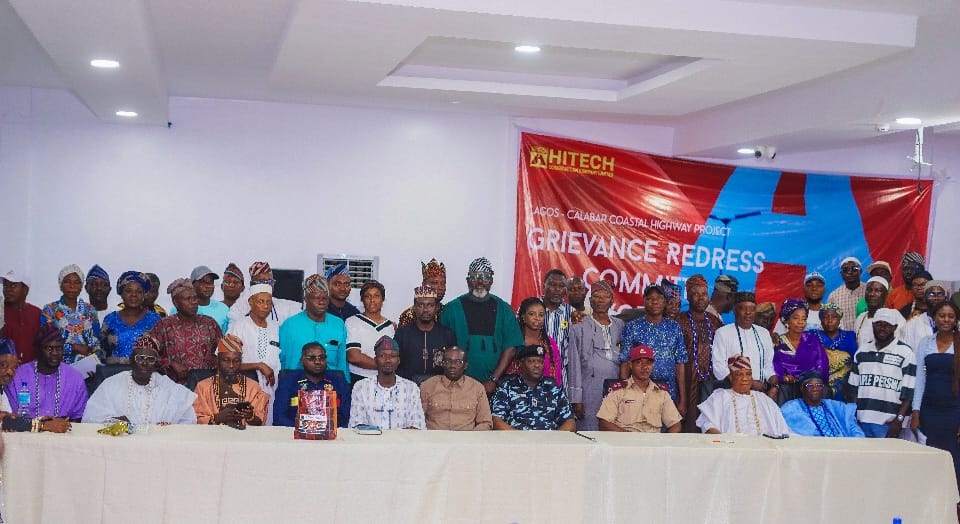
*Communities back grievance frameworks, fight against vandals
The Federal Government and Hitech Construction Company Ltd. have deepened stakeholder confidence in the Lagos-Calabar Coastal Highway following a well-attended engagement with host communities and key institutions focused on grievance management and resettlement processes for Section 1 of the project.
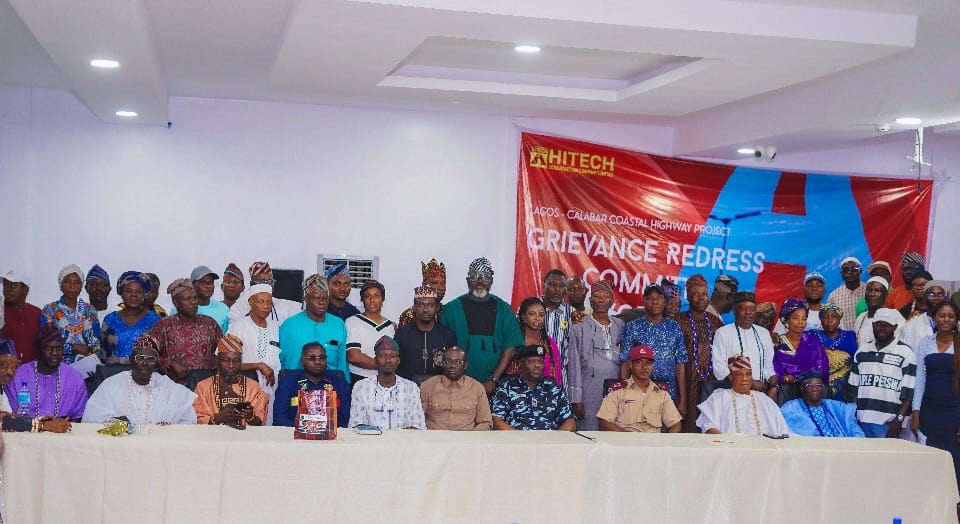
The workshop, held in Lekki, Lagos, centered on the operationalisation of the Grievance Redress Committee (GRC) for the 47.5-kilometre stretch from Victoria Island to Eleko, while an Independent Supplementary Resettlement Action Plan (SRAP) process was conducted on the sidelines by Messrs. Dynasmart Limited, including ongoing field validation activities within affected communities.
The Lagos-Calabar Coastal Highway remains one of Nigeria’s most strategic national infrastructure initiatives, designed to enhance coastal connectivity, stimulate economic growth, unlock investment corridors and strengthen national integration. Being delivered in sections, similar stakeholder engagements are expected to be replicated across other segments as construction progresses.
At the session, the Federal Controller of Works (Lagos), Engr. Olufemi Dare, represented the Federal Ministry of Works and conveyed the goodwill of the Honourable Minister of Works, H.E David Umahi, while acknowledging the strong backing of President Bola Ahmed Tinubu GCFR, for the project.
Engr. Dare described the coastal highway as a critical national asset and clarified key regulatory concerns raised by stakeholders, particularly on the 150-metre right-of-way. He explained that the provision is a statutory regulation determined by the Office of the Surveyor General of the Federation and measured from the centreline of the road, noting that neither the contractor nor the Ministry determines such parameters. The clarification addressed widespread misconceptions and was well received by participants.
Speaking at the engagement, the Community Relations Manager of Hitech Construction – Prince David Omaghomi, emphasized that the GRC represents a structured and transparent platform aligned with global best practices for grievance management. He clarified that the GRC does not interfere with government processes, statutory responsibilities, or matters already before the courts, but serves as a credible mechanism for documenting, tracking and resolving concerns in a fair and timely manner.
He noted that the initiative reflects Hitech’s deliberate commitment to international environmental and social standards, commending the company’s management for aligning with the directive of President Bola Ahmed Tinubu and the Honourable Minister of Works to ensure that major infrastructure projects are delivered with a strong social and human-centred approach.
Stakeholders were given visibility into the grievance register and acknowledged the level of transparency demonstrated by Hitech in tracking and resolving complaints.
On the resettlement component, the Independent SRAP process, led by Professor Pius Adejo, from Dynasmart Limitedwas presented as a complementary framework to strengthen outcomes for Project Affected Persons. The process focuses on verification of affected persons, addressing compensation concerns, identifying any gaps from earlier studies, and developing livelihood restoration strategies. Field activities, including validation visits to host communities, are already underway, with communities expressing readiness to support the process and anticipation for its outcomes.
A major highlight of the engagement was the unified commitment by host communities to support Hitech and security agencies in addressing vandalism and theft along the corridor. Community representatives collectively condemned such acts and pledged cooperation in identifying and reporting offenders, underscoring a shared responsibility to safeguard the project.
The Zonal Command of the Nigeria Police Force, represented by DCP Oriyomi Ajasa, reaffirmed a zero-tolerance stance on vandalism and criminal activity, stressing that offenders would be prosecuted irrespective of status and urging communities to collaborate closely with law enforcement. In line with the mandate of the Inspector General of Police The Lagos State Neighbourhood Safety Corps (LNSC), led by Commandant Hammed Apatira, highlighted its operational presence across communities and its readiness to partner with stakeholders to enhance security along the project corridor.
The Federal Road Safety Corps (FRSC), represented by Kayode Adekunjo, also addressed participants, emphasizing road safety compliance and encouraging stakeholders to utilize reporting platforms for quick response to incidents as the highway becomes operational.
Environmental and sustainability considerations were highlighted by the Nigerian Conservation Foundation (NCF), which is implementing Hitech in implementing the project’s Biodiversity Management Plan. The Foundation outlined ongoing initiatives, including conservation awareness programmes in schools, ecosystem monitoring, and plastic waste management campaigns within host communities, as part of efforts to ensure that environmental safeguards are integrated into project delivery.
Other stakeholders present included representatives of the Iru Local Government, Lagos State Ministries of Works, Environment and Water Resources, and Women Affairs and Poverty Alleviation, as well as professional bodies, civil society organisations, transport unions, market associations, fishermen groups, youth organisations, and representatives of persons with disabilities—reflecting a broad and inclusive stakeholder base.
The session concluded with a strong endorsement of the GRC as a credible and transparent grievance management platform, and recognition of the SRAP as an important step toward strengthening resettlement outcomes. Stakeholders reaffirmed their willingness to collaborate with the Federal Government and Hitech to ensure the successful and sustainable delivery of the Lagos-Calabar Coastal Highway.
Hitech Construction Company Ltd. reiterated its commitment to executing the project in line with global best practices, maintaining transparency, and ensuring that the social and environmental dimensions of infrastructure delivery remain central to its operations.
The workshop marks another significant milestone in strengthening partnerships, building trust, and positioning the Lagos-Calabar Coastal Highway as a truly national project with shared ownership and long-term impact.
Disclaimer
Comments expressed here do not reflect the opinions of Vanguard newspapers or any employee thereof.