By Onyeka Ezike
Guests from across the art industry, alongside enthusiasts, convened at the Nigerian National Museum for the reopening of its newly refurbished gallery. The reopening event, titled “Echoes of the Past: A Timeline of Antiquities in Nigeria,” showcased a thoughtfully curated presentation of the nation’s cultural heritage. The upgraded gallery employs modern exhibition techniques, offering visitors an immersive experience that fosters a deeper connection to Nigeria’s rich antiquities. With its contemporary design, the revitalized space positions the institution alongside leading global counterparts, enhancing both its aesthetic appeal and educational value, marking a significant milestone in the preservation and presentation of Nigeria’s historical legacy. The event was recently held in Onikan, Lagos.
The reopening was held in partnership with IHS Towers, one of the world’s largest independent owners, operators, and developers of shared telecommunications infrastructure.
The company manages over 15,900 towers in Nigeria and more than 37,000 across Africa, Latin America, and the Middle East, while also providing services such as colocation and fibre connectivity.
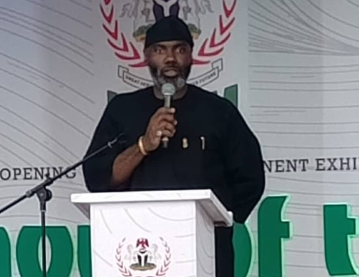
Speaking at the event, the Director-General of the National Commission for Museums and Monuments, Olugbile Holloway, emphasized the significance of the upgraded gallery in reconnecting audiences with Nigeria’s heritage.
He noted that the project reflects a clear purpose, identifying the stakeholders involved, the motivation behind the initiative, and, most importantly, its cultural substance. He commended IHS for supporting the vision with trust and minimal bureaucracy, while praising the museum team for delivering on expectations.
Holloway explained that the initiative aims to revive a collective consciousness of Nigerian heritage and address longstanding indifference toward cultural preservation.
According to him, the museum not only reflects the nation’s history and trajectory but also instils a sense of identity and belonging among younger generations by highlighting the achievements of past civilizations and the symbolic depth of indigenous artefacts.
Among the notable artefacts on exhibition at the Museum was the Nok culture collection (500 BC – 200 AD), representing one of the earliest known iron-working civilizations in West Africa, with origins traced to the Jos Plateau.
The culture is distinguished by both its metallurgical advancement and its agricultural practices, including the cultivation of grains and oil-producing crops.
Another striking piece is the Terracotta Human Figure, which depicts an individual of high status, evident in its elaborate bead ornaments and distinctive coiffure. The sculpture, mounted on a hollow base adorned with facial and human reliefs, portrays the figure holding the heads of snakes, with their bodies draped over its shoulders.
Also on display is the Afo Fertility Figure from Eluyi (1600–1900 AD), a seated wooden female sculpture marked by pronounced physical features and symbolic engravings.
Traditionally housed in a ritual space, it is brought out during the dry season following divination rites, accompanied by offerings such as food and locally brewed beverages. The ritual is believed to ensure agricultural abundance, communal well-being, and safe childbirth.
The Bush Cow Headdress of the Chamba (Mumuye) people (1600–1800 AD) is another significant exhibit. Used in funerary rites, ceremonies, and rites of passage, the headdress is believed to guide the souls of the deceased and protect communities from malevolent forces and disease.
The Interior designer for the Museum, Tinuke Odunfa, explained that the gallery’s thematic layout presents a chronological journey through Nigeria’s artistic evolution, guiding visitors through exhibits in a clockwise sequence.
She noted that her exposure to leading global institutions, including the Louvre Museum, the British Museum, the Metropolitan Museum of Art, the Vatican Museums, and the National Museum of Anthropology, informed her approach to designing a world-class exhibition space within Nigeria.
Odunfa added that the project was driven by a desire to demonstrate that Nigeria can effectively preserve and present its cultural heritage to international standards. She emphasized the importance of telling indigenous stories within their authentic context while maintaining global best practices in conservation and display.
Also speaking at the event, the Chief Corporate Services Officer of IHS Nigeria, Dapo Otunla, highlighted the importance of safeguarding cultural assets.
He noted that while Nigeria’s artefacts and monuments carry global significance, access has historically been constrained by infrastructural and geographic limitations.
Otunla stated that, following IHS’s collaboration with the commission to digitize the museum and support the launch of Nigeria’s first digital museum of antiquities, the company deemed it necessary to further enhance the physical infrastructure. He reaffirmed IHS’s commitment to connecting present and future generations with their cultural heritage, while also creating a safe and enriching environment for tourists, researchers, and the general public to engage with Nigeria’s history.
Disclaimer
Comments expressed here do not reflect the opinions of Vanguard newspapers or any employee thereof.