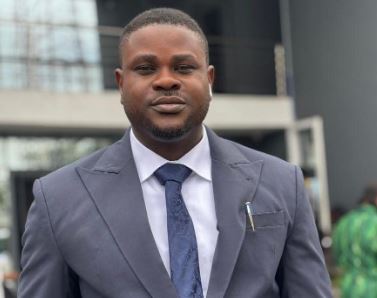
Dr. Ganiu Abisoye Bamgbose (Dr. GAB)
By Ganiu Bamgbose, PhD
I personally think there should be another name for books in soft copies. I am sorry but for me those are not exactly books. Maybe they should be called PDFs as popularly called or at best materials. It is okay to call me primitive on this. I think of books in terms of hard copies. A book is for me that bound document thay I can underline its words, sniff its smell, write on its edges, pause to reflect on its postulations and hold close to my chest. A book is what I connect with spiritually, find comfort with in my lone time and stay glued to in my private space. I do not desire that this meaning of book as something that can be touched, smelt, felt, talked to and played with becomes obsolete while I still live.
You will share my concern as an academic or researcher if you think of the last time you found any student holding a dictionary in your institution. You may equally be shocked by the number of your undergraduate students who do not have a dictionary and who may not be able to find a word in a dictionary. Reading lists have become mere rituals on the course outline. Students now buy books only when there is an implication. People’s libraries are now on their computers.
Before this time, a personal library with 30 books meant an encounter with an avid reader. These days, a computer with a thousand PDFs does not even guarantee that the owner can problematise a study. Books were once sacred. Access to them was a privilege and abusing them was sacrilegious. There are professors who still have their undergraduate notes but we are raising students who only write in jotters and who fling such jotters on the corridor while in the queue to the exam hall. When I see jotters everywhere in my classes, I ask my students if they would have ever written in school if people had not died or celebrated birthdays. Dear scholars and colleagues, is this the legacy we desire?
I was astonished by a post made by a popular young Nigerian social media influencer, Enioluwa (called the lipgloss guy), where he celebrated getting his 1000th book. Enioluwa is on his PhD and that post of his portrayed him as one who understands the business of research. It is worth adding that a personal library is not even an exclusive possession or lifestyle of scholars or academics. A personal library should be cherished by everyone who cares about their personal growth. It must contain sections with different genres of books. The acclaimed Nigerian comedian Ali Baba (Atunyota Alleluya Akpobome) has been reported to own an “enviable library,” which has been highlighted as part of his dedication to research, knowledge, and intellectual development within the comedy industry. Former Nigerian Minister of Finance, Kemi Adeosun, once shared a video showcasing a towering collection of over 1,000 books she has read, describing it as a personal symbol of lifelong learning. And by that she meant books, not PDFs.
This piece is not in any way to discountenance the relevance and several advantages of PDFs; it is to argue that they are not substitute for the ownership of physical libraries, however small that space is. Libraries build people, shape intellects and guide your today and your tomorrow. I often take pride in saying my inheritance from my stepdad was a 1974 book I picked on his shelf which I can proudly say is in the possession of less than 100 people in the whole of Nigeria. I hope to include it as part of my will to my most intellectually-inclined child.
I end this piece on a note of appeal to those who share my sentiment to kindly join the crusade on the need for young people to buy, own and read books, and build for themselves a space that can be called a library. As Ernest Hemingway posited: there is no friend as loyal as a book. Let us resuscitate the love for books.
Ganiu Bamgbose writes from the Department of English, Lagos State University.
Disclaimer
Comments expressed here do not reflect the opinions of Vanguard newspapers or any employee thereof.