…warns against poverty, misinformation
By Joseph Erunke
ABUJA — Former Minister of Information and Culture, Alhaji Lai Mohammed, has declared that democracy, despite its flaws, remains the most reliable system of governance, urging deeper investments in education and social development to strengthen its outcomes in Nigeria.
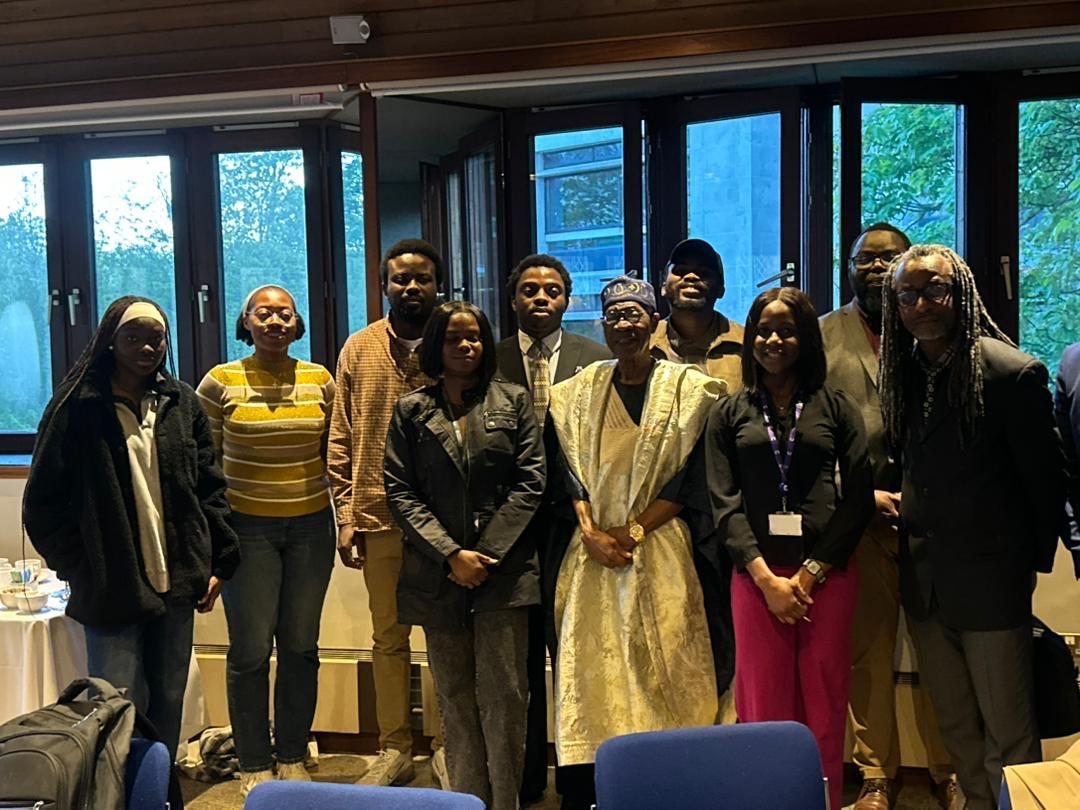
Speaking at a high-level interactive session at St John’s College, Cambridge, organised by the Cambridge University Nigeria Society, Mohammed engaged Nigerian students and scholars in a wide-ranging discussion on governance, insecurity and the evolving role of communication in the digital age.
According to a statement by his media office,through its Head, Nnamdi Atupulazi, the former minister argued that criticisms of democracy, particularly in societies with low educational penetration, often miss the real issue.
According to him, the challenge lies not in the principle of equal voting rights, but in the socio-economic realities that shape voter choices.
“Improving access to education, healthcare and infrastructure, especially in underserved communities, is critical to making democracy work better,” he said.
Linking insecurity to social exclusion, Mohammed noted that insurgency and banditry are fueled by poverty, illiteracy and marginalisation.
He cautioned against relying solely on military force, advocating instead for a comprehensive strategy that combines security operations with education and economic empowerment.
In a major highlight of his address, the former minister described communication as the “lifeblood” of governance, stressing that no government can succeed without strategic, transparent and credible engagement with its citizens.
“Communication is not a supporting function of governance,it is central to it. It is how policies are explained, trust is built and legitimacy is sustained,” he stated.
Drawing from his experience as both opposition and government spokesperson, Mohammed pointed to a dramatic shift in political communication, driven by the rise of digital platforms.
“We have moved from top-down messaging to real-time public conversation. Citizens now interrogate and shape narratives. Governments must adapt by being more transparent, responsive and consistent,” he said.
Reflecting on his tenure, he highlighted the deployment of multi-platform communication strategies,spanning traditional media, digital channels and direct citizen engagement,as a defining feature of the administration he served.
“We moved from one-way broadcasting to meaningful engagement, where feedback from citizens informed governance,” he added.
Citing insights from his book, Headlines and Soundbites: Media Moments That Defined an Administration, Mohammed illustrated how communication shaped key national and international outcomes.
He described Nigeria’s COVID-19 response as a case where communication proved decisive in the absence of vaccines and treatment at the early stages of the pandemic.
“At that time, communication was our strongest weapon. It drove behavioural change,mask-wearing, social distancing and hygiene,and helped limit the impact of the virus,” he said.
On the controversial $9.6 billion P&ID arbitration case, he revealed that the government adopted a dual strategy of legal action and aggressive media engagement to win both in court and in global public opinion.
“We were not just fighting a legal battle; we were also reshaping the narrative to expose the case as fraud against Nigeria,” he explained.
Addressing the EndSARS protests, Mohammed warned about the dangers of fake news and disinformation, noting that the digital era has accelerated the spread of unverified information capable of escalating crises.
“The speed of misinformation today can inflame tensions and distort reality,” he cautioned.
He also revisited the Federal Government’s decision to suspend Twitter (now X), describing it as one of the toughest calls of his time in office.
“It was a difficult decision with clear economic and social implications, but public interest and national security had to come first,” he said.
According to him, these experiences reinforce a critical lesson: in times of crisis, communication is not optional but indispensable.
Mohammed is currently on a three-day speaking tour of the United Kingdom, with engagements at Abbey College Cambridge, St John’s College, Cambridge, and the London School of Economics, where he continues to share insights on governance, media and Nigeria’s democratic journey.
Disclaimer
Comments expressed here do not reflect the opinions of Vanguard newspapers or any employee thereof.