By Chioma Okoye
For years, African science and tech conversations have returned to one stubborn line: there is no African data. It is said in conference halls, startup rooms, research circles, and policy meetings, often with equal parts frustration and fatalism.
But the founders of Datum Africa believe that sentence, while familiar, has become too easy. Not because the problem is false, but because it is incomplete.
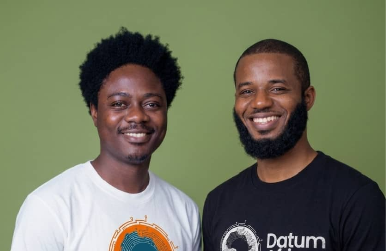
Datum Africa was co-founded by Anda Usman and Samson Ajao to help close the gap between data rhetoric and real data systems in Africa. The founders argue that the challenge is not only that data is missing. It is also that available data is scattered, hard to discover, difficult to verify, and often not structured for practical use.
Some data has never been collected. Some exist in fragments. Some sit in physical archives and libraries. Some remain on private systems or behind institutional walls. Some are collected but never curated into forms people can trust and apply.
That is the gap Datum Africa was founded to address.
With a long-horizon plan, the organization has set a target that sounds ambitious by design: open 10 million African datasets in 10 years. For the founders, this is not a slogan. It is an execution commitment.
“We cannot keep repeating the same problem statement for decades,” Anda said. “We have to build systems that help people find, trust, and use African data at scale.”
The build is already underway. Through their dataset portal, Datum Africa is creating a search and access experience for open African datasets. The organization arm also coordinates broader institutional work, programs, partnerships, and collaboration pathways.
The team says the project entered a clearer public rollout phase in 2025. Around the platform layer, Datum Africa is expanding volunteer participation, running programs like Research Saturday, and developing publications tied directly to open-data practice on the continent.
The premise is straightforward: better decisions require better evidence systems.
When data is inaccessible or unreliable, governments mis-target interventions, programs miss communities, and innovators solve problems with partial visibility. The costs are practical, not theoretical.
Datum Africa positions open data as foundational infrastructure, the kind that must be built patiently, governed responsibly, and improved collectively. The organization is inviting collaboration from researchers, institutions, funders, civil society, and public actors who want to move from data rhetoric to data systems.
In many ways, the organization is trying to change the grammar of the conversation:
from “there is no African data” to “here is how we build it, open it, and use it.”
Ten million datasets in ten years is a long horizon. Datum Africa’s argument is that long horizons are exactly what this problem has always required, and that the work has to start now.
Disclaimer
Comments expressed here do not reflect the opinions of Vanguard newspapers or any employee thereof.