By Emmanuel Elebeke
In a political landscape often dominated by campaign slogans and promises, renowned legal practitioner Balarabe Ahmad has made a strong case for competence as the defining factor for leadership in Adamawa State.
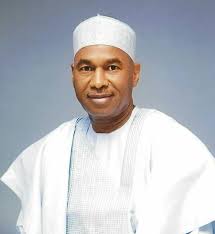
Throwing his support behind Ahmed Galadima Aminu, Ahmad argues that the state urgently needs a technocrat with a proven track record rather than another cycle of election-season rhetoric.
Speaking in an interview with Daily Trust, Ahmad described Aminu as a timely solution to what he called Adamawa’s long-standing leadership gap since 1999. According to him, the state has witnessed no shortage of political promises, but has consistently lacked technically grounded leadership focused on sustainable human development.
Ahmad highlighted Aminu’s extensive career at the Petroleum Technology Development Fund (PTDF), where he rose from pioneer staff to chief executive over more than two decades. He emphasized that under Aminu’s leadership, the agency significantly expanded its mandate of building human capacity in the oil and gas sector. Thousands of professionals, including engineers, geoscientists, and technicians benefited from scholarships, training programs, and research opportunities, many of whom now form a critical part of Nigeria’s energy workforce.
Beyond professional achievements, Ahmad underscored Aminu’s personal qualities, describing him as a leader who combines empathy with discipline. He portrayed him as someone who listens, values people, and treats public office as a trust, while also maintaining firm standards and accountability. According to Ahmad, this balance is exactly what Adamawa’s diverse population civil servants, farmers, traders, teachers, and youth needs.
He also pointed to Aminu’s consistency, noting that unlike many politicians, he has remained engaged in institution-building and service delivery since 1999, rather than appearing only during election cycles. For Ahmad, this long-term commitment reflects a deeper understanding of development as a gradual and demanding process.
Addressing concerns about whether a technocrat can navigate Nigeria’s complex political terrain, Ahmad argued that the current moment calls for competence and results over mere political survival skills. He maintained that Aminu is not just a policy designer but an effective executor, a distinction he believes is critical for governance.
Outlining Aminu’s vision, Ahmad said it focuses on human capital development aligned with global development goals. Key proposals include establishing vocational and technical hubs across the state’s three senatorial zones, linking education to industry needs, retraining teachers and health workers, and creating clear pathways from schooling to employment in sectors such as agriculture, ICT, construction, and manufacturing.
On the issue of insecurity, Ahmad emphasized the role of economic opportunity, particularly for young people.
He argued that unemployment remains a major driver of instability in the North-East and proposed demand-driven skills training, apprenticeships, and job pipelines that could transition youths into paid employment within a year. According to him, providing legitimate opportunities for income and dignity is essential to reducing crime and violence.
In conclusion, Ahmad framed the upcoming political decision as a choice between continuing with familiar political patterns or embracing a results-driven approach. After years of what he described as “politics as usual,” he urged voters to prioritize a proven record over promises, positioning Aminu as a candidate whose experience in building human capacity at a national level could now be redirected toward transforming Adamawa State.
Disclaimer
Comments expressed here do not reflect the opinions of Vanguard newspapers or any employee thereof.