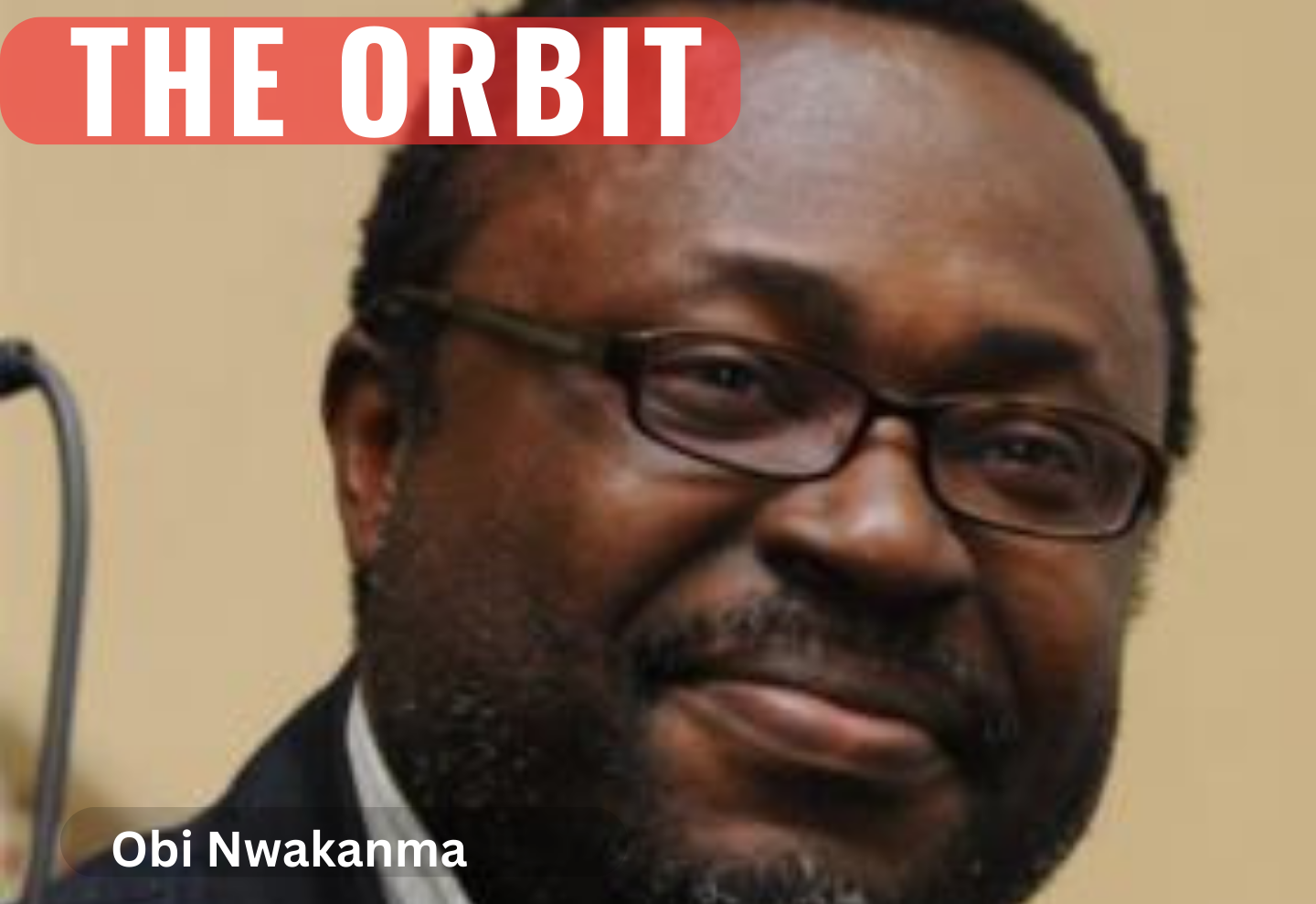
Obi Nwakanma
There are these times when uttering words feel too overwhelming, because words sometimes weigh like stones. Such moments are like now, when we must make offerings to the memory of a man like Biodun Jeyifo – BJ for short. At his death, I was too tongue-tied to make appropriate tribute.
In these times, when vulgar politics has sullied all values, men like Jeyifo who signaled the primacy of the intellect, and of humane pursuits, and particularly the humane letters, and the humane ideas that seek the build nations, seem irrelevant. The literature of a nation–its body of ideas-become irrelevant when the nation itself has disappeared or at the cusp of disappearance. Literature is a tool for nation building and nation-consciousness. Nigeria is a nation in regression. It is a victim of what Jeyifo himself discerned, in one of his most lucid moments as “arrested decolonization.”
Biodun Jeyifo was one of those embodiments of the true revolutionary spirit of an age; of intellectuals of my generation, who seemed to us – young, idealistic folk of the ‘80s-in those years when we were truly primed to the work of the public imagination, to be what ancient sailors called the Port of Alexandria– Eunostos–the‘port of safe returns. ’Biodun Jeyifo was one of those men of letters with whom we walked ashore to revolutionary or liberatory ideas. The idea of nation. The idea of commitment. The idea of literary authority beyond subalternity. The idea of the sovereign imagination. The idea of an African aesthetic rooted in the cosmopolitan values of Marxism, to which he did not actually find contradiction, but which he gave very clear, dialectical interpretations in his own lucid, but also usually coruscating writing.
He was to flinch from Marx years later, but not from a distinct interpretation and interrogation of colonialism and its roots in modern capitalism, and the cultural crisis of modernity. Biodun Jeyifo was not Yoruba by ancestry, he was of what was then called the Kukuruku, but he inserted himself firmly into Yoruba life, by the fact of his birth in the city of Ibadan, which was resolutely, culturally his. I too was born in Ibadan. He was in fact, one of the two people who used to call me, “Ara ‘badan” – in his case, he would say, “Marinus-Ara ‘Badan!” anytime he saw me, and I greeted him, from the moment in 2003 when I first fully met him at Cornell University at Ithaca, New York, during a conference organized at Cornell by his now equally late friend and colleague, and teacher of mine, Don Ohadike.
But his large reputation preceded him. I was very shocked and amused in fact, in that first meeting at Ithaca, by the rambunctious meddling of this wiry, bohemian character, who had a very fierce opinion about every literary point. He seemed then to me like a leprechaun, going in and out of sessions, of debates, and of the fight or battles for ideas. His was theoretically grounded on the radical epistemology. But at this point, it was neither left, nor right, nor center. It was revisionist – much like the thinkers of the Frankfurt School. That was what I thought of, at that first impression of him. I was both impressed and critical. But I was also a bit more flattered when after the conference, BJ came over to me and said very good things about my discussion on Okigbo. I had just concluded the MFA in Poetry, and BJ actually said,“if you’re thinking of the PhD, you should think of Cornell, and let me know…” I was thinking of Harvard.
But for all kinds of existential exigencies, I had to bat for Saint Louis. Noregrets. But in hindsight, I would have been very fortunate, and possibly more illumined, had I taken up BJ’s offer, and worked with him. But that was the kind of intellectual he was. He grew in the era of the great giants of African literature, and was in his own right, among the giants of modern African letters.
Born in Ibadan in 1946, Jeyifo’s trajectories followed the footsteps of the giants. He found himself, breaking from the pathway of the formal modernity of Obumselu, in his foundational teleology on the discourse of Modern African literature, or Echeruo’s very “Euromodernist” formalism before his eventual turn, or Abiola Irele’s, structural, narratological and phenomenological approach grounded in the French “La nouvelle critique,” or Nwoga’s traditionalism, or Obiechina’s excavatory criticism, or even Anozie Structuralism because of the influence of his teacher Roland Barthe, towards establishing the very tradition of Marxist criticism in Nigerian literature,andbatting,alongside the “bolekaja” troika of Chinweizu, Madubuike and Jemie, to constitute the grounds for “decolonizing” the discourse of modern African literature. BJ’s brand of the public intellectual was Herculean and engaged. His activism sprung, not only from the metalangue of poetry, but by the uprisings of street protests in a most dramatic period, and of a dramatic and febrile city, Ibadan, at the onset of nation.
He was thus quintessentially Gramscian – engaged and organic. He was born in Ibadan on January 5, 1946, and by design, ended in Ibadan on 11 February, 2026. In 1966, he was admitted to the University of Ibadan to study English. But his love of Wole Soyinka drew him to Drama. As he himself confessed, “I wanted Soyinka to be my teacher.” And so was he, even if only by his occasional presence in class and on campus, whenever his own brand of public drama and social activism allowed him. Everybody knew that the Playwright, his teacher, was in regular entanglement with the subversive politics of the mid- 1960s.
Ibadan was its cauldron. BJ was a very conscious teen in Ibadan of the “wild, wild West’: that era of incendiary politics and “Wetie!”, that pitched the people against the tide of power following decolonization. This period helped in very significant ways to shape Jeyifo’s political commitments and ideological consciousness. Like Soyinka’s own father, Jeyifo’s father was a life-long NCNC – the nationalist party of Nnamdi Azikiwe. The city of Ibadan itself was a “Zikified city.” But by the time of his emergent and rising political consciousness, the image of Awolowo as “Palinurus” held in his “empty catacomb”, as the poet Okigbo describes him in “Limits,” held sway in Jeyifo’s mind, and in the mind of his own generation, who saw in defiance, the radical alternative to compromise. Years and later events might have whittled the image, but by 1967 Biodun Jeyifo was among the young Pyrates on the campus of the University of Ibadan, engaged in the active politics of defiance, and subversion; holding the mast at the absence of “Cap’n Blood,” who was himself imprisoned, and held in his own empty catacomb, by 1967, following his visit to Biafra, and the errands he ran for Colonel Banjo, from Benin.
Wole Soyinka has described these events in intriguing detail in his memoirs – from The Man Died, to Ibadan: the Penklemes Years, and You Must Set Forth at Dawn. What has often not been discerned in that narrative is that Jeyifo was among his young runners. I have heard, although could not confirm, the story of how Jeyifo was among the young radicals, who alongside the likes of Eddie Madunagu, began to build a corridor and supply routes to welcome the Biafrans through Okitipupa, and setting up an active commune at Aiyetoro – which was abandoned later. The story of the Aiyetoro commune was hinted on in Soyinka’s 1973 novel, Season of Anomy, and the story of Ofeyi and Iriyise. The point of all this is to ground Jeyifo on the radical front of the Nigerian national imaginary.
With a First class degree in English from Ibadan in 1970, he went on to New York University (NYU) for graduate school; returned to Ibadan where he taught, and went to Ife, to its
English department. He made his marks at Ife, and was a key figure in what was then famously known as “The Ife Collective,” which in due course, following the Nigerian factor, ultimately ran out of steam.
Jeyifo’s leadership of ASUU, his spats with the military dictators who began to “unbuild” the Nigerian university system in the mid- 1980s, and his ultimate escape from Nigeria to teach in some of America’s most prestigious universities, tell the story, in very close terms, of the tragedy of Nigeria, and its unfinished decolonization. The rest is, of course, history. The years most certainly fled from us.
It is now really very startling that the last time I actually saw BJ was at the African Literature Association Conference in Bayreuth, Germany, where he, with his friend, the playwright, Femi Osofisan, rescued me from the wrath of the great Ghanian literary matriarch, Ama Ata Aidoo, who flared mightily at me for writing the biography of Christopher Okigbo without talking to her. “How dare you?” she said, with great choler, and shoed me away from her and from further conversation. It took Jeyifo and Osofisan’s gentle prodding and remonstrances to lower her sails. It was a palliative act: part theatre, part diplomacy. I think back to those now precious moments, and it strikes me, how true is the saying among my Igbo people, who insist that time is a beautiful bride. You lie with her and close your eyes. The next time you wake and open your eyes, you wonder who or what spirit lies besides you. Time flies, to put it simply. It is irrecoverable and irrevocable. Our time with Jeyifo has now been spent. We measure him now, by the now timeless place he occupies in the canon of African letters, and his impact in the shaping of the African imagination, in a most productive and dramatic era.
Disclaimer
Comments expressed here do not reflect the opinions of Vanguard newspapers or any employee thereof.