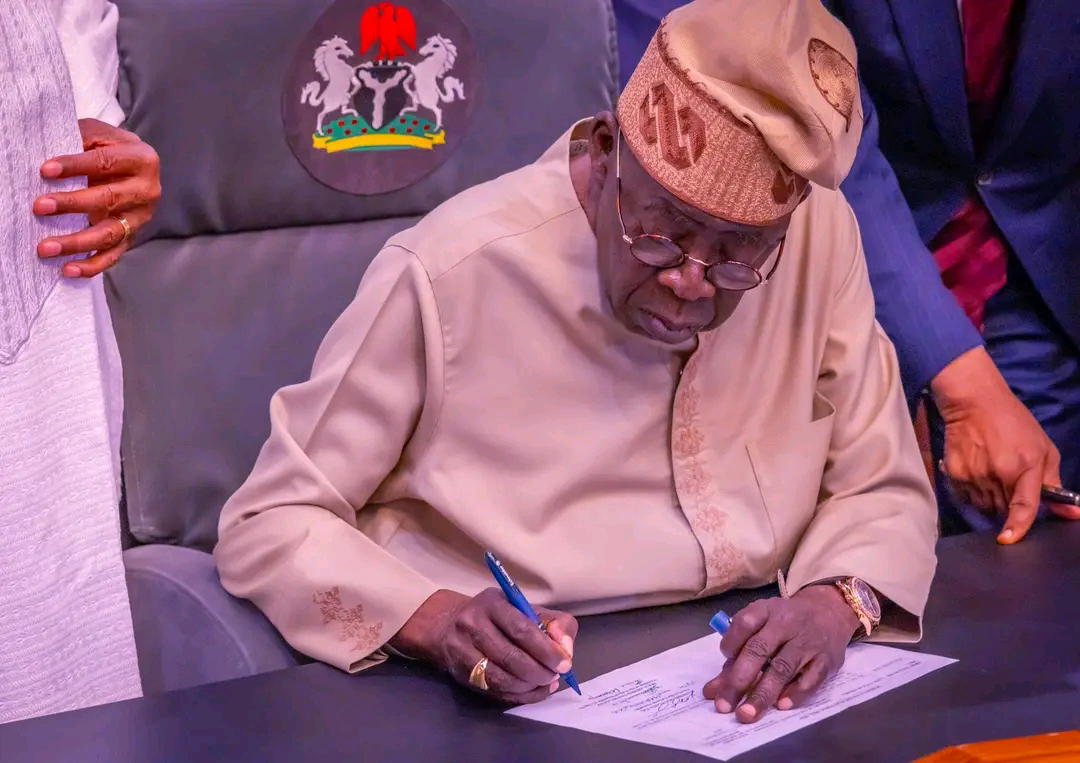
Group of civil society organisations and opposition political actors, under the aegis of the Pan-Nigeria Civil Society Organisations and Opposition Alliance, PANCSOA, has expressed concern over the African Democratic Congress, ADC’s, decision not to outrightly zone its presidential ticket to the South, warning that President Bola Tinubu could secure an easy victory in 2027 if the zoning arrangement is not respected.
PANCSOA lamented the confusion and disorganisation within the ADC, saying the situation was making Tinubu’s re-election more likely.
The group also condemned the resurgence of violence in the country, describing it as politically motivated and engineered by politicians desperate for power.
Rising from a strategic stakeholders’ deliberation held in Abuja, the Federal Capital Territory, speakers at the meeting, including the Executive Director of the Northern Female Education Campaign, NOFEC, Fatima Abbas; a member of the Steering Committee of the Coalition of United Political Parties, CUPP, Igwe Benjamin; President of the Federation of Political Parties and Associations, FEPPA, Mark Adebayo; Programme Officer of the Secure World and Liberty Initiative for Peace, SELIP, Victor Terhember; Deputy National Chairman of the Zero Corruption Agenda, ZECA, Danesi Momoh Prince; Acting National Chairman of the Committee for Human Rights and Anti-Corruption, CHRA, Tosin Olorunfemi; and Olaosebikan Aina of The Common Man’s Movement of Nigeria, COMAN, said the group would unveil its preferred candidates at an upcoming national convention involving over 500 political, civil society, and faith-based organisations collaborating on a nationwide campaign.
The statement reads: “PANCSOA condemns the resurgence of politically motivated violence in the country, which studies have shown typically escalates as elections approach. This pattern has been evident in past elections and has become particularly pronounced since the 2015 general elections. Terrorism and banditry in Nigeria appear to have significant political underpinnings, often engineered by power-seeking politicians and external interests bent on exploiting the country’s vast natural resources, as seen in parts of Africa, particularly the Congo. These threats must be decisively addressed.
“The deliberation recognised that defeating terrorism and banditry cannot be left to the government or military alone and called for greater citizen involvement in supporting the armed forces. We urge wealthy individuals to establish foundations to support injured military personnel, as well as the families of those who have paid the ultimate price in service to the nation. Timely action based on credible intelligence is also critical to preventing attacks and minimising loss of lives and property. Nigeria can overcome these challenges if all citizens play their part.
“One of the most significant developments in the current dispensation is the emergence of a coalition. As civil society and opposition actors, we believe every democracy requires a vibrant opposition to remain legitimate. While opposition activities have increased recently, particularly within the coalition, the opposition landscape remains fragmented, with many political parties operating independently rather than speaking with one voice.
“We have observed a pattern of self-sabotage driven by the ambitions of multiple presidential aspirants, rather than a coordinated effort to support a widely acceptable candidate. Internal disagreements among supporters of different aspirants have further weakened the coalition.
“The biggest error the opposition is currently making is its failure to zone its presidential ticket to the South. This has already created doubts among supporters, recalling the internal crisis that affected the Peoples Democratic Party (PDP) in 2022 after it abandoned its zoning principle. The current coalition appears to be repeating the same mistake, effectively giving the incumbent administration a clear path to victory in 2027, given its strong political structure and nationwide reach.
“The coalition has also shown a lack of foresight in failing to anticipate and address its internal challenges. Even if external forces are contributing to these issues, proactive measures should have been taken. Competing ambitions, weak grassroots mobilisation, and the inability to present clear policy alternatives remain major obstacles for the opposition ahead of the elections.
“While acknowledging that the country still faces serious challenges in security, the economy, and ethnoreligious divisions, the forum believes Nigerians may have little choice but to return the incumbent, given the apparent disorganisation within the opposition.
“Finally, the forum resolved that, following ongoing national consultations, it will unveil its preferred candidates at a national convention involving over 500 political, civil society, and faith-based organisations. At this stage, President Bola Tinubu remains our primary focus.”
Disclaimer
Comments expressed here do not reflect the opinions of Vanguard newspapers or any employee thereof.