By Providence Ayanfeoluwa
Industry stakeholders have identified poor standardisation, weak logistics, and policy imbalances as major barriers to intra-African trade, urging governments across the continent to prioritise value addition and seamless movement of goods.
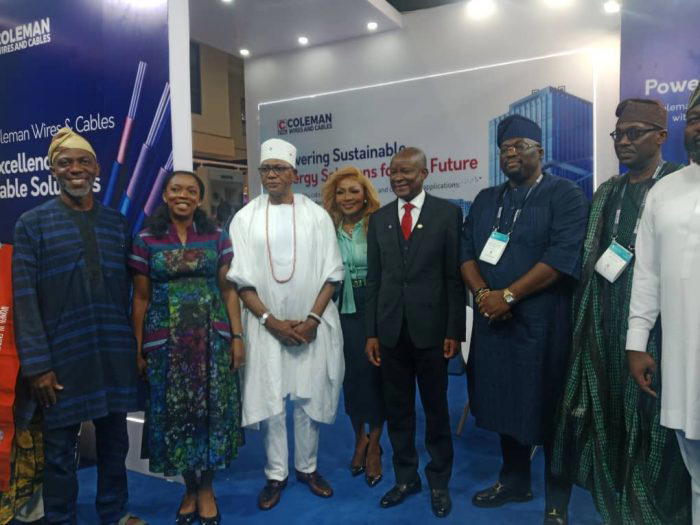
Managing Director/Chief Executive Officer of Coleman Technical Industries Limited, George Onafowokan; Vice President of the World Trade Center Lagos, David Oke; Taiwo Ajetunmobi representing the Nigeria-China Strategic Partnership; Founder and Chief Executive of SeedaTree Capital, Bowale Adeoye; and Founder/Chief Executive of Matta, Mudiaga Mowoe, spoke during a panel session at the just concluded West Africa Industrialisation, Manufacturing & Trade Summit & Exhibition held in Lagos.
Speaking, Onafowokan identified lack of harmonised standards and persistent logistics bottlenecks as the biggest obstacles to intra-African trade.
He stressed that while progress has been made in standardisation, products approved in one country should be accepted across others to ease business operations.
According to him, certification is not the main challenge; rather, the movement of goods and people across borders remains a pressing issue, pointing multiple border charges, poor road networks, and policy inconsistencies as factors that continue to frustrate trade within West Africa and the continent.
Onafowokan said many countries treat border crossings as revenue sources, which undermines seamless trade, even as he emphasised that improved container transport systems and simplified logistics are essential for unlocking the full potential of intra-African commerce, urging policymakers to prioritise integration over barriers.
He emphasised the need for African countries to move away from exporting raw materials and instead focus on building competitive regional supply chains.
Drawing a comparison with China, he noted that although the country imports about 40 percent of the world’s copper, it processes and exports finished goods at significantly higher value.
He said: “They buy raw materials, process them into finished products, and export them at multiple times the original value. That is how you build a strong trade balance,” he explained.
He lamented that Africa continues to export crude oil, cocoa, and other raw commodities only to import refined petroleum products and finished chocolate at higher costs.
“It does not make sense that we see ourselves as the world’s raw material source and the biggest consumers of the finished products made from those same materials,” he said. “Until we wake up and prioritise value addition, our non-oil exports will never surpass oil exports.”
However, he called for balanced trade policies that encourage local manufacturing rather than import dependence, saying: “We should encourage the importation of raw materials duty-free if they will be processed locally, but discourage the export of unprocessed materials”.
He said with over 70 percent of Nigeria’s population below 25 years, the country must adopt policies that drive job creation through manufacturing and industrial growth.
“Government should be the enabler, not the driver of business. The private sector drives business, while government creates the environment,” he said.
On global economic developments, he warned that geopolitical conflicts, including tensions affecting global oil markets, could negatively impact manufacturing through rising energy and logistics costs.
He said “In any conflict scenario, crude oil prices rise, and that affects energy, transportation, and production costs across industries. We hope it remains temporary”.
Disclaimer
Comments expressed here do not reflect the opinions of Vanguard newspapers or any employee thereof.