… Performs 350 dialysis sessions monthly amid rising kidney cases
By Chioma Obinna
On this year’s World Kidney Day, Nephrologists have warned that late detection of kidney disease is pushing many Nigerians into costly treatment that can consume up to N1 million monthly, as cases of chronic kidney disease continue to rise across the country.
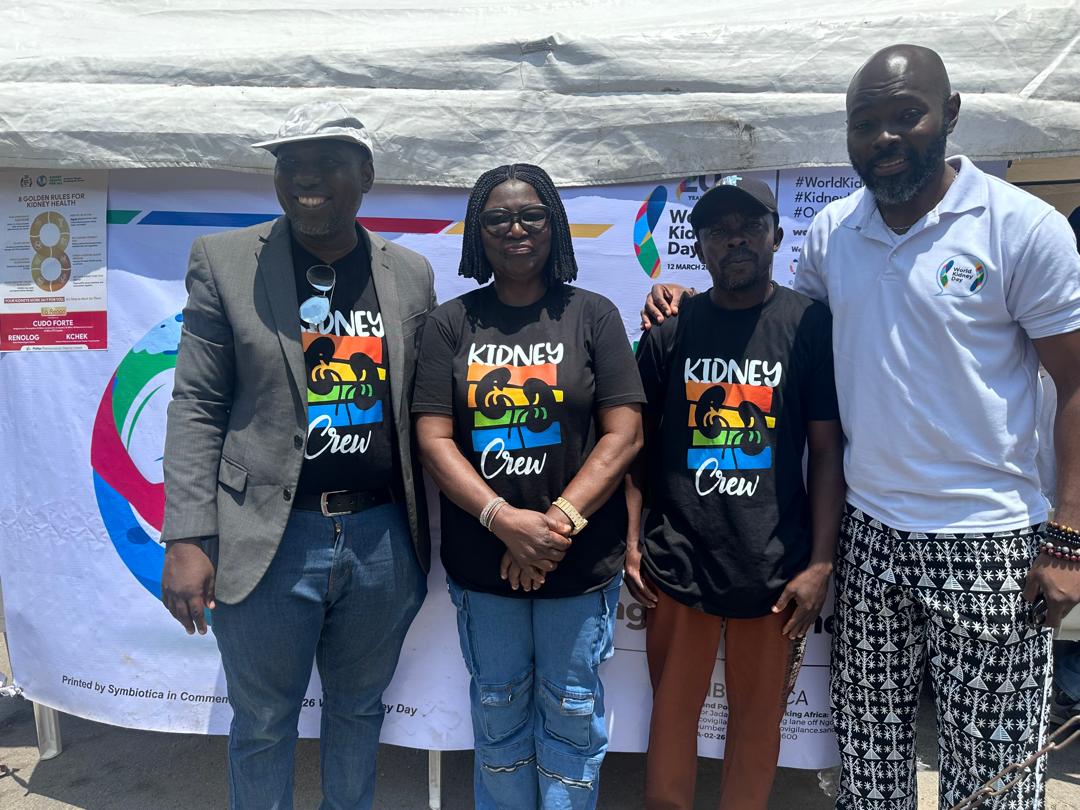
The warning came Thursday as specialists at the Federal Medical Centre, FMC, Ebute Metta, Lagos, marked this year’s World Kidney Day with a community awareness walk and free medical screening aimed at detecting early signs of kidney disease.
In an interview with Vanguard, the Nephrologists lamented that kidney disease remains one of the most dangerous yet overlooked health conditions because it often develops silently without early symptoms.
In his submission, Consultant Nephrologist, Dr. Nmadu Danladi, who noted that every second Thursday of March every year is set aside to remind people about their kidneys said people often think about the heart or the liver, but the kidneys are easily forgotten, perhaps because they are hidden at the back of the body.”
Danladi explained that many patients only discover the disease when the kidneys have already suffered severe damage.
“The truth about kidney disease is that you may not know anything is wrong until the kidney is almost completely damaged. It does not show early signs, which is why many patients present very late.” Danladi warned that the financial burden of kidney failure is devastating for most Nigerian families.
“Kidney failure is extremely expensive. It costs not only the patient but also relatives around them in terms of money and time. Roughly speaking, the treatment of kidney disease can cost about N1 million every month,” he said.
According to him, dialysis alone costs between N40, 000 and N50, 000 per session in many hospitals, with patients requiring multiple sessions weekly to survive.
However, he noted that the Federal Government’s dialysis subsidy programme has helped to ease the burden on patients at FMC. “In our centre, dialysis has been subsidised to about N12, 000 per session. You can imagine the gap the government is bridging by bringing the cost down from about N50, 000 to N12, 000,” he said.
Danladi revealed that the hospital now carries out between 300 and 350 dialysis sessions monthly due to the increasing number of patients. “On average we perform about 20 to 25 dialysis sessions daily, and we see about two to three new emergency cases of kidney failure almost every day,” he said.
He explained that kidney disease progresses in stages and can often be managed if detected early.
“When patients are diagnosed in stages one to three, there is a lot we can do with medication and lifestyle changes to slow down or stop progression to kidney failure,” he said.
Danladi urged Nigerians to adopt simple lifestyle measures to protect their kidneys.
“We advise people to drink plenty of water, reduce salt intake, cut down on red meat and increase vegetables in their meals. Ideally, vegetables should make up about half of the plate,” he said.
He also emphasised the importance of routine screening.
“The tests are very simple. We conduct a blood test to check creatinine, which is a waste product removed by the kidneys. We also do a urine test and imaging to see how the kidneys look and whether there are blockages,” he said.
According to him, adults without underlying health conditions should check their kidneys at least once a year from the age of 40, while people with hypertension, diabetes or a family history of kidney disease should begin screening earlier.
“The most common cause of kidney damage in Nigeria is hypertension, followed by diabetes. If you have any of these conditions, you must check your kidneys regularly,” he said.
Also speaking, Consultant Nephrologist at FMC, Dr. Muyideen Orolu, described kidney disease as a silent condition that often progresses without warning signs.
“Most patients do not have symptoms until the kidneys have already failed. That is why awareness and early screening are extremely important,” he said.
Orolu said the hospital organised community outreach activities to detect hidden cases of kidney disease.
“We began the day with an awareness walk within our community and invited residents to return to the hospital for free health screening. We are checking blood pressure, blood sugar and conducting urinalysis to identify people who may be at risk,” he said. He warned that the indiscriminate use of medications and herbal mixtures is worsening the burden of kidney disease in the country.
“Many people use antibiotics, painkillers and herbal concoctions indiscriminately. These substances can be very harmful to the kidneys,” he said.
Orolu emphasised that early detection is the only true way to salvage the nation’s health. He recommended a “1, 2, 3” check-up at least once a year for those over 40. This includes a blood test to check creatinine waste levels, a urine test to see how the kidney is filtering, and medical imaging to take a picture of the kidney to look for blockages.
Speaking, Assistant Director of Nursing and Head of the Dialysis Unit at FMC, Mrs. Ogunleye Julianah Monisola, said hospitals are witnessing an alarming increase in kidney disease cases.
“Kidney problems are now very common. In fact, in the hospital we see them almost as frequently as malaria,” she said.
She blamed late presentation for the large number of severe cases seen at health facilities.
“Most patients come very late when the disease has already reached the end stage. Only a few patients present early when the condition can still be managed,” she said.
Monisola also warned against the misuse of over-the-counter medications and unhealthy lifestyle habits.
“Many people take painkillers such as paracetamol and ibuprofen without prescription. Excessive use of these drugs can damage the kidneys,” she said.
She also cautioned against excessive consumption of sugary drinks, alcohol and unregulated herbal mixtures.
“Herbal mixtures are dangerous because there is no proper measurement and many contain toxins that can damage the kidneys,” she said.
She urged Nigerians to prioritise preventive healthcare through regular medical checkups, adequate hydration, balanced diets and sufficient rest.
“People should not wait until they break down before checking their health. If kidney disease is detected early, it can be treated and managed before it progresses to kidney failure,” she said.
Disclaimer
Comments expressed here do not reflect the opinions of Vanguard newspapers or any employee thereof.