By Providence Ayanfeoluwa & Cynthia Alo
The Kofi Annan International Peacekeeping Training Centre, KAIPTC Ghana, has called on governments in the Gulf of Guinea, GoG to prioritize policy reforms that promote gender equality and digital inclusion as part of efforts to enhance maritime security.
The centre said such policies will not only enhance maritime security, but also contribute to broader socioeconomic development and peace-building efforts in the region, adding that private engagement is equally crucial.
Recall that the maritime sector in West Africa is a cornerstone of regional economic development, trade facilitation, and integration, despite its critical role, women remain significantly underrepresented across this industry, particularly in specialized maritime roles, leadership positions, and decision-making forums.
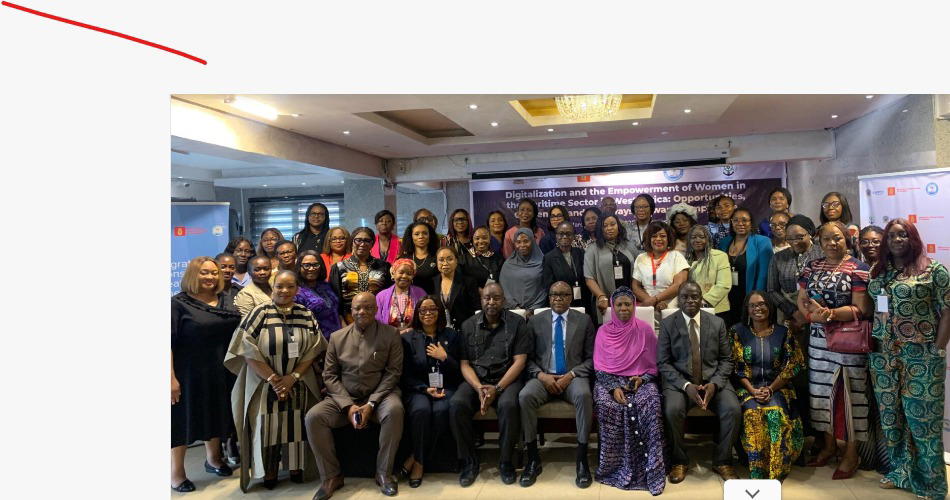
To address the challenge, the KAIPTC organized symposium on digitalisation and the empowerment of women in collaboration with the Ministry of Foreign Affairs of Denmark and the Interregional Coordination Centre, ICC and supported by the Nigerian Maritime Administration and Safety Agency, NMASA, themed: “Digitalisation and the empowerment of Women in the Maritime Sector of West Africa: Opportunities, Challenges and Pathways Forward”.
In his remark, Deputy Commandant KAIPTC Brig. Gen. Zebrim Bawah Ayorrogo, said it is imperative to recognise that empowering women through digital transformation is not only a matter of equity, but a strategic imperative for maritime security and sustainable development.
He assured that the GoG international peacekeeping training centre stands ready to support this effort and looks forward to fruitful collaboration that will strengthen the resilience and prosperity of the GoG.
Ayorrogo said: “Technology companies, maritime operators, and financial institutions have a responsibility to invest in women-led digital innovations and entrepreneurship.
“The symposium also highlights the importance of policy frameworks that promote gender equality and digital inclusion. Governments in the Gulf of Guinea must prioritise reforms that facilitate women’s access to digital tools, protect against cyber vulnerabilities, and encourage participation in decision-making processes.
“Public-private partnership can accelerate the development of cutting-edge technologies while ensuring their accessible and relevant to women’s needs and aspirations within the maritime space. The future of the Gulf of Guinea maritime domain depends on inclusive approaches that harness the full potential of all stakeholders, particularly women, who are vital agents of this change.”
On his part, Director of DARIPS Dr. Emma Birikorang, said that the programme’s focus areas are artificial intelligence, cyber security, social media dynamics, and multilateral responses to existential threats.
“One of the other strategic projects that the programme, Technology and Security Programme focuses on is on maritime security in the GoG. We also work on small arms and light weapons control and artificial intelligence and cyber security governance in Africa.
“The programme is also providing technical support to the Office of Ghana’s Special Envoy to the Alliance of the Sahelian States and West Africa. Critical amongst our tools for impact are experiential research, peer dialogue, and capacity development. We have three other programmes that we run.
“The other one is on conflict governance and leadership, peace operations, stabilisation, and peace building. And then we also have a final programme on climate security and migration.
Disclaimer
Comments expressed here do not reflect the opinions of Vanguard newspapers or any employee thereof.