By Peter Egwuatu
During economic uncertainty, companies across all industries naturally turn to spreadsheets, projections, and ledger pages for salvation.
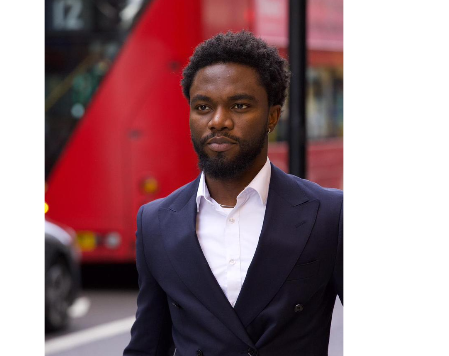
But as Nigerian strategist Damilare Davola contends, the answers might be less about statistics than mindset. “Profit isn’t just a matter of supply and demand,” he says. “It is also a matter of perception, of trust, and of behavior.” If you know how individuals behave in uncertainty, you can build businesses that profit when others fail.
Davola is one of the proponents of a new school of business thinking: using behavioral science to business. The science asks the question of how biases, emotions, and habit-driven behavior influence consumers and corporate actions. Though long understood in Western business culture for several years, its use in developing economies such as Nigeria is only beginning to pick up speed. Tribune Business decided to dig deeper by speaking to major proponents of this new wave of thoughts, particularly as the year 2026 began with several business uncertainties.
Davola asserts that uncertainty does not eliminate opportunity; it amplifies it for individuals who comprehend the drivers of human beings. During times of inflation, for example, humans do not make choices upon rational economic models but upon fear, herding, or psychological consolation. Companies that comprehend these behaviors can develop products, prices, and messages that connect deeper than ageless cost-benefit analysis.
To give an example, he points to Nigeria’s food retail scene. When costs go up, a lot of sellers start cutting corners on quality to keep their profit margins, thinking customers won’t mind too much. Yet behavioral research suggests otherwise: consumers under stress cling even more tightly to trust-based relationships. “If a family believes a particular brand won’t compromise on quality,” Davola observes, “they will stay loyal even if prices rise slightly. That loyalty isn’t about logic; it’s all about the mind.
Mayowa Akinola, who said that the pandemic has changed the way people work and live, has looked into how trust affects shopping habits during unpredictable market times. Akinola reckons that loads of Nigerian companies don’t get how feelings can make folks spend more. His study found that brands that really get into the customer’s shoes and stay true to their vibe tend to do better than those just trying to save a buck. This reinforces Davola’s conviction that behavioral insights are not peripheral but central to survival. Another voice in the conversation is Ifeoma Okoye, a behavioral economist and consultant to several West African firms. She highlights how businesses frequently overlook “friction costs”—those tiny annoyances that irk customers and push them away to rivals. In unstable economies, these frictions are magnified. “If paying for your service requires ten steps instead of three, you’ve already lost customers who are stressed by uncertainty,” Okoye explains. Her work shows that making things easier and cutting down on mental blocks can keep the cash flowing, even when people have less to spend.
Together, these views construct a picture of profit not as a hard calculation but as a dynamic process based on human psychology. This is, for Davola, the changing focus for Nigerian businesses. Companies, in his opinion, too often treat uncertainties as external: devaluation of the naira, changing policies, or global uncertainty without due consideration of the internal dynamics of their customer base. “Your customers are not abstract numbers,” he declares. “They are human beings making daily trade-offs under pressure. The understanding of these trade-offs is what sets profits apart from losses.”
The implications also extend beyond the consumer market. The same behavioral insights can help organizational resilience. Employees act differently under uncertainty: they might hoard information, resist change, and disengage from risk-taking. Such companies that recognize and deal with these psychological patterns can maintain their productivity and morale. Davola observes: “A workforce that feels some sense of security even when faced with insecurity will deliver value consistently. That sense of security is as much psychological as it is financial.”
The combined perspective of Davola, Akinola, and Okoye suggests a challenge for businesses to rethink what resilience means. It is not merely setting aside reserves or diversifying assets. It is about developing acute business sensitivity regarding human behavior. Against inflation, currency instability, and political unpredictability, that is more than theory for Nigerian businesses; it is a road map.
Neutral onlookers might find that behavioral science is not a panacea. Structural obstacles including infrastructure deficits, regulatory instability, and limited access to money continue to plague companies. But what the insights of these experts emphasize is that understanding human behavior may release secret benefits even inside boundaries.
Davola’s viewpoint finally prevails with its lucidity: profit under uncertainty is a psychological struggle as much as an economic one. Those who examine balance sheets devoid of human behavior risk misinterpreting the market whole. Rather than merely surviving uncertainty, companies that concentrate on trust, perception, and the minor decision-making levers are mastering it.
Disclaimer
Comments expressed here do not reflect the opinions of Vanguard newspapers or any employee thereof.