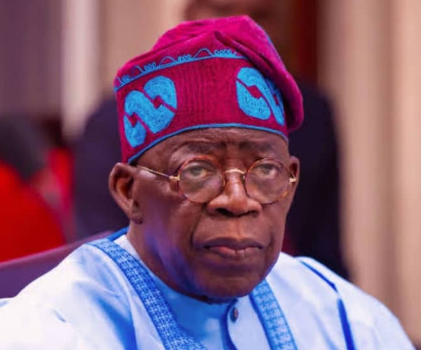
President Bola Tinubu
By Peter Egwuatu
The Federal Government is planning to use an unconventional strategy to address the country’s chronic electricity shortages: squeezing more power out of plants that already exist but barely operate.
Under a proposal by President Bola Ahmed Tinubu, a new government-owned vehicle called the Grid Asset Management Company Limited (GAMCO) aims to revive idle generation capacity and unlock private investment in the transmission network.
The presidency say the initiative could restore up to 1,600 megawatts of electricity within two years — a potentially significant boost for a grid that struggles to deliver consistent power to Africa’s most populous country.
The initiative is designed to address Nigeria’s power sector challenges through optimisation, private capital mobilisation, and disciplined asset management, ultimately improving electricity reliability and national competitiveness, a statement from the presidency said last week.
Nigeria has long suffered from a paradox in its power sector, with billions of dollars invested in generation plants that sit underused because of weak gas supply, poor maintenance, or inadequate transmission capacity. Although the country has an installed generation capacity exceeding 13,000MW, average daily output typically hovers far lower, leaving households and businesses heavily reliant on diesel generators.
Commenting on the unconventional strategy to revive the electricity supply, Mr. Bayo Onanuga, Special Adviser to the President on Information and Strategy, said: “GAMCO, currently under review by an inter-ministerial committee, is designed to tackle that gap by turning stranded public investments into bankable infrastructure projects capable of attracting private finance.
According to him, in a statement “ The company will be wholly owned by the federal government, with shares held by the Ministry of Finance Incorporated, but structured as a commercially run entity rather than a traditional government agency. Its mandate is narrow but ambitious: identify underperforming government power assets, rehabilitate them, and package them into revenue-generating projects that can attract lenders and investors.
“In its first phase, GAMCO will focus on a critical part of Nigeria’s electricity network: the Benin–Lagos transmission corridor, which supplies power to Lagos and neighbouring Ogun state, the country’s industrial heartland.
The pilot programme targets three gas-fired plants built under Nigeria’s National Integrated Power Project: Omotosho, Olorunsogo and Ihovbor. Together they have installed capacity of roughly 1,775MW but currently operate far below potential due to a mix of operational and commercial constraints.
By securing reliable gas supply contracts, bringing in experienced operations and maintenance partners, and restructuring power purchase agreements with credible buyers, officials believe the plants’ availability could be raised toward international benchmarks. At 90 per cent availability, planners estimate the plants could generate around 38,400 megawatt-hours per day, equivalent to roughly 38 per cent of Nigeria’s average daily generation in late 2025.
The plan also includes building a new high-capacity double-circuit transmission line along the corridor to relieve a major bottleneck in the grid. Nigeria’s transmission network has historically been designed around individual generators, with each plant connected by a single evacuation line to the grid. When those lines fail, entire plants are forced offline.”
He added that GAMCO proposes replacing that approach with a shared high-voltage “transmission corridor” capable of carrying power from multiple generators, a model used in markets ranging from Texas to India.
He said the line would be the country’s first privately financed independent power transmission project and could serve as open-access infrastructure for future gas, solar or hydro generators.
Onanuga said : “ Crucially, the government insists GAMCO will not replace existing power institutions but work alongside them. The Niger Delta Power Holding Company will retain ownership of the National Integrated Power Project plants, while the Transmission Company of Nigeria will remain the statutory operator of the national grid.
Instead, GAMCO would act as a project developer and financing platform, working through contractual arrangements with both entities. Its role would include arranging operations contracts, securing fuel supply, negotiating power purchase agreements and raising capital for new transmission infrastructure.”
The presidency also noted that the approach reflects a pragmatic response to global constraints as well as domestic ones. Building new gas-fired capacity has become significantly more expensive, with turbine costs rising sharply and global manufacturing capacity struggling to keep up with demand.
Constructing a new 1,600MW plant could cost more than $3bn and take five to seven years, according to project documents. By contrast, rehabilitating existing plants and upgrading the transmission corridor could deliver a similar amount of power in under three years at a fraction of the cost.
Another key feature is the financing model. The government says GAMCO is designed to mobilise domestic and international private capital through project-finance structures tied to specific assets and revenue streams, rather than relying on sovereign borrowing.
“The Federal Government would provide initial seed funding through the Renewed Hope Infrastructure Development Fund, but most of the investment would be raised against the cash flows of individual projects.
If successful, the Benin–Lagos pilot could serve as a template for wider reform of Nigeria’s electricity network, with similar corridor projects rolled out across other regions of the country.
For businesses accustomed to erratic power supply and soaring generator costs, even modest gains in grid reliability could have a large economic impact.
The real test, however, will be execution. Nigeria’s power sector has seen multiple reform efforts over the past two decades, many of which promised private investment and improved performance but delivered only incremental progress, Onanuga noted.
GAMCO’s architects argue the difference lies in its focus: not new plants or sweeping institutional change, but extracting value from infrastructure the country already owns
As the planning document puts it, Nigeria’s problem is not a shortage of turbines, it is a shortage of functioning systems to make them work.
Disclaimer
Comments expressed here do not reflect the opinions of Vanguard newspapers or any employee thereof.