By Innocent Anaba
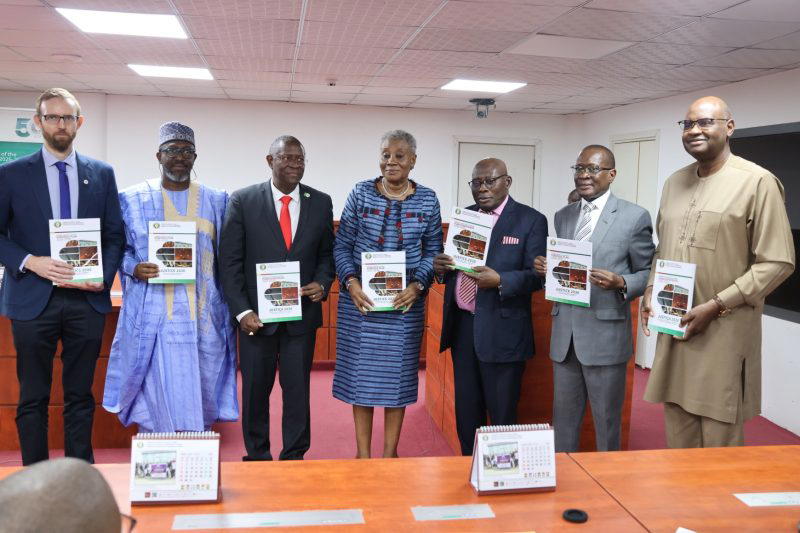
The President of the ECOWAS Court of Justice, Justice Ricardo Gonçalves, has declared that the newly launched 2026–2030 Strategic Plan will reposition the Court as a more effective driver of justice, rule of law and regional integration across West Africa.
Speaking at the official launch in Abuja on Friday, Justice Gonçalves described the plan as a “turning point” in the institution’s evolution, stressing that it goes beyond a symbolic document to represent a firm commitment to institutional transformation and measurable impact on citizens.
“This moment is not merely symbolic. It represents a clear affirmation of our collective resolve to strengthen the role of the Court as a guarantor of the rule of law and a vital pillar of regional integration,” he said.
The event was attended by the Vice-President of the Court, judges, representatives of ECOWAS institutions, development partners, civil society organisations, and members of the media.
Three pillars for success
Outlining the roadmap for implementation, the President identified three critical actors whose roles will determine the success of the plan — judges, staff, and external stakeholders.
He charged judges to uphold the integrity and credibility of the Court through independence, consistency, and high-quality jurisprudence.
“They are expected not only to decide cases with rigor but also to lead by example and ensure justice is accessible, expeditious and respected,” he stated.
On the role of staff, the President described them as the “backbone of the institution,” stressing the need for administrative efficiency, improved case management, and a results-driven service culture.
He warned against complacency, noting that outdated work practices must be discarded.
“The old way of working—mechanically repeating the same tasks, making the same mistakes, and offering the same excuses—must become a thing of the past,” he said.
Call for collaboration
The ECOWAS Court President also underscored the importance of collaboration with Member States, legal institutions, development partners, and civil society.
According to him, the Court’s effectiveness depends on the enforcement of its decisions, legal harmonisation, and the promotion of accountability across the region.
“The Court does not operate in isolation. Its relevance depends on active collaboration with all stakeholders,” he added.
Focus on planning, accountability
A major highlight of the Strategic Plan is a renewed emphasis on improved planning and accountability across all departments.
The President said the new framework would require clear priorities, better resource alignment, and strict monitoring of results.
“Better planning means anticipating challenges and moving away from reactive approaches to a culture focused on results and impact,” he explained.
He directed all departments and managers within the Court to align their activities with the strategic objectives, warning that without proper planning and execution, meaningful transformation would be impossible.
New phase for the Court
The President concluded by announcing that the Court is entering a new phase aimed at increasing its visibility, accessibility, efficiency, and influence within the ECOWAS region.
“The challenge is great, but our determination is even greater. Today, we are not merely launching a plan; we are ushering in a new chapter,” he said.
He expressed confidence that with collective commitment and professionalism, the Court would successfully implement the plan and strengthen its role in advancing justice, stability, and regional integration in West Africa.
Disclaimer
Comments expressed here do not reflect the opinions of Vanguard newspapers or any employee thereof.