By Luminous Jannamike
ABUJA – Civil society organisations on Wednesday backed a bill they say could, for the first time, give clear legal protection to journalists, whistleblowers, election observers and activists who often face risks for defending human rights in Nigeria.
At a public hearing at the National Assembly, the groups argued that while the 1999 Constitution guarantees fundamental freedoms, there is still no specific law that directly safeguards those who step forward to defend them.
The proposed Human Rights Defenders Bill (HB 1867), they said, is designed to close that gap by defining who qualifies as a human rights defender, outlining the protections available and clarifying which institutions are responsible for enforcing them.
Their position was contained in a joint memorandum presented by Oluwafunke Adeoye, Executive Director and Founder of Hope Behind Bars Africa (HBBA).
The memorandum was jointly signed by HBBA, Centre for Journalism Innovation and Development (CJID) and Accountability Lab.
The organisations described the bill as Nigeria’s first comprehensive legislative effort specifically tailored to protect human rights defenders and commended the House Committee on Human Rights for convening a technical review session in December 2025.
While supporting the bill, the groups addressed concerns raised over Section 3, particularly fears that it could impose operational burdens on state institutions or prove difficult to implement. They recommended that Section 21(2) be formally cross-referenced within Section 3 to reinforce internal coherence and clarify that the obligations outlined are neither standalone nor excessive.
According to the memorandum, such a cross-reference would strengthen the structural consistency of the bill, clarify the legal foundation of Section 3 obligations and reduce interpretative ambiguity. They stressed that the proposal does not alter the substance of the legislation but serves as a technical refinement aimed at improving clarity and institutional buy-in.
The organisations also proposed inserting defined timelines into key sections, notably Sections 28, 32 and 33, which deal with investigation, protection and assistance for human rights defenders.
In addition, they urged lawmakers to include an illustrative, though non-exhaustive, list of individuals who qualify as human rights defenders. Suggested categories include human rights lawyers, investigative journalists, trade union leaders, student activists, digital rights advocates, whistleblowers, women’s rights advocates, environmental defenders, disability rights advocates, election observers, community organisers and traditional leaders resisting harmful practices.
The memorandum noted that such clarification would reinforce that protection under the bill is function-based rather than profession-based, extending coverage to individuals operating formally or informally across urban and rural settings, as well as in digital and physical spaces.
Speaking with journalists after the hearing, Adeoye responded to concerns from some stakeholders who argued that existing constitutional provisions already provide adequate safeguards.
“It is not just about defining who a human rights defender is. The bill clearly outlines the nature of protection to be provided, identifies responsible institutions and strengthens the role of the National Human Rights Commission in safeguarding defenders.
“When you look at it critically, these individuals are human rights defenders and ought to be protected. Yet, we do not currently have specific legislation that expressly safeguards them.
“I don’t think this is a bill that should scare anybody. It is inclusive, exhaustive in its definition and designed to protect anyone who seeks to defend human rights. We strongly support its enactment,” she said.
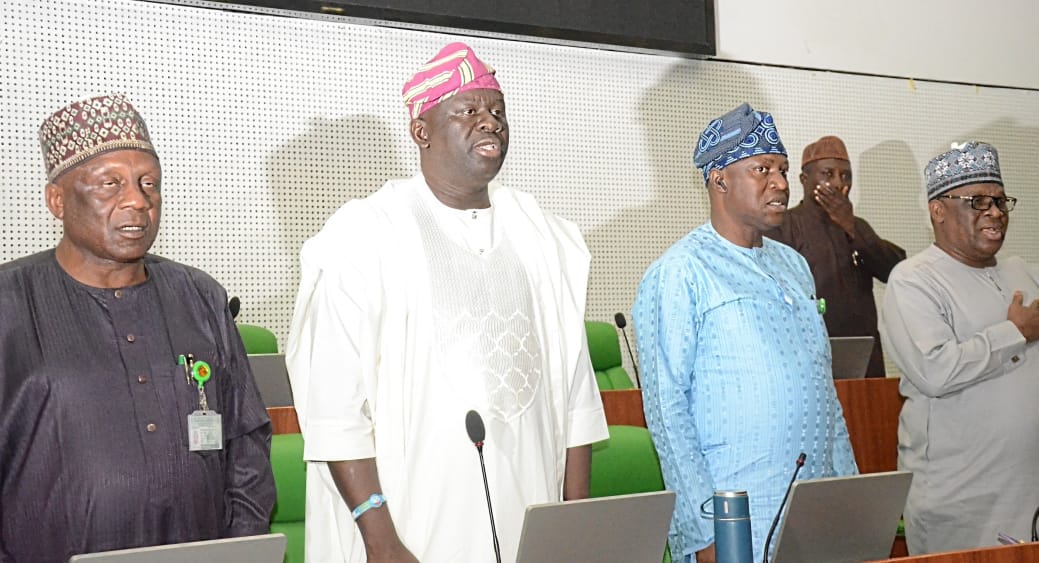
Declaring the hearing open, Speaker of the House of Representatives, Abbas Tajudeen, described the exercise as both a moral and constitutional responsibility.
“This hearing is not just a legislative ritual but a critical part of our constitutional duty. It is especially crucial today because it focuses on protecting the fundamental rights and dignity of citizens, upholding the rule of law and promoting good governance,” he said.
The Human Rights Defenders Bill seeks to formally recognise and protect human rights defenders while strengthening the Federal Government’s capacity to safeguard them.
A related proposal, the National Human Rights Commission Bill, 2025 (HB 2376), would repeal the existing law and its 2010 amendment to enhance the Commission’s investigative powers, financial integrity and operational independence in line with the Paris Principles adopted by the United Nations General Assembly.
The bill is currently under consideration by the National Assembly..
Disclaimer
Comments expressed here do not reflect the opinions of Vanguard newspapers or any employee thereof.