By Joseph Erunke, Abuja
The Director-General of the National Institute for Cancer Research and Treatment ,NICRAT, Prof. Aliyu Malami, has identified weak coordination, limited decentralisation of services and inadequate funding as major obstacles to effective cancer control in Nigeria.
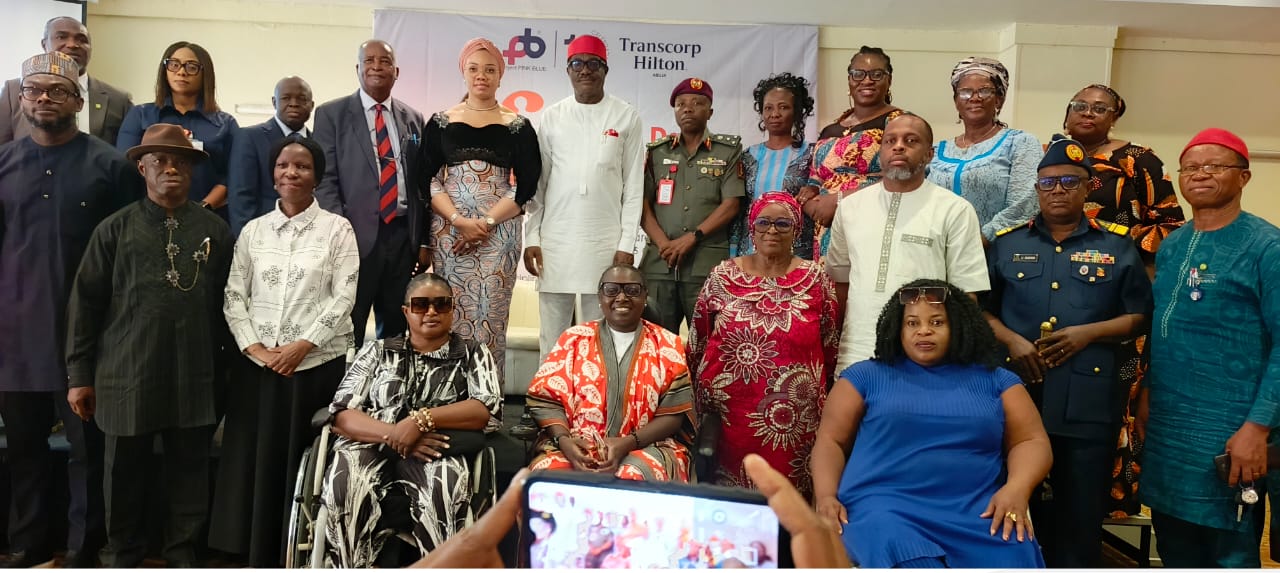
Malami stated this in Abuja on Tuesday while speaking at the World Cancer Day Symposium organised by Project PINK BLUE, Health and Psychological Trust Centre. He was represented at the event by the Director of Clinical Services, Prof. Musa Ali-Gombe.
According to him, although several actors are involved in cancer-related activities across the country, the absence of a strong coordinating centre in the past resulted in duplication of efforts and critical gaps in service delivery.
He noted that cancer services remain largely concentrated in major cities, leaving rural and conflict-affected communities without access to prevention, screening and early diagnosis.
Malami said the establishment of NICRAT marked a turning point in Nigeria’s cancer response, as the country now has, for the first time, a dedicated agency and budget line for cancer control.
“Funding for cancer care has increased steadily since 2020, but it is still far below what is required to meet the national burden,” he said.
He disclosed that NICRAT has strengthened cancer registries across the six geopolitical zones to improve data collection and evidence-based planning, adding that Nigeria has produced a draft national cancer incidence report for the first time.
Describing the development as a major milestone, he said the report would significantly support policy formulation and programme implementation.
On access to treatment, Malami explained that the National Cancer Health Fund currently provides free treatment for breast, cervical and prostate cancers at designated centres of excellence across the six geopolitical zones.
He said the initiative is being piloted due to funding and specialist constraints, but plans are underway to expand both the number of centres and the range of cancers covered.
The NICRAT Director-General stressed the need to integrate cancer care into national security and humanitarian response plans, noting that displaced persons and populations affected by conflict continue to live with chronic conditions that require uninterrupted care.
Also speaking, Chairperson of First Ladies Against Cancer ,FLAC, and Imo State First Lady, Barr. Chioma Uzodimma, disclosed that Nigeria records about 128,000 new cancer cases annually, lamenting that insecurity and conflict are increasingly cutting off vulnerable communities from early diagnosis and lifesaving treatment.
She said the cancer burden places enormous strain on individuals, families and the health system, noting that breast cancer remains the leading cause of cancer-related deaths among women, while prostate cancer leads among men.
According to her, thousands of cancer-related deaths recorded yearly are avoidable if cases are detected early and treated without interruption.
Uzodimma warned that insecurity has become a major barrier to care, with health facilities shut down in conflict-affected areas and health workers forced to flee due to attacks, kidnappings and killings.
She added that prolonged disruptions, including sit-at-home orders in parts of the South East, have delayed chemotherapy sessions, follow-up visits and palliative care.
“These are not just statistics. They are mothers, fathers and children whose lives are cut short because care is unavailable or unsafe to access,” she said.
Uzodimma said FLAC, established in 2015, has worked to bridge gaps in Nigeria’s cancer care continuum through awareness campaigns, screening programmes, patient support and policy advocacy.
She added that since 2025, the coalition has expanded partnerships with federal and state governments, the private sector and international development partners to strengthen cancer prevention, research and treatment.
Highlighting collaborations with the Federal Ministry of Health and Social Welfare, NICRAT, the World Health Organisation and civil society groups, she said the efforts are advancing cervical cancer elimination through HPV vaccination and large-scale screening in underserved communities.
However, she cautioned that progress is being undermined by conflict in the North East, North West and parts of the South East, where disrupted supply chains, displacement and poverty are driving late-stage cancer presentation.
She called for mobile clinics, stronger protection for health workers, safe corridors for medical supplies and expanded funding for the National Cancer Health Fund.
Former Senator representing Abia North and sponsor of the bill that established NICRAT, Mao Ohuabunwa, described cancer as a national emergency requiring sustained political commitment.
He said insecurity has compounded an already difficult situation, making access to screening and treatment more challenging for patients in vulnerable areas.
Ohuabunwa urged the National Assembly, the executive, civil society and development partners to collaborate in strengthening funding, oversight and implementation of cancer control programmes, stressing that the focus must now shift from legislation to effective, people-centred implementation.
Earlier, Project PINK BLUE Senior Finance and Administration Officer Lead, Godwin Kagior, said the symposium was convened to move stakeholders beyond discussions to concrete action, describing cancer as both a medical and social justice issue.
He said Project PINK BLUE, established in 2014, has spent the past 11 years on cancer awareness, advocacy, patient navigation, research, oncology training, psychological support and free screening.
Kagior urged participants to ensure that the outcomes of the symposium translate into practical recommendations, stronger partnerships and measurable action, noting that “behind every statistic is a human life whose chance of survival depends on the systems we build.”
Disclaimer
Comments expressed here do not reflect the opinions of Vanguard newspapers or any employee thereof.