By Providence Ayanfeoluwa
The Nigerian Shippers’ Council, NSC in partnership with Deutsche Gesellschaft für Internationale Zusammenarbeit (GIZ), Economic Community of West African State, ECOWAS Commisson; Nigeria Customs Service has reaffirmed commitment to promoting seamless and cost-effective trade across Nigeria border by sensitising cross border traders and farmers to maximise Border Information Centre, BIC Seme border.
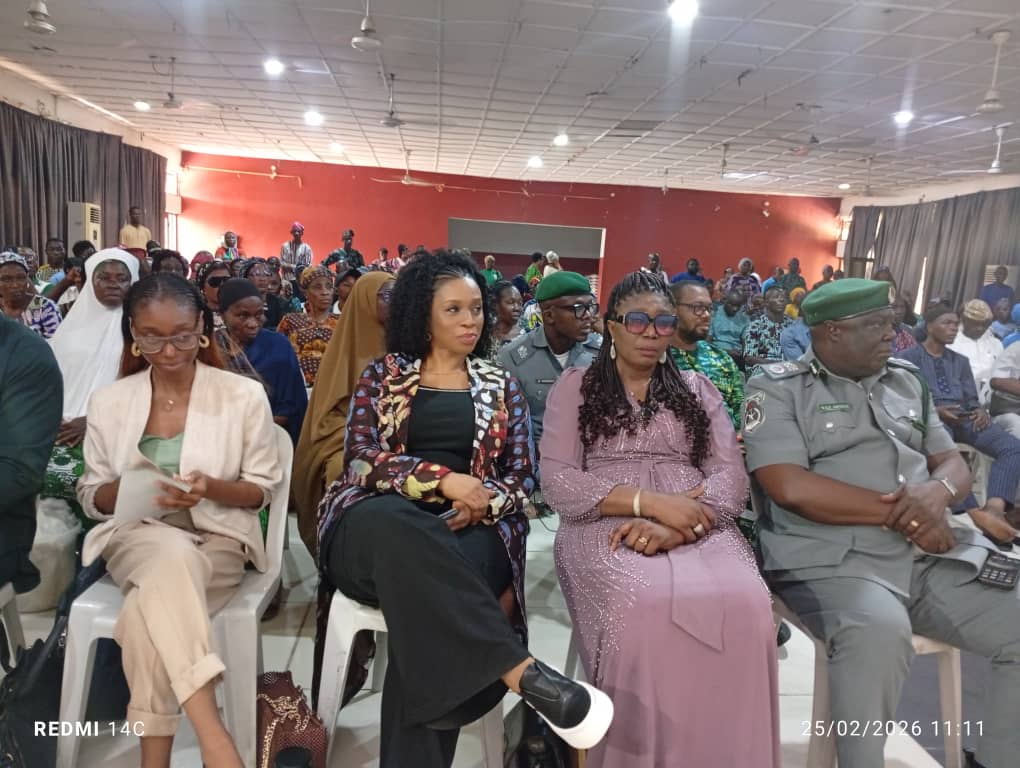
The awareness event tagged film screening and dialogue session organised by the Deutsche Gesellschaft für Internationale Zusammenarbeit (GIZ), the ECOWAS Commission, and other development partners in collaboration with the NSC is themed “Trade Now: Empowering Cross-Border Traders Through the Trade Information Desk (TID)” held in Badagry.
In his remark, Executive Secretary/Chief Executive of NSC Pius Akutah encouraged traders to take advantage of the BIC for greater trade facilitation.
He said: “We are encouraging you all to start using the BIC, we are happy that the use of the facility has increased”.
Meanwhile, Director of Consumer Affairs Department, NSC Ify Okolue, said that the TID widely known in the West African region as the BIC is a practical instrument designed to improve transparency and efficiency in cross-border trade particularly for small-scale traders, women, and youth.
She explained that the BIC provides traders with accurate information on tariffs, documentation requirements, import and export procedures, standards, and other regulatory obligations, thereby reducing information gaps and addressing barriers to trade formalisation and competitiveness.
Okolue explained that BIC have already been established at Seme-Krake, Jibia-Maradi, Illela-Birnin Koni, and Mfum-Nkot borders, while the Idiroko border centre will become operational before the end of the second quarter of 2026.
She pointed out that the council has also undertaken complementary initiatives which included: the promotion of Inland Dry Ports in Kaduna, Dala, and Funtua, the development of Vehicle Transit Areas to improve corridor efficiency, and the establishment of complaints handling and dispute resolution mechanisms accessible both at BICs and online via a designated website.
She said the film screening was not just a documentary presentation but an advocacy platform to raise awareness about the availability of the Trade Information Desk as a reliable source of trade-related information and a channel for lodging complaints, even as she urged stakeholders to actively participate in the dialogue and formally register with the Council for effective engagement.
She stressed that collective efforts would foster a trade environment that is inclusive, predictable, and supportive of sustainable economic growth.
“Together, we can build borders that are transparent, efficient, and responsive to the needs of legitimate traders,” she said, while appreciating GIZ and other partners for convening the programme.
Also, Seme Customs Area Controller, Comptroller Wale Adenuga, said that small scale businesses contribute significantly to GDP and reduce inflation rate and crime because they engage in legitimate trade.
He added that “trade facilitation is our goal at customs, the data of exports that go through seme is huge, in as much as we want to engage in legitimate trade, we don’t tolerate illegitimate trade. Nobody disturbs anyone doing legitimate trade. Seme border is a place where cross border trade is being encouraged.
On the other hand, Sarah Okporufe who spoke on behalf of the Director of Trade at ECOWAS Commission, Mr. Kolawole Sofola, commended the government and people of Nigeria, as well as the development partners, the GIZ and the General Development Agency, for their support and dedicated partnership with the ECOWAS Commission in advancing inter-regional trade and integrating ECOWAS member states.
Sofola said cited Article 3 of the Resilience ECOWAS Treaty which provides for the removal of trade barriers and harmonisation of trade policies with the objective of the establishment of a free trade area and a customs union, and a common market, adding that ECOWAS has adopted a number of policies and legal instruments to facilitate the free trade within its borders and within region.
Sofola said: “We have set up a regional trade facilitation committee, which is made up of several representatives from the ministries responsible for trade, customs administration, and also the private sector, and they meet together to discuss how they can improve transparency and clear provisions within the region.
“We also have our informal trade regularisation support programme, which supports informal cross-border traders. It helps to quantify the amount of trade that is moving through our borders and it helps to support informal cross-border traders to formalise within the sector.
“We also have our trade agenda action plan, which looks at Austrian trade among others. We also have our tools like the trade obstacle alert mechanism, which addresses trade obstacles and helps to resolve trade obstacles by a swift resolution of the non-tariff barriers that traders encounter at the borders.
“We are also undertaking centralisation programmes for our small-scale cross-border traders, including centralisation caravans along the G-Corridor, including this Abidjan-Lagos Corridor.”
Disclaimer
Comments expressed here do not reflect the opinions of Vanguard newspapers or any employee thereof.