By Emma Feyi
In the quest to protect our valuable vehicles from the elements, the traditional garage has long been the undisputed king. However, for many homeowners, the high cost, lengthy construction time, and significant space requirements of a garage can be major deterrents. Fortunately, a more flexible, affordable, and stylish alternative has been steadily gaining popularity: the carport. This comprehensive guide will delve into the world of carports, exploring their benefits, comparing them to garages and other alternatives, and providing a detailed look at the various types, materials, and considerations to help you make an informed decision for your home.
What is a carport and why is it gaining popularity?
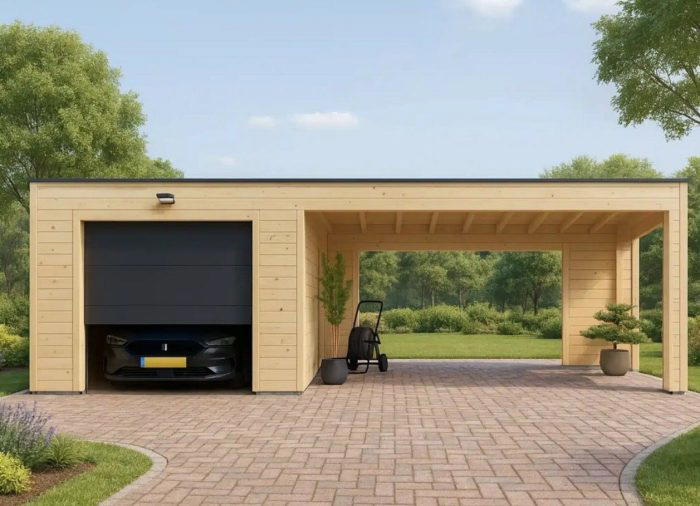
A carport is a covered structure used to offer limited protection to vehicles, primarily cars, from rain, snow, and sun. Unlike a garage, a carport does not have four walls and is typically open on at least two sides. This open design is not just a matter of aesthetics; it provides excellent ventilation, which helps to prevent the buildup of moisture and condensation that can lead to rust and other issues. The term “carport” was coined by the renowned architect Frank Lloyd Wright, who believed that modern cars, unlike horses, did not require an elaborate “barn” for shelter. He incorporated carports into his Usonian home designs in the 1930s, and the concept has since evolved into a popular and practical solution for homeowners worldwide.
The rising popularity of carports can be attributed to several factors. They are significantly more affordable than traditional garages, both in terms of materials and construction costs. Their simpler design also means they can be erected much more quickly, sometimes in as little as a weekend. Furthermore, carports offer a high degree of versatility. They can be freestanding or attached to a house, and they come in a wide variety of materials, styles, and sizes to suit any property and aesthetic. Carports are also becoming increasingly popular in commercial settings, including hotels, shopping centers, and office parks, where they provide cost-effective parking solutions without the expense of constructing full garages. For homeowners, carports represent a practical investment that extends the lifespan of vehicles by protecting them from weather-related damage while maintaining the open, airy feel of a property.
A carport or garage?
Beyond the initial cost and construction time, the decision between a carport and a garage has long-term implications for your property and lifestyle. Home insurance premiums, for instance, may differ. A fully enclosed and lockable garage is often seen as a more secure structure by insurance companies, which could lead to lower premiums for both your vehicle and home. Conversely, the addition of a garage may increase your property’s assessed value, potentially leading to higher property taxes. A carport, being a less substantial structure, typically has a smaller impact on property taxes.
When it comes to security, garages offer a clear advantage. The ability to lock a garage provides a significant deterrent to theft and vandalism. Modern garages can be equipped with advanced security features such as smart garage door openers, security cameras, and alarm systems. While a carport cannot offer the same level of security, there are measures you can take to enhance its protective capabilities. Motion-activated lighting, security cameras, and parking a vehicle in a well-lit area can all help to deter potential thieves. For those living in low-crime areas, the security offered by a carport may be sufficient for their needs.
The choice between a carport and a garage is a significant one for any homeowner. Both offer protection for your vehicle, but they do so in different ways and come with their own sets of advantages and disadvantages. Here’s a detailed comparison to help you decide which is the right fit for your needs and budget:
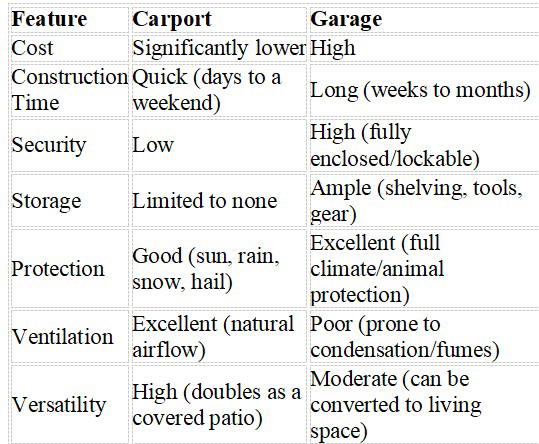
Carports are the more budget-friendly option, offering a quick and easy way to protect your vehicle from the worst of the weather. Their open design provides excellent ventilation, which is a key advantage in preventing rust. The natural air circulation means your vehicle dries more quickly after rain, reducing the risk of moisture-related damage. However, they offer little to no security for your vehicle or any other items you might store under them.
Garage, on the other hand, provide complete protection from the elements and a secure space for your vehicle and other belongings. They can also be converted into additional living space, adding value to your home. However, these benefits come at a much higher cost and a longer, more complex construction process. Garages also require compliance with local building codes and fire safety regulations, which can add to both the complexity and expense of construction.
Exploring carport types and materials
Choosing the right material for your carport is a critical decision that will impact its durability, appearance, and maintenance requirements. Let’s delve deeper into the most common materials and explore some less common options.
Wood carports
Wooden carports offer a timeless and classic aesthetic that can be customized to complement any home. Pressure-treated pine is a popular and affordable choice, offering good resistance to rot and insects. For a more upscale look, cedar and redwood are excellent options. These woods have natural oils that make them resistant to decay and insects, and they weather to a beautiful silvery-gray over time. However, wood carports require the most maintenance of any carport material. To protect the wood from the elements, it’s essential to apply a coat of paint or sealant every few years. Without proper maintenance, wood can be susceptible to rot, warping, and insect damage. The lifespan of a wood carport can vary greatly depending on the type of wood, the climate, and the level of maintenance it receives.
Metal carports
Metal carports are prized for their strength, durability, and low maintenance. Steel is the most common material for metal carports, and for good reason. It’s incredibly strong and can be engineered to withstand heavy snow loads and high winds. Galvanized steel, which is coated with a layer of zinc, is highly resistant to rust and corrosion. For even greater protection, some steel carports are coated with a durable paint finish. Aluminum is another popular choice for metal carports. It’s lightweight, which makes it easier to install, and it’s naturally resistant to rust and corrosion. While not as strong as steel, aluminum is still a durable and long-lasting material. Metal carports are available in a wide range of colors and styles, and they can be designed to mimic the look of other materials, such as wood.
Polycarbonate carports
Polycarbonate carports are a modern and stylish option that offers a unique combination of benefits. The polycarbonate panels used for the roof are incredibly strong and virtually unbreakable. They are also lightweight, which makes them easy to install. One of the biggest advantages of polycarbonate is its ability to block harmful UV rays while still allowing natural light to pass through. This protects your vehicle’s paint from fading and keeps the interior from getting too hot. Polycarbonate carports are also very low maintenance. The smooth surface of the panels is easy to clean, and they are resistant to yellowing and cracking. While polycarbonate carports are generally more expensive than metal or wood carports, their durability and low maintenance can make them a cost-effective choice in the long run.
Fabric carports
For those seeking a more temporary or portable solution, fabric carports are an excellent option. These carports consist of a metal frame covered with a durable fabric, such as polyethylene or polyester. Fabric carports are lightweight, easy to assemble and disassemble, and they are the most affordable type of carport. While they don’t offer the same level of protection as a permanent structure, they can still provide good protection from sun, rain, and light snow. Fabric carports are a great choice for renters, or for those who need temporary shelter for a boat, RV, or other vehicle.
Carports are constructed from a variety of materials, each offering different benefits and aesthetic qualities. The most common materials include wood, metal, and polycarbonate.
Before buying a carport
Before you purchase a carport, there are several important factors to consider to ensure you choose the right one for your needs:
1) Size & dimensions: The first step is to determine the size of the carport you need. Measure the length and width of your vehicle or vehicles, and add extra space for opening doors and walking around. It’s also a good idea to consider future needs, such as a larger vehicle or the need for additional storage space.
2) Local climate and weather conditions: The climate in your area will play a significant role in determining the best material and style for your carport. If you live in an area with heavy snowfall, you’ll need a carport with a strong roof and a high snow load rating. In areas with high winds, you’ll need a carport that is securely anchored to the ground.
3) Building permits and zoning laws: Before you begin construction, it’s crucial to check with your local building department to see if a permit is required for your carport. There may also be zoning laws that dictate the size, location, and style of carports in your area.
4) Homeowners’ Association (HOA) rules: If you live in a community with an HOA, be sure to check their rules and regulations regarding carports. Some HOAs have strict guidelines on the size, style, and materials that are allowed.
5) Budget and long-term value: Carports are available in a wide range of prices, so it’s important to set a budget before you start shopping. While it may be tempting to choose the cheapest option, it’s also important to consider the long-term value of your investment. A high-quality carport will last longer and require less maintenance, saving you money in the long run.
6) DIY vs. professional installation: Many carports are available as DIY kits, which can be a great way to save money on installation costs. However, if you’re not comfortable with DIY projects, or if you’re installing a large or complex carport, it’s best to hire a professional installer.
Installation + maintenance
Proper installation and regular maintenance are essential for ensuring the longevity and safety of your carport.
Installation process
The installation process for a carport typically involves the following steps:
A) Site preparation: The first step is to prepare the site where the carport will be installed. This involves clearing the area of any debris, leveling the ground, and ensuring proper drainage.
B) Foundation: A solid foundation is crucial for the stability of your carport. The type of foundation you need will depend on the size and weight of your carport, as well as the soil conditions in your area. Common foundation options include concrete slabs, concrete footers, and ground anchors.
C) Assembly: Once the foundation is in place, you can begin to assemble the carport frame according to the manufacturer’s instructions.
D) Anchoring: The final step is to securely anchor the carport to the foundation. This is a critical step for ensuring the safety and stability of your carport, especially in areas with high winds.
Maintenance tips
To keep your carport in top condition, it’s important to perform regular maintenance:
– Regular cleaning: Clean your carport regularly to remove dirt, debris, and bird droppings. This will not only keep your carport looking its best, but it will also help to prevent damage to the finish.
– Inspect for damage: Regularly inspect your carport for any signs of damage, such as rust, loose bolts, or cracks in the roof. Repair any damage promptly to prevent it from getting worse.
– Check the anchors: Periodically check the anchors to ensure they are secure. Tighten any loose bolts or screws as needed.
Trim overhanging branches: If your carport is located near trees, trim any overhanging branches to prevent them from falling on the roof and causing damage.
The future of carports: The rise of solar carports
The convergence of vehicle protection and renewable energy has given rise to one of the most exciting innovations in residential architecture: the solar carport. This ingenious structure not only shields your vehicle from the elements but also harnesses the power of the sun to generate clean, renewable electricity for your home. As the world transitions towards a more sustainable future, solar carports are poised to become an increasingly common and valuable feature of the modern home.
The technical side of solar carports
A solar carport is more than just a carport with solar panels on top. It’s a complete power generation system that is integrated into the structure of the carport. The key components of a solar carport system include:
Photovoltaic (PV) panels: These are the heart of the system, responsible for capturing sunlight and converting it into direct current (DC) electricity.
Inverter: The inverter is the brain of the system. It converts the DC electricity from the solar panels into alternating current (AC) electricity, which is the type of electricity used in your home.
Mounting system: The mounting system is the framework that holds the solar panels in place on the carport roof. It’s designed to be strong and durable, and to position the panels at the optimal angle for capturing sunlight.
Battery storage (optional): A battery storage system allows you to store excess electricity generated by your solar panels for use at night or during power outages. This can provide you with greater energy independence and peace of mind.
EV charger (optional): For electric vehicle owners, a solar carport can be equipped with an EV charger, allowing you to charge your car with clean, renewable energy from the sun.
Return on investment (ROI)
While the upfront cost of a solar carport is higher than a traditional carport, the long-term return on investment can be significant. The savings on your electricity bills, combined with government tax credits and incentives, can help to offset the initial cost of the system. The payback period for a solar carport can vary depending on a number of factors, including the cost of electricity in your area, the amount of sunlight your home receives, and the size of your solar carport system. In many cases, a solar carport can pay for itself in as little as 5 to 10 years. After the payback period, the electricity generated by your solar carport is essentially free.
As the world continues to embrace renewable energy, a new and exciting innovation has emerged in the world of carports: the solar carport. A solar carport is a carport with photovoltaic (PV) panels installed on the roof. These panels capture energy from the sun and convert it into electricity, which can be used to power your home, charge your electric car (EV), or even be sold back to the grid.
The benefits of a solar carport
Solar carports offer a wide range of benefits for homeowners:
- Reduced electricity bills: By generating your own electricity, you can significantly reduce your reliance on the grid and lower your monthly electricity bills.
- Clean, renewable energy: Solar energy is a clean and renewable resource, which means you can reduce your carbon footprint and help to protect the environment.
- Increased property value: A solar carport can increase the value of your home, making it a smart investment for the future.
- EV charging: If you own an electric vehicle, a solar carport can provide a convenient and cost-effective way to charge your car at home.
The cost of a solar carport
The cost of a solar carport can vary depending on the size of the system, the type of panels you choose, and the complexity of the installation. While the upfront cost of a solar carport is higher than a traditional carport, the long-term savings on your electricity bills can make it a worthwhile investment. The average cost for a residential solar carport can range from $8,000 to $30,000 (₦10,750,960.00 to ₦40,316,100.00).
A smart investment for your home and vehicle
Whether you’re looking for a simple and affordable way to protect your vehicle from the elements, or you’re interested in harnessing the power of the sun to generate your own electricity, a carport is a smart and practical investment for any homeowner. With a wide variety of styles, materials, and options to choose from, there’s a carport to suit every need and budget. By carefully considering your options and following the tips in this guide, you can choose the perfect carport to protect your vehicle, enhance the value of your home, and provide years of reliable service.
Emma Feyi, car enthusiast, wrote in from Lagos
Disclaimer
Comments expressed here do not reflect the opinions of Vanguard newspapers or any employee thereof.