By Juliet Umeh
The Impact Investors Foundation (IIF), Nigeria’s leading platform for unlocking impact capital, has advanced efforts to operationalise its Gender Equity and Social Inclusion (GESI) roadmap with a high-level workshop held in Lagos.
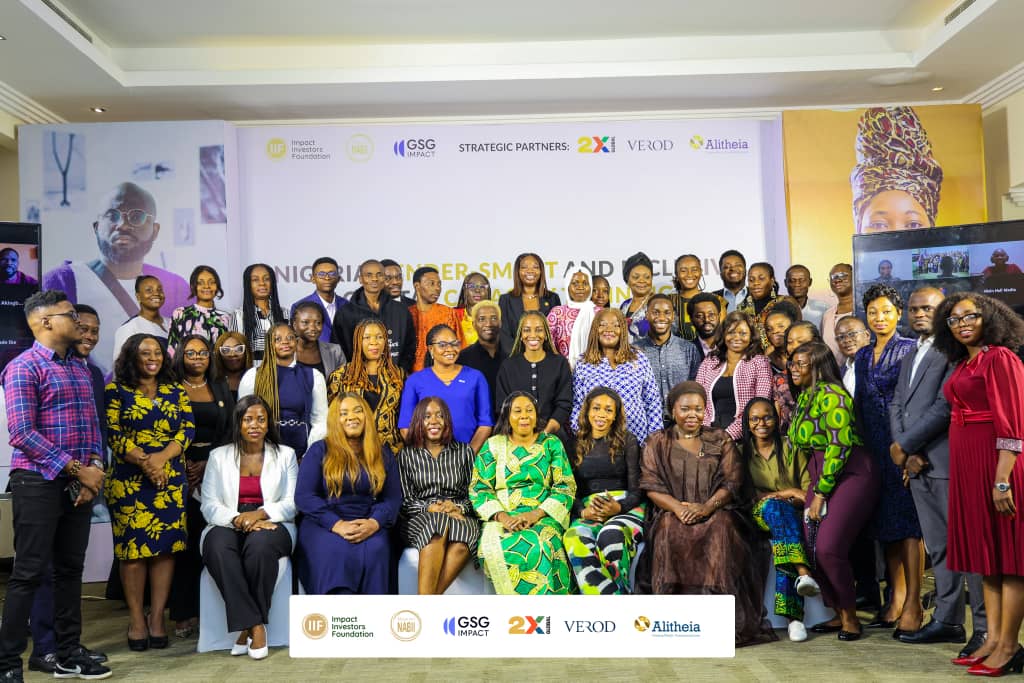
The Nigeria Gender-Smart and Inclusive Capital workshop, hosted at Four Points by Sheraton, convened investors, policymakers, development partners and private sector leaders to move from high-level commitments to practical implementation. The session followed the launch of Nigeria’s Gender/GESI Roadmap at the 2025 Gender Impact Investment Summit.
In her welcome remarks, Etemore Glover, CEO of the Impact Investors Foundation, described the workshop as a critical bridge between policy and execution.
“Following the landmark launch of Nigeria’s Gender/GESI Roadmap in 2025, this workshop represents the essential next strategic step in our journey towards a truly inclusive financial ecosystem,” Glover said. “It is not enough to have a roadmap; we must now begin to operationalise it through institutional transformation that goes beyond mere policy alignment.”
Goodwill messages were delivered by Elizabeth Boggs Davidsen, CEO of GSG Impact, and the Permanent Secretary, Federal Ministry of Women Affairs, Mrs. N. A. Esuabana, represented by Dr. Abia Udeme Nsikak. They emphasised the role of private capital in advancing inclusive growth and national development priorities.
A key highlight was a technical deep dive into the roadmap by a Partner from PwC, outlining how gender-smart principles can be embedded across the investment lifecycle—from deal sourcing and due diligence to portfolio management and exit strategies.
Experts from 2X Global and Moremi Capital also led sessions on gender-smart investing, contextualising global standards such as the 2X Criteria for Nigeria’s market.
Participants used IIF’s GESI Diagnostic Tool to assess institutional readiness and develop action plans to strengthen governance, internal policies and screening processes. The presentation of Nigeria’s Inclusive Capital Baseline Survey further anchored discussions in data, providing benchmarks to track progress in closing financing gaps affecting women, youth and other marginalised groups.
Investment professionals from Verod Capital shared practical strategies for integrating GESI metrics into governance systems, while a case study from Alitheia Capital demonstrated how gender-lens investing can drive both financial performance and measurable social impact.
The workshop concluded with stakeholders committing to embed gender-smart principles into core operations, signalling a shift from advocacy to structured, data-driven execution.
“With growing evidence that diverse and inclusive enterprises outperform their peers in risk management, innovation, and long-term value creation, Nigeria’s push to operationalise gender-smart investing reflects both a moral imperative and a significant market opportunity,” Glover added.
Disclaimer
Comments expressed here do not reflect the opinions of Vanguard newspapers or any employee thereof.