By Marie-Therese Nanlong & Gilbert Joseph
Jos — Amid persistent violence in rural communities across Plateau State, the Institute for Integrated Transitions (IFIT) has reinforced the need for dialogue-centred peacebuilding, insisting that security deployments alone cannot resolve the underlying drivers of communal conflict.
The position was reiterated at a stakeholder engagement held in Jos, where IFIT’s Nigeria Country Manager, Thomas Bimba, underscored the limitations of force in addressing deep-seated grievances fuelling unrest in farming and pastoralist settlements.
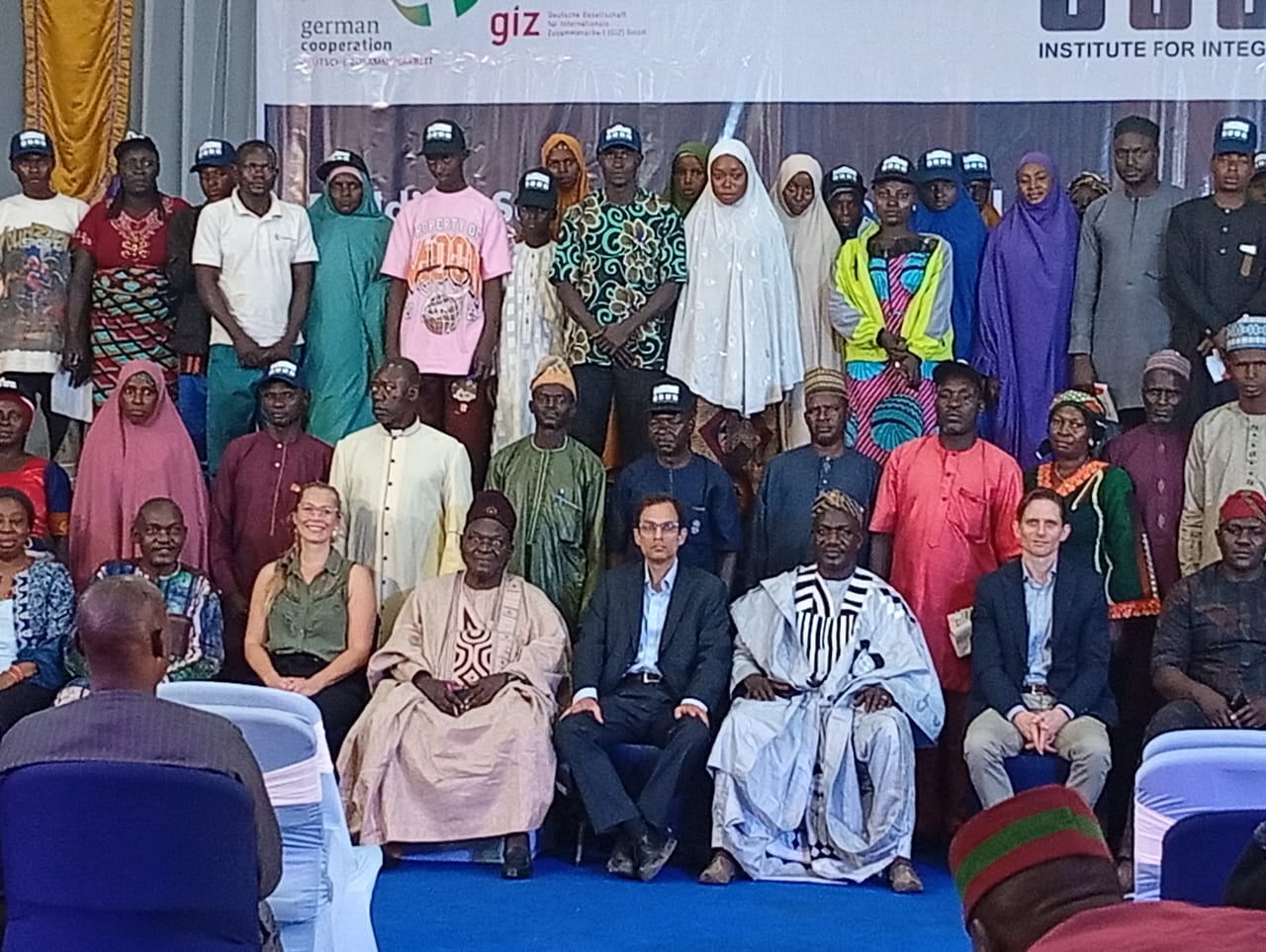
The forum forms part of IFIT’s ongoing project, Building Social Cohesion in Rural Communities in Plateau State, supported by the German Development Cooperation (GIZ) through its Peace Core II Programme.
Bimba explained that the intervention targets rural flashpoints marked by distrust, marginalisation and protracted disputes over resources, factors that have repeatedly escalated into deadly confrontations.
According to him, strengthening relationships within and between communities remains the most reliable buffer against violence.
He said, “Field engagements and research indicate that these communities already possess strong social assets. When communication channels remain open and disputes are addressed early, the likelihood of violence reduces significantly.”
He noted that the initiative is designed to complement, not replace, government security responses by preventing tensions from deteriorating into crises requiring military or police action.
One of the programme’s core strategies is a six-day residential capacity workshop, widely referred to as the Akwanga Engagement. The sessions convene community representatives in a neutral setting to build practical skills in negotiation, mediation, collaboration and joint problem-solving.
He revealed that no fewer than 120 participants, largely women and young people, have benefitted directly, reflecting IFIT’s deliberate inclusion of groups often sidelined in formal peace negotiations despite their grassroots influence.
Preliminary field observations, he added, suggest a decline in violent incidents in parts of Bokkos and Riyom Local Government Areas since October, though he cautioned against drawing definitive conclusions at this stage.
Another organiser, Seth Kaplan, Senior Adviser at IFIT and Professor at Johns Hopkins University, Washington DC, noted that the Middle Belt is one of Nigeria’s most ethnically and religiously diverse regions and plays a critical role in the country’s economic development.
He stated: “If we worry about the future of Nigeria, we need to make sure the Middle Belt is stable and making progress. That is why we originally chose the region. We then identified areas where we could have the greatest impact.
“Right now, we are most focused on Plateau and Nasarawa. Plateau is hugely important because there are significant spill-over effects. If conflict is not stabilised, it will have negative repercussions for the state, for Kaduna, and for broader regional and national dynamics.
“We aim to maximise the impact of our efforts. We have been able to select the right communities. Women and youths in particular are key drivers who are often ignored but can have a significant impact. So far, this work has exceeded our expectations. We are very happy with the progress, but it must be sustained and expanded.”
Director-General of the Plateau Peace Building Agency, Julie Sanda, commended the organisation’s efforts, noting that they complement ongoing state initiatives to restore peace in affected communities.
Community leaders say the engagements are already yielding visible outcomes.
District Head of Sha in Bokkos LGA, David Agai, described the process as impactful, noting that trained participants are cascading peace messages through religious and public platforms to rebuild fractured relationships.
He said facilitators worked closely with locals to identify conflict triggers and jointly craft solutions.
“The organisers have succeeded in harmonising the communities, especially at the local level. They followed the programme consistently to ensure its success. They identified our problems and discussed them together with us.
“We believe the agreements will be implemented. In churches and mosques, where you often see more people, we will make sure this peace holds,” he said.
A major milestone of the intervention is the signing of a peace agreement by participants drawn from Sha community in Bokkos, as well as Bum and Sopp communities in Riyom Local Government Area.
Disclaimer
Comments expressed here do not reflect the opinions of Vanguard newspapers or any employee thereof.