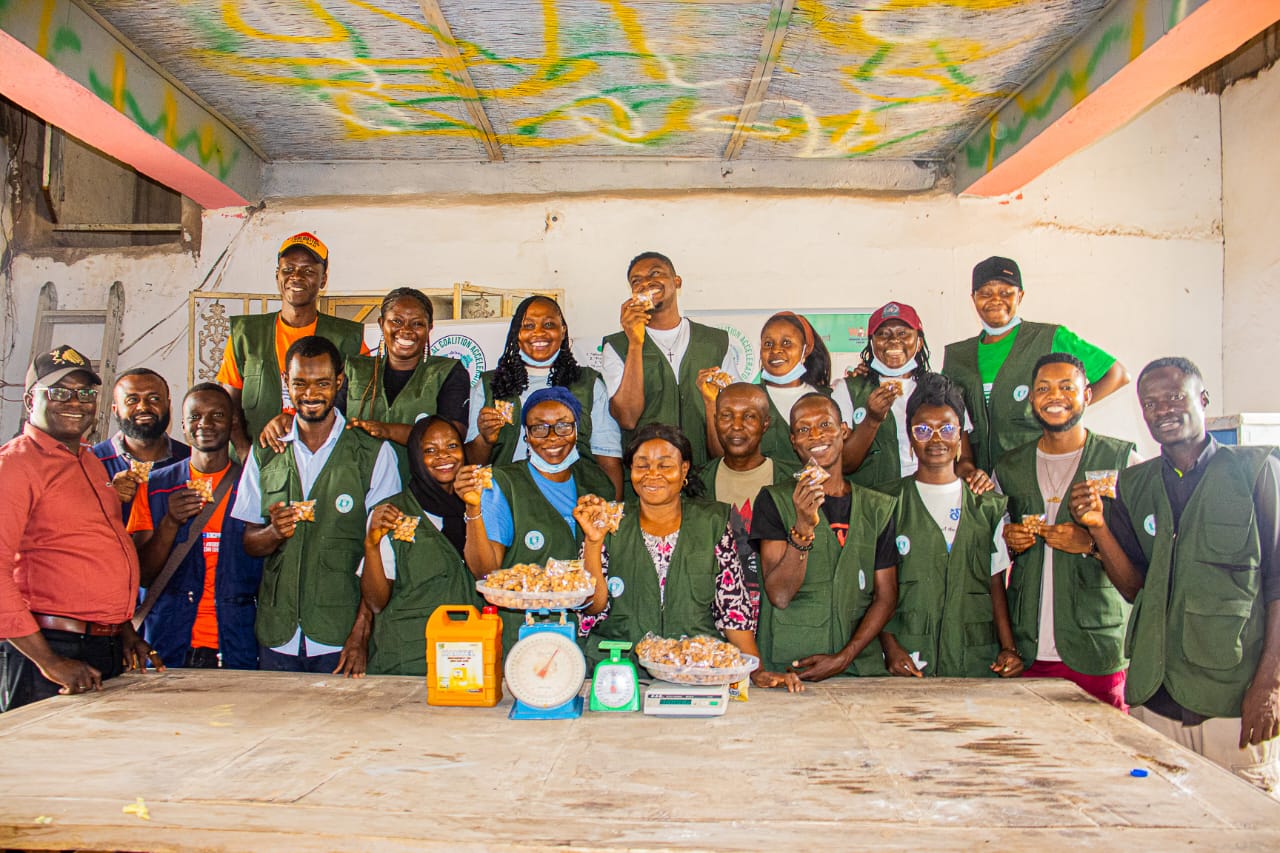
Members of the Nigeria Local Coalition Accelerator gathered in Yola this week to witness something they’ve been working toward for months: the first bottles of groundnut oil and processed peanuts emerging from their own production facility.
The moment marked more than just a product launch. It represented what Coordinator Sir Richard Inyamkume called a significant step toward building financial sustainability without relying exclusively on donor funding, a challenge that has kept many Nigerian civil society organizations perpetually dependent on grants.
Local Coalition Agro Processing and Export Services received official registration under the Companies and Allied Matters Act from the Corporate Affairs Commission, giving legal structure to an enterprise funded entirely through pooled contributions from NLCA members operating under their Multipurpose Cooperative Society.
The cooperative model means members who contributed resources now own shares in an enterprise designed to generate revenue that supports NLCA’s broader community development work. It’s a different approach from the typical donor-funded project cycle where money flows in for specific activities then disappears when grants end.
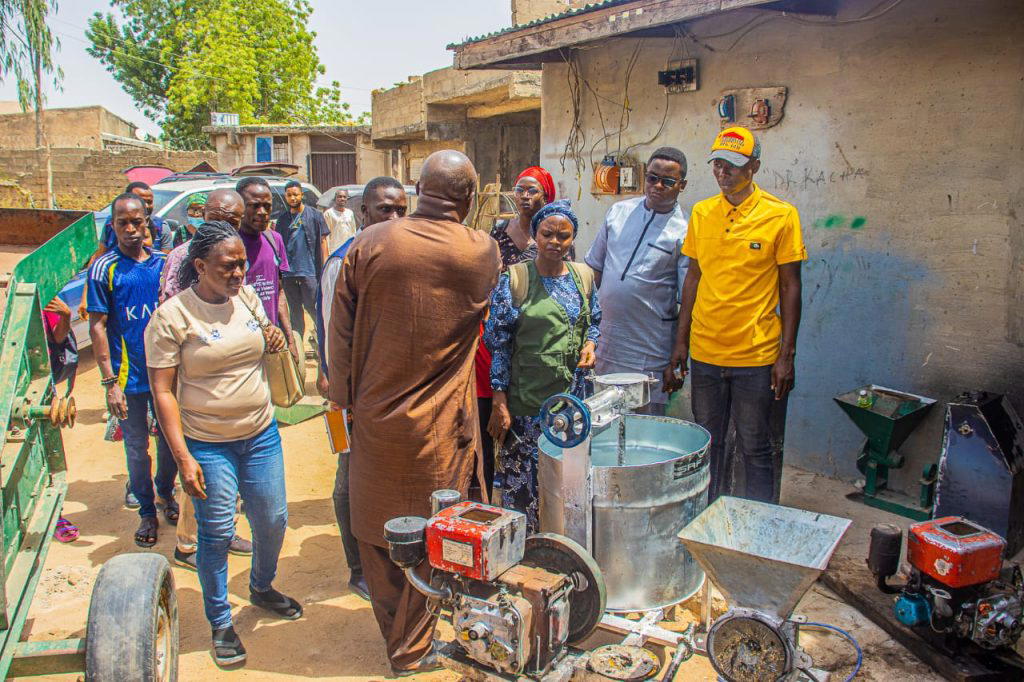
What members purchased with their pooled funds tells the story of serious commercial ambition: a groundnut oil processing machine capable of producing five tons daily, a peanut processing machine, office space, a production center, and storage facilities located within Kahyel Integrated Services premises in Yola.
Kahyel Integrated Services Limited, an Adamawa-based consulting firm, serves as NLCA’s technical partner for the enterprise. That partnership provides expertise the cooperative needs to navigate the gap between community-level processing and commercial-grade production that can compete in formal markets.
Inyamkume announced that NLCA has established an Enterprise Development Committee with two representatives from each member organization to provide oversight and strategic support. The governance structure acknowledges that running a profitable business requires different skills and accountability mechanisms than managing donor-funded programs.
The coalition isn’t treating regulatory compliance as an afterthought. According to The Gazette News (Nigeria), NLCA has already begun registration and engagement with the Technology Incubation Centre in Yola, the National Agency for Food and Drug Administration and Control, the Federal Institute of Industrial Research Oshodi, and the Nigerian Council of Food Science and Technology.
Those registrations matter because they determine whether products can legally be sold beyond informal local markets. NAFDAC certification, in particular, opens doors to retailers, institutions, and export markets that won’t touch products lacking proper regulatory approval.
The Technology Incubation Centre in Yola connects the enterprise to resources designed to support startups with technical assistance, quality control systems, and business development support. For a cooperative venturing into commercial production for the first time, access to such expertise could mean the difference between sustainable operation and expensive mistakes.
Engagement with the Federal Institute of Industrial Research brings capacity to refine production processes and potentially develop value-added products beyond basic groundnut oil. The Nigerian Council of Food Science and Technology provides professional certification that reassures buyers about food safety and quality standards.
Groundnut oil itself represents a strategic product choice. As a staple cooking medium across Nigeria and West Africa, it offers ready domestic demand. The five-ton daily production capacity suggests the enterprise aims to serve markets well beyond immediate NLCA member consumption.
But the coalition’s vision extends further. Plans include establishing a modern bread bakery, which Inyamkume said will create jobs, increase income generation, strengthen local food systems, and enhance institutional sustainability while supporting continued community impact.
Adding a bakery makes commercial sense. Bakeries require different equipment and skills than oil processing, but they share distribution channels and customer bases. A coalition supplying both cooking oil and bread to retailers and institutions multiplies revenue streams while spreading operational risks across different product lines.
For member organizations that contributed funds to purchase equipment and establish facilities, the enterprise represents a gamble on self-reliance. If the business succeeds and generates profits, those returns can fund community programs without waiting for donors to approve proposals or release instalments.
If it fails, members lose their investments and NLCA returns to full dependency on external funding. That risk concentrates minds on operational efficiency and market competitiveness in ways that donor-funded activities rarely do.
The cooperative structure distributes both risks and rewards among members who now have skin in the game. Shared investment creates collective ownership that can motivate members to support the enterprise through their networks, direct purchases, and active participation in governance.
However, cooperatives face distinctive challenges. Balancing member expectations for dividends against the need to reinvest profits for growth requires discipline that can be difficult when members contributed their own limited resources and want to see returns quickly.
Ensuring professional management while maintaining democratic member control demands governance structures that many cooperatives struggle to get right. The Enterprise Development Committee represents NLCA’s attempt to create oversight that protects member interests without micromanaging day-to-day operations.
The announcement that the first products are “available for your testing” invites feedback from potential customers, members, and supporters before the large-scale commercial launch. Smart businesses use early production runs to identify quality issues, refine packaging, and adjust formulations based on customer responses.
For Adamawa State, the enterprise adds processing capacity in a region where agriculture dominates the economy but value addition often happens elsewhere. Processing groundnuts into oil locally rather than shipping raw nuts to processors in Lagos or Kano keeps more economic value within Adamawa.
Jobs are created through the processing operations and planned bakery matter in a state where formal employment remains scarce and youth unemployment drives migration to cities. Even enterprises employing ten to twenty people make meaningful differences in communities where wage labor opportunities are limited.
Whether Local Coalition Agro Processing and Export Services achieves its ambitious vision depends on execution challenges that lie ahead: maintaining consistent product quality, developing reliable distribution channels, managing cash flow through seasonal variations in raw material supply, and remaining price competitive while meeting regulatory requirements.
The enterprise’s success or failure will provide lessons for other civil society organizations exploring social enterprise as a path toward financial independence. If NLCA demonstrates that member contributions can build commercially viable businesses generating surpluses while serving social missions, the model becomes attractive to Nigeria’s vast network of community organizations tired of donor dependency.
Inyamkume’s phrase “building sustainability beyond donor funding” captures the fundamental motivation driving the enterprise. Organizations that generate their own revenue from commercial activities gain autonomy that fully donor-dependent groups can never achieve.
The first bottles of groundnut oil produced under NLCA’s banner carry symbolic weight beyond their commercial value. They represent proof that local coalitions can pool resources, navigate regulatory systems, and establish commercial operations supporting broader social development missions while building economic independence.
As members sampled the inaugural production this week, they weren’t just tasting groundnut oil. They were tasting possibility: the possibility that their cooperative investment might generate returns that fund community programs, create jobs, and demonstrate that African solutions to African challenges don’t always require waiting for external donors to write cheques.
Whether that possibility becomes reality depends on how well NLCA executes the difficult transition from civil society organization to commercial enterprise operator. For now, production lines are running, products are emerging, and members who pooled their resources are watching closely to see if their gamble on self-reliance pays off.
Disclaimer
Comments expressed here do not reflect the opinions of Vanguard newspapers or any employee thereof.