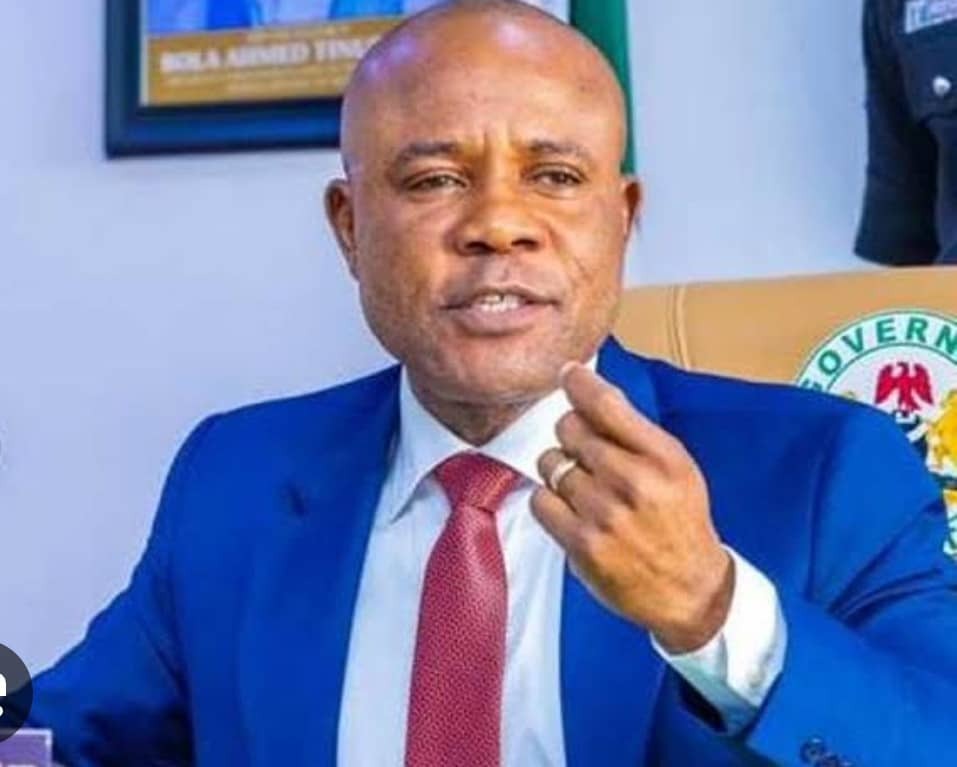
Governor Mbah
By Ibrahim Hassan-Wuyo
Enugu State’s ongoing economic transformation under Governor Peter Ndubuisi Mbah is attracting growing national attention, as reforms and large-scale infrastructure investments reshape the state’s development trajectory.
This view was expressed by Concerned Professionals for Good Governance, a leadership advocacy group, in a statement signed by its representative, Okechukwu Nwafor. The group said the administration’s policy direction signals a deliberate shift from a civil service-dependent structure to a diversified, investment-driven economy.
Governor Mbah, who assumed office on May 29, 2023, has introduced governance reforms and development initiatives aimed at strengthening industrial growth, enhancing public service efficiency, and expanding economic opportunities.
Governance Reforms and Ease of Doing Business
Key early measures include Executive Order 005, which mandates Ministries, Departments, and Agencies (MDAs) to publish service-level agreements detailing procedures, timelines, and costs for services. The policy is designed to promote transparency, predictability, and accountability.
The digitisation of land administration through the Enugu Geographic Information Services (ENGIS) has streamlined land title processing, reducing bureaucratic delays and improving access to land for commercial and industrial development. Observers say these reforms are improving the ease of doing business and boosting investor confidence.
Infrastructure Expansion as Growth Catalyst
Infrastructure development remains central to the administration’s economic agenda. Projects include the construction and rehabilitation of road networks linking rural production centres to urban markets, and a significant expansion of water supply capacity from about two million litres per day to a projected 120 million litres per day.
The passage of the Enugu State Electricity Law has created opportunities for private sector participation in power generation and distribution. Deployment of fibre-optic infrastructure and technology-driven security systems is also supporting digital commerce and public safety.
The government has initiated the revival of previously dormant industries, including Sunrise Flour Mills, United Palm Produce Ltd., and Nigergas Ltd., to restore production capacity and generate employment. Developments such as the Lion Business Park and a proposed Free Trade and Industrial Zone are expected to attract manufacturing and logistics investments, while large-scale agricultural estates aim to modernise food production and strengthen export value chains.
Through the Smart Green Schools initiative, the state is introducing digitally enabled learning environments, focusing on skills in coding, robotics, artificial intelligence, and other emerging technologies. Investments in digital governance and civil service capacity are also improving public sector performance and service delivery.
Transport, Connectivity, and Tourism
Transport modernisation efforts include the launch of Enugu Air, development of ultramodern transport terminals, and rollout of a state-wide mass transit system powered by compressed natural gas (CNG) buses, enhancing mobility and positioning Enugu as a regional logistics hub.
In hospitality, restoration of the historic Presidential Hotel and construction of modern conference facilities form part of a broader strategy to expand tourism and strengthen the state’s conference economy. Enugu has hosted an increasing number of national conferences and corporate events, reflecting renewed commercial activity.
Security and Technology Investments
The administration has prioritised security coordination, working with agencies and community stakeholders to address disruptions linked to sit-at-home protests in parts of the South East. A $20 million technology investment project is expected to support local digital device manufacturing and expand industrial capacity.
According to the group, these reforms reflect a broader vision of reducing reliance on federal allocations while building a resilient, diversified, and technology-driven economy. Stakeholders emphasise that sustained implementation, institutional stability, and policy continuity will be critical to maintaining momentum and ensuring inclusive growth.
Analysts say the coming years will determine how effectively these reforms translate into measurable economic gains and long-term prosperity for Enugu State.
Disclaimer
Comments expressed here do not reflect the opinions of Vanguard newspapers or any employee thereof.