By Nkiruka Nnorom
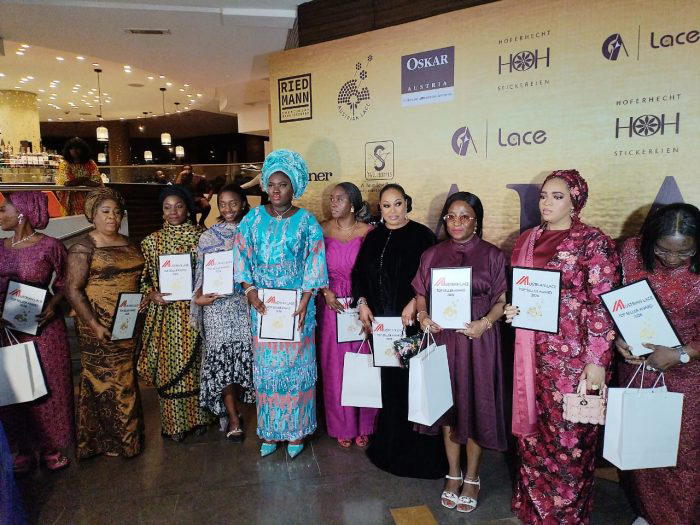
Lagos State government has reaffirmed its commitment to fostering international trade, particularly with Austria, as the Central Europe country honoured 63 top Nigerian lace merchants.
The event, organised by the Commercial Section of the Austrian Embassy in Nigeria on behalf of the Association of Austrian Lace Manufacturers in Vorarlberg, Austria, celebrated excellence, creativity, and enduring commercial collaboration between Austria and Nigeria with a focus on the textile industry.
The event highlighted the strong bilateral trade relations between Austria and Nigeria with nearly half of Austria’s lace exports going to Nigeria.
It brought together top lace merchants, designers, and industry stakeholders to honour the contributions of Nigerian merchants, who have played a critical role in promoting and selling Austrian lace in the country.
The event also featured exquisite designs from renowned Austrian manufacturers like Riedmann, Oscar, HOH, Scheffknecht, and Amann, live entertainment, and an awards ceremony, recognising top achievers in the industry.
Speaking at the event, Mrs. Folashade Ambrose-Medebem, Lagos State Commissioner for Commerce, Cooperative, Trade and Investment, said that the Austrian Lace Appreciation Event was more than a tribute to top lace sellers. The event, according to her, was a testament to the enduring bilateral trade relationships between Nigeria and Austria.
She noted that Austrian lace had carved a distinctive niche in Nigeria’s fashion industry, being synonymous with quality, elegance, and craftsmanship.
She stated that recognition of top lace sellers was commendable, saying that they serve as critical connectors between Austrian manufacturers and the Nigerian consumers.
“All these entrepreneurs and business leaders serve as critical connectors between Austrian manufacturers and the Nigerian consumers. They take on the responsibility of importation, distribution, marketing, retail, adaption, and adaptation to suit local tastes and market dynamics,” she said.
“We also acknowledge the importance of cultural exchange as a foundation for economic diplomacy. Trade is most resilient when it is built not only on transactions, but on mutual respect, shared creativity, and people-to-people connections. Events such as this deepens these bonds; they allow us to celebrate craftsmanship while fostering dialogue between producers, distributors, designers, policy makers, and investors,” Ambrose-Medebem added.
She called on Nigerians to take advantage of the trade ties, saying that opportunities abound for collaboration between Austrian manufacturers and investors across the textile value chain, including local finishing, distribution hubs, fashion incubation programmes, skills development, and technology transfer.
She assured that Lagos State would remain committed to creating an enabling business environment, improving the ease of doing business, and fostering international trade relationships that create jobs, enhance skills, and stimulate prosperity.
Barbara Lehninger, Commercial Counsellor, Austrian Embassy in Nigeria, said that the relationship between Nigerian lace vendors and Austrian lace manufacturers had been fruitful and successful for decades, dating back to the 1960s.
She noted that the partnership had been mutually beneficial, with many generations of companies involved, while the number of top sellers of Austrian lace has continued to increase over the years.
Lehninger stated that Nigeria had remained a key market for Austrian lace due to its vibrant fashion industry, creativity, and the blending of tradition with innovation.
Jermaine Sanwo-Olu, Executive Secretary/Head of Lagos State Office of Diaspora Affairs (LASDA), noted the significance of the event, saying that it promotes cultural exchange between Nigeria and Austria.
He called on Nigerians, particularly those in the diaspora, to seize business opportunities in the textile industry, including lace production and export.
Disclaimer
Comments expressed here do not reflect the opinions of Vanguard newspapers or any employee thereof.