By Joseph Erunke, Abuja
The Federal Government has begun a coordinated push to overhaul women’s health outcomes in Nigeria, as it convened the first national Women’s Health Stakeholders’ Meeting under the newly created Office of the Senior Special Assistant to the President on Women’s Health.
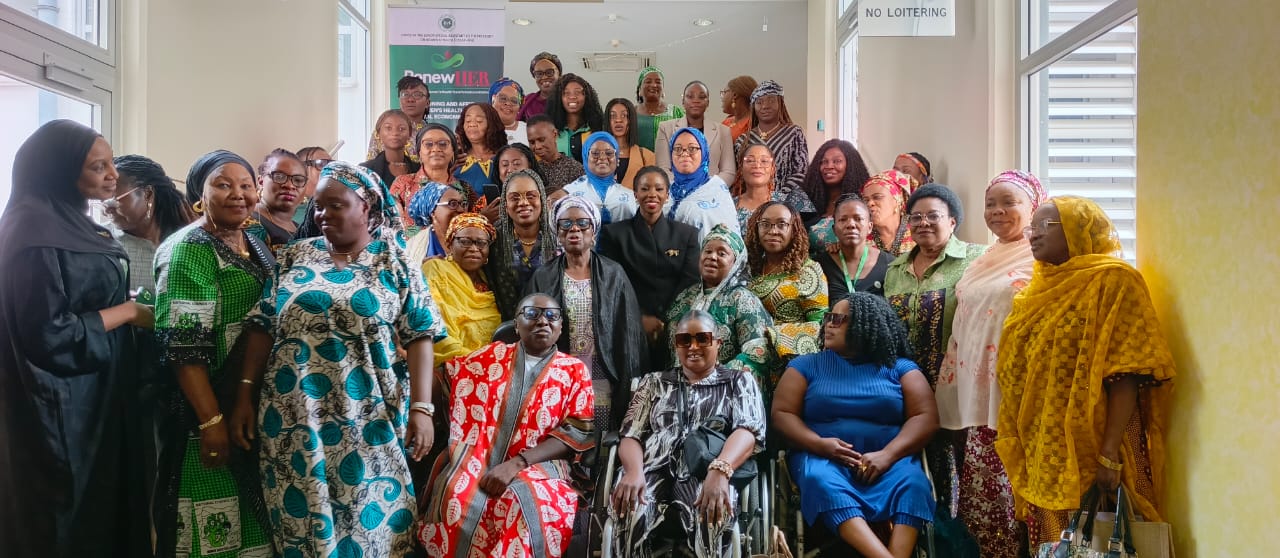
The meeting, held on Tuesday in Abuja, brought together women’s groups, civil society organisations, media practitioners, development partners and government officials to shape priorities for the implementation of the President’s RenewHER women’s health transformation agenda.
Speaking at the forum, Senior Special Assistant to the President on Women’s Health, Dr. Adanna Steinacker, described the gathering as a “listening engagement” designed to ensure that national policies are informed by the lived realities of women, particularly those in underserved communities.
She said the establishment of the Office of the Senior Special Assistant to the President on Women’s Health,officially launched by President Bola Ahmed Tinubu on September 11, 2025,marked the first time Nigeria would have a dedicated coordinating platform for women’s health at the presidency.
According to Steinacker, the office was created to strengthen alignment, coordination and policy coherence on women’s health issues, working closely with the Federal Ministry of Health and Social Welfare and the Ministry of Women Affairs.
“I would like to thank President Bola Ahmed Tinubu for creating, for the first time in our history, an office dedicated to women’s health,” she said, while also commending the Coordinating Minister of Health and Social Welfare, Prof. Muhammad Ali Pate, for providing the leadership that enabled the stakeholders’ engagement.
She explained that the mandate of the office is driven through the RenewHER agenda,an acronym for Health, Equity and Reform,which is structured around three core pillars aimed at closing longstanding gaps in women’s and girls’ health outcomes.
The first pillar focuses on digital media, advocacy and health literacy, targeted at addressing widespread gaps in awareness about women’s health and existing government services.
“There is still a significant lack of knowledge about how women can take care of their health, and even about services already available,” Steinacker said, noting that digital platforms would be leveraged to disseminate accurate, evidence-based information and encourage positive health-seeking behaviour.
The second pillar centres on geopolitically anchored flagship campaigns to be implemented in collaboration with the Federal Ministry of Health.
She said this approach would involve identifying high-burden regions, prioritising critical issues in those areas and deploying targeted, data-driven interventions.
Coalition-building forms the third pillar of the agenda, with plans for symposia, summits and multi-stakeholder networks to advance women’s health as a shared national priority.
Steinacker stressed the need to break down institutional silos and promote coordinated action across government, civil society and development partners.
Tuesday’s meeting, she said, marked the first stakeholder convening under the new office and provided an opportunity for participants to highlight access challenges and service gaps at the community level.
“Women’s groups are closest to the grassroots. If we want to take solutions to the people, we must first understand the problems from them,” she said.
Steinacker emphasised that the initiative was not about personalities, but about leveraging the opportunity created by what she described as a progressive administration.
“I might come as one, but I stand as a thousand. This opportunity is for every woman and girl in this country,” she said, underscoring the critical role of the media in shaping narratives and driving improved health outcomes.
She said the next phase of implementation would include sustained dialogue, improved coordination and the possible creation of technical working groups to address priority issues identified during consultations.
The stakeholders’ meeting, convened under the leadership of the Federal Ministry of Health and facilitated by the Office of the Senior Special Assistant to the President on Women’s Health, is part of broader efforts to translate the Renewed Hope Agenda of President Tinubu into inclusive, systems-level interventions for women and girls nationwide.
As the RenewHER initiative is scaled nationally, Steinacker said continued engagement with women’s groups, professionals, youth organisations and the media would be critical to ensuring that policies are grounded in community realities and deliver measurable impact across Nigeria.
Disclaimer
Comments expressed here do not reflect the opinions of Vanguard newspapers or any employee thereof.