By Joseph Erunke
Niger State’s centuries-old cultural pride, the Bida Bariki festival, is set for major global spotlight as the Federal Government and the National Council for Arts and Culture (NCAC) signal readiness to partner the state in transforming the iconic durbar into an international tourism brand.
The push gained momentum following high-level engagements led by the member representing Bida/Gbako/Katcha Federal Constituency, Sa’idu Musa Abdullahi, and the General Manager of the Niger State Tourism Corporation, Zainab Mohammed, who have been rallying federal support to unlock the state’s vast tourism potential.
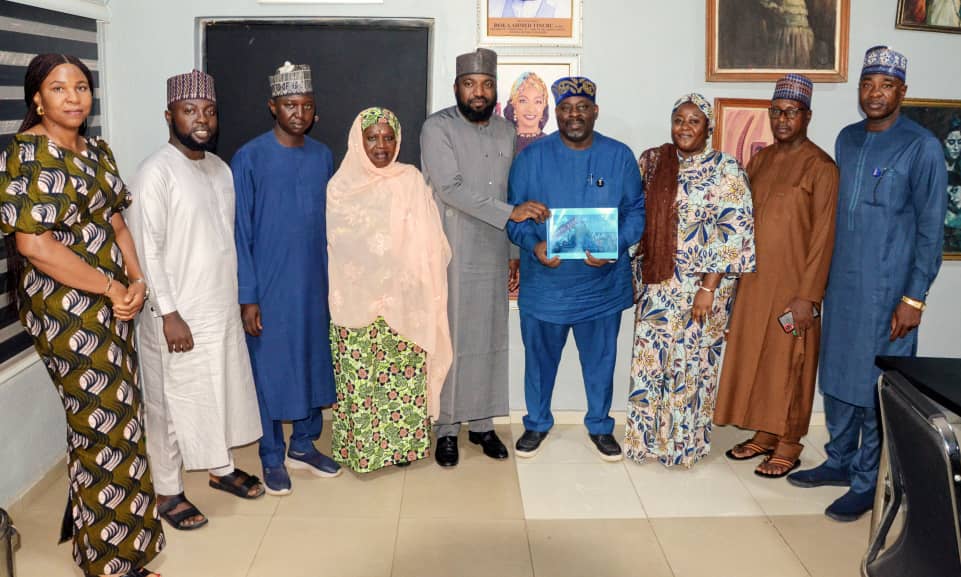
After an earlier meeting with the Minister of Arts, Culture and the Creative Economy, Hannatu Musawa, the delegation took their campaign to NCAC Director-General, Obi Asika, seeking structured collaboration to reposition the annual Bida Bariki — a durbar tradition spanning over a century — as a flagship cultural export.
Hon. Abdullahi described Bariki as one of the most important cultural events in the Nupe Kingdom, deeply woven into the identity of the people and celebrated twice yearly on the fifth day of both Eid-el-Fitr and Eid-el-Kabir.
“It is a tradition that has existed for more than 100 years,” he said.
“Even after independence, it has endured. But now, we must not only sustain it — we must give it greater visibility and tell our story differently as a generation.”
According to him, the festival begins with homage to the traditional institution at the Emir’s palace and culminates in a grand procession of traditional rulers across Bida town, drawing massive crowds from across Niger State, beyond Nigeria and from outside the country.
“For the Nupe-speaking people, Sallah is on Bariki Day,” he said, illustrating the cultural weight the event carries.
“Generation after generation, it has remained the same. But in today’s world, we must elevate it.”
He revealed that Minister Musawa had expressed immediate interest in the proposal following her personal experience of Nupe culture during a recent visit to Bida.
Reviving a fading craft heritage
Beyond the durbar spectacle, the state is also seeking to revive Bida’s renowned craftsmanship — a sector that once defined the emirate’s economic and artistic identity.
Zainab Mohammed said the broader vision is to tie the festival to economic revival through craft exhibitions and cultural showcases.
“The tradition has gone down a bit. We are looking at how to revive Bida craftsmanship and integrate it into the festival experience,” she said.
“When people come for Bariki, they should also encounter our artisans — the metal works, bead making and other folk arts that define us.”
She reminded stakeholders that in 2021, Bida was designated Nigeria’s first UNESCO Creative Cities Network Creative City of Craft and Folk Art, a status that places it on the global cultural map.
“When UNESCO saw the parade, the horsemanship, the drummers, the dancers, they invited our troupe to South Korea to showcase Nupe culture,” she added, underscoring the international appetite for the heritage.
NCAC pledges branding, global promotion
Responding, NCAC Director-General Obi Asika commended the initiative and pledged institutional backing, particularly in the areas of branding, storytelling and structured promotion.
He observed that poor publicity has limited the reach of northern cultural festivals.
“Nobody seems to know when the durbars are happening,” Asika said, adding that “you just wake up and it’s tomorrow. If I hear it’s tomorrow, I can’t arrive tomorrow.”
He proposed a six-week pre-event media rollout and a two-week post-event media extension to sustain visibility.
“You still need traditional media — newspapers, radio and TV — but a lot of the storytelling today happens through social media, influencers and travel bloggers.
Once you aggregate content under a hashtag, everyone pushes the same story,” he said.
Asika also advised the state to engage diplomats, celebrities, influencers and major brands as ambassadors for Bida Bariki 2026, positioning it as a must-attend cultural event on Nigeria’s tourism calendar.
The unfolding partnership signals a shift toward leveraging culture as an economic driver in Niger State, with stakeholders viewing tourism as a pathway to job creation, investment inflow and global recognition.
Disclaimer
Comments expressed here do not reflect the opinions of Vanguard newspapers or any employee thereof.