By Mathew Johnson
Stakeholders across the education, finance and workforce development sectors have called for urgent, systemic reforms in Africa’s education landscape, warning that outdated curricula and rigid thinking are undermining the continent’s preparedness for the future of work.
The call formed the thrust of the DisruptED Africa Summit 2026, organised by EduKate Africa at the University of Lagos on Thursday, December 29, 2026.
Flagging off the summit, which convened academics, industry leaders and students to interrogate the relevance of current learning models, Professor Olufemi Oloyede of the University of Lagos challenged youths to position themselves as agents of change rather than passive recipients of knowledge.
He noted: “As I look at the young minds in this room, I see hope for this continent. We must move away from normal thinking and begin to do things differently.”
Reframing the notion of disruption, Prof. Oloyede described it as a constructive tool rather than a nuisance. “When people hear ‘DisruptED Africa,’ they think of nuisance. But disruption is about challenging systems, questioning processes and finding better ways,” he explained.
He urged students to abandon the job-seeker mindset for a problem-solving approach, reminding them that “you are the employer. Problems are opportunities waiting to be transformed.”
Echoing this position, Director of EduKate Africa and sponsor of the event, Tosin Adebisi, stressed that innovation in education was no longer optional.
He said: “If you keep doing the same thing and expect the same result, then you probably know what it is—some people call it insanity. We must keep innovating, thinking differently and reimagining everything around education: how we teach, how we learn, and how we address access, financing, skills and employability gaps.”
Adebisi challenged young people to think beyond national boundaries, noting that “young people should be asking themselves: how am I future-ready? How am I future-proofing myself? What is my place in the changing dynamics of the global world, not just in Nigeria, but globally?”
At the event, he unveiled the Community Endowment Fund, a “Communiversity” initiative designed to pool sustainable funding from the diaspora, high-net-worth individuals and local communities to support students and innovation.
“We want to complement what the government is already doing. Any money you put in there, you will see it. We’ve built a system like the GoFundMe of education. Students’ dissertations should not die; they should solve real-world problems, create jobs and validate products while receiving financial support,” he said.
Speaking during an interview with journalists, Francis Omorojie, Director at EduKate Africa, explained that the summit was designed to integrate all actors within the education ecosystem.
“The DisruptED Summit brings together academia, the private sector and financial institutions to design solutions that ensure inclusive, accessible and quality education,” he said.
Omorojie revealed that financial hardship remained a major barrier to education in Nigeria, noting that “over 50 per cent of student dropouts are due to financial constraints.” He added that strategic partnerships were being formed with organisations offering technology programmes and courses to make them accessible to students.
He also announced the launch of the Adame Fund, a philanthropic initiative aimed at providing scholarships and seed funding to students.
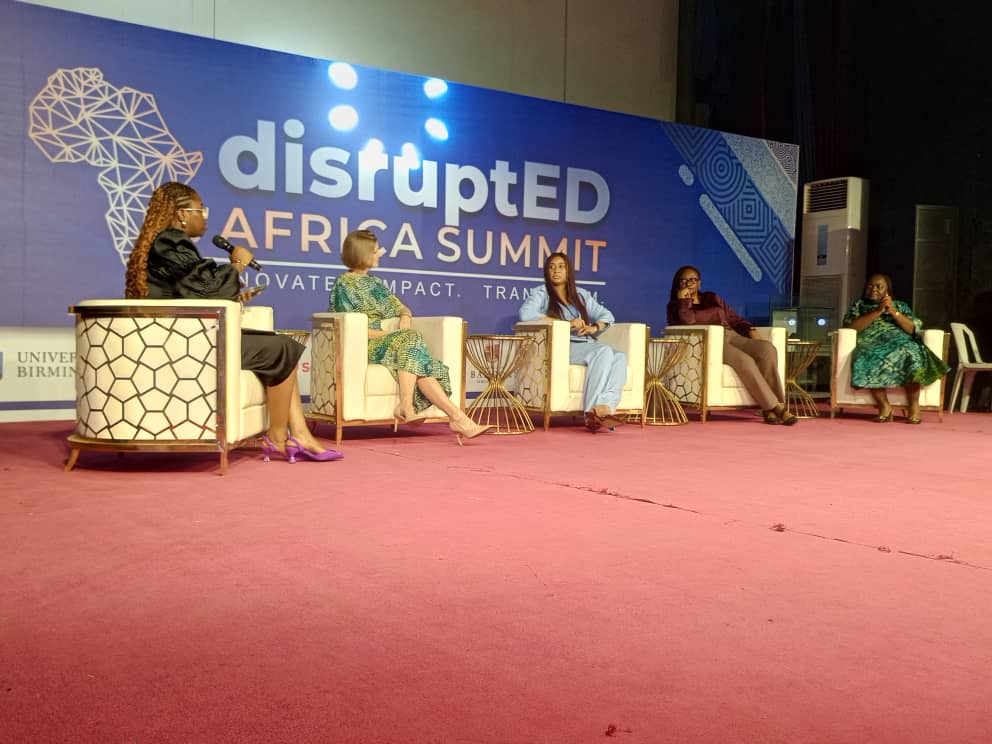
The urgency of reform dominated a panel discussion featuring Olapeju Ibekwe of Sterling One Foundation, Debt Okoh of Brunel University, London, and Ashley Immanuel of Semicolon.
One of the panelists lamented the slow pace of curriculum reform, saying: “All my education has been in Nigeria, and I do not think there has been any significant change to the curriculum, while the world has moved significantly.”
Warning against intellectual stagnation, another panelist noted that “if you don’t upgrade your knowledge, you risk becoming extinct,” stressing that formal schooling alone is insufficient.
“Beyond schooling, young people need opportunities to learn, earn and test their skills,” the panel agreed.
Ideas were translated into action during the Inter-University Africa Debate, where students of the University of Lagos presented Project Green Dream, an initiative aimed at reducing the annual waste of about 32 billion kilograms of tomatoes by converting them into flakes.
With more than 200 students in attendance, participants warned that Africa could face a bleak future if urgent curriculum reforms are not implemented, innovative financing models introduced and obsolete systems discarded, noting that failure to act would leave a generation unprepared for the demands of the 21st-century global economy.
Disclaimer
Comments expressed here do not reflect the opinions of Vanguard newspapers or any employee thereof.