By Chidera Efosa
The global movement to eradicate Female Genital Mutilation (FGM) is often framed through statistics and legislative milestones. Yet, behind the data lies a harrowing reality for those on the front lines of change. For families who dare to defy centuries of entrenched practice, the struggle is not merely cultural—it is a matter of life and death.
Across the globe, an estimated 230 million women and girls have been subjected to FGM, a practice recognized internationally as a gross violation of human rights. While often justified as a “rite of passage” or a safeguard for “chastity,” FGM is, at its core, a manifestation of systemic gender inequality—a weapon of control that inflicts lifelong physical and psychological trauma.
In communities where tradition is held as absolute, the refusal to comply with FGM is seen as an act of radical rebellion.
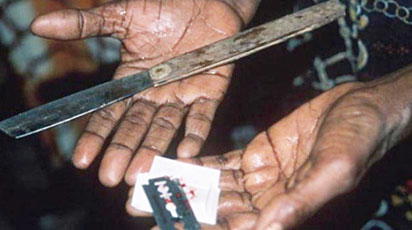
Recently, this long-simmering tension erupted into a devastating breaking point with the brutal killing of several members of a single family in Ugbori community, Warri south, Delta state. Their name is withheld due to security reasons, as some surviving relatives remain on the run—but their humanity must not be erased along with their identities. They were not targeted for violence, extremism, or rebellion. Their only “crime” was the most fundamental and instinctive act of parenthood: choosing to protect their daughters from the blade.
Under relentless pressure, isolated and abandoned even by other family members who withdrew out of fear or forced compliance, they stood firm. Alone, exposed, and resolute, they refused to surrender their children to harm. That act of love, courage, and moral defiance ultimately became their death sentence
This was not a localized anomaly, nor an unfortunate exception—it was a chilling and deliberate repetition of history, as if the past had risen again to claim new victims. The blood that was spilled was not new; it flowed along a path already carved by earlier atrocities, darkened by memory and unanswered cries.
Two years earlier, James Edah and his family were murdered for the very same reason, while surviving members were forced into exile—scattered, hunted, and silenced. Their only defiance was the courage to resist practices that feed on suffering and demand obedience through fear. In both tragedies, the truth is agonizingly clear: a choice for progress over pain, for love and protection over inherited harm. And in both cases, that choice was met with merciless brutality from those who anoint themselves the guardians of “cultural heritage,” twisting the language of tradition into a weapon—one used to justify violence, erase dissent, and punish anyone who dares to imagine a future without blood.
A State of Collective Exhaustion
The repeated targeting of reformist families has plunged communities into a state of collective exhaustion. There is a profound weariness that comes from living in a system where the state’s silence is deafening. When the family were murdered in 2023, the lack of meaningful legal intervention sent a dangerous message: that tradition provides a cloak for impunity.
Today, that impunity has emboldened perpetrators, leaving vulnerable families to feel exposed and unprotected. While legal frameworks intended to abolish FGM exist, they often remain theoretical artifacts rather than practical shields. The gap between the law on the books and enforcement on the ground is where families are lost.
A Critical Turning Point
The blood of these families serves as a sober testament to a systemic failure of justice. We are witnessing a crisis that demands more than just advocacy; it demands an urgent re-evaluation of how the law intervenes in cultural spaces.
The Failure of Protection: Families cannot be expected to champion human rights if doing so carries a death sentence.
The Illusion of Religion: It is essential to reiterate that neither Islam nor Christianity endorses FGM; it is a cultural construct maintained through fear.
The Demand for Accountability: For progress to be sustainable, the state must challenge the notion that “tradition” grants a license to kill
A Call for Action
On a global scale, a girl today is one-third less likely to be subjected to FGM than she was three decades ago. This is a triumph of human rights. However, for that progress to reach the world’s most vulnerable corners, the cost of resistance must not be a grave.
The story of those who stood their ground—and paid the ultimate price—is a stark reminder that the fight to end FGM is not just about the blade; it is about the safety, dignity, and survival of those who dare to say “no.”
Disclaimer
Comments expressed here do not reflect the opinions of Vanguard newspapers or any employee thereof.