…as Matura Agro ignites Alfalfa revolution in Jigawa
By Gabriel Ewepu
DUTSE – A new dawn has begun in Nigeria’s food system as the United Kingdom, UK, Government support is transforming livestock production in Nigeria through Propcom+ by catalysing the Alfalfa Grass revolution in Jigawa State.
Noting that Nigeria’s livestock sector is constrained by a cycle of low productivity and vulnerability.
Smallholder farmers rely heavily on fibrous crop residues such as maize, sorghum, and rice stalks, which are bulky, low in nutrients, and inefficiently converted into meat and milk.
This dependence results in poor yields and a sector unable to meet the country’s growing demand for animal protein. The situation is worsened by land degradation, conflict-induced displacement, and limited resilience to climate shocks.
At the core of the challenge are the limited supply of nutritious, climate-adapted fodder and fragmented demand aggregation, which prevent the development of reliable feed markets.
To address these gaps, Propcom+ co-created the feed-and-fodder model with agribusinesses, including commercial fodder producers. At the centre of the feed and fodder model is Alfalfa grass, a nutrient-dense forage for livestock widely acclaimed as the ‘king of forages’.
According to Propcom+, in early 2025, it supported Matura Agro Resources Limited, an innovative agribusiness startup, in piloting Alfalfa Grass cultivation in Jigawa State using sustainable practices and new technologies.
This phased, private-sector-driven intervention is designed to support agribusinesses in scaling commercial fodder production. The pilot assesses the feasibility of inclusive, market-led fodder production to expand access to climate-smart, high-quality feed and drive systemic change in livestock nutrition.
Propcom+ provided catalytic support to unlock scale and sustainability in Matura’s business model. With a capital asset grant, the partner installed a 55-hectare centre-pivot irrigation system on previously underutilised land, enabling year-round cultivation of alfalfa for commercial fodder.
This investment transformed Matura’s 100-hectare expansion site into a productive asset and established the proof of concept for commercial alfalfa production in Nigeria.
The grant also funded a 100kw solar power system at Matura’s processing plant, allowing the company to optimise hay processing from an average of 10 tonnes per day (limited by unreliable electricity) to 80 tonnes per day. This efficiency gain positioned Matura to aggregate more grass from its outgrowers, strengthening supply chains.
In addition, two electric three-wheelers (E3Ws) were deployed to pilot green logistics, while farmer engagement and aggregation systems were enhanced to deepen inclusivity and resilience.
This collaboration creates a mutually beneficial cycle: smallholder farmers gain access to improved knowledge, inputs, and guaranteed markets, boosting their productivity and securing higher incomes.
Meanwhile, commercial fodder producers benefit from a reliable supply, stronger relationships with farmers, and better financial returns. Ultimately, the system fosters inclusive and sustainable fodder production that delivers long-term profitability for producers while improving livelihoods for smallholder farmers.
Propcom+ is an eight-year (2023 – 2030) rural and agricultural market development programme supporting climate-resilient and sustainable agriculture and forestry that benefits people, climate, and nature.
The programme is funded by the UK Foreign, Commonwealth & Development Office (FCDO) and is expected to impact 3.79 million smallholder farmers and small-scale entrepreneurs, with improved incomes and enhanced climate resilience.
The UK Government is keen on supporting Nigeria’s local economy, driving inclusive economic growth and maintaining mutual prosperity between Nigeria and the UK.
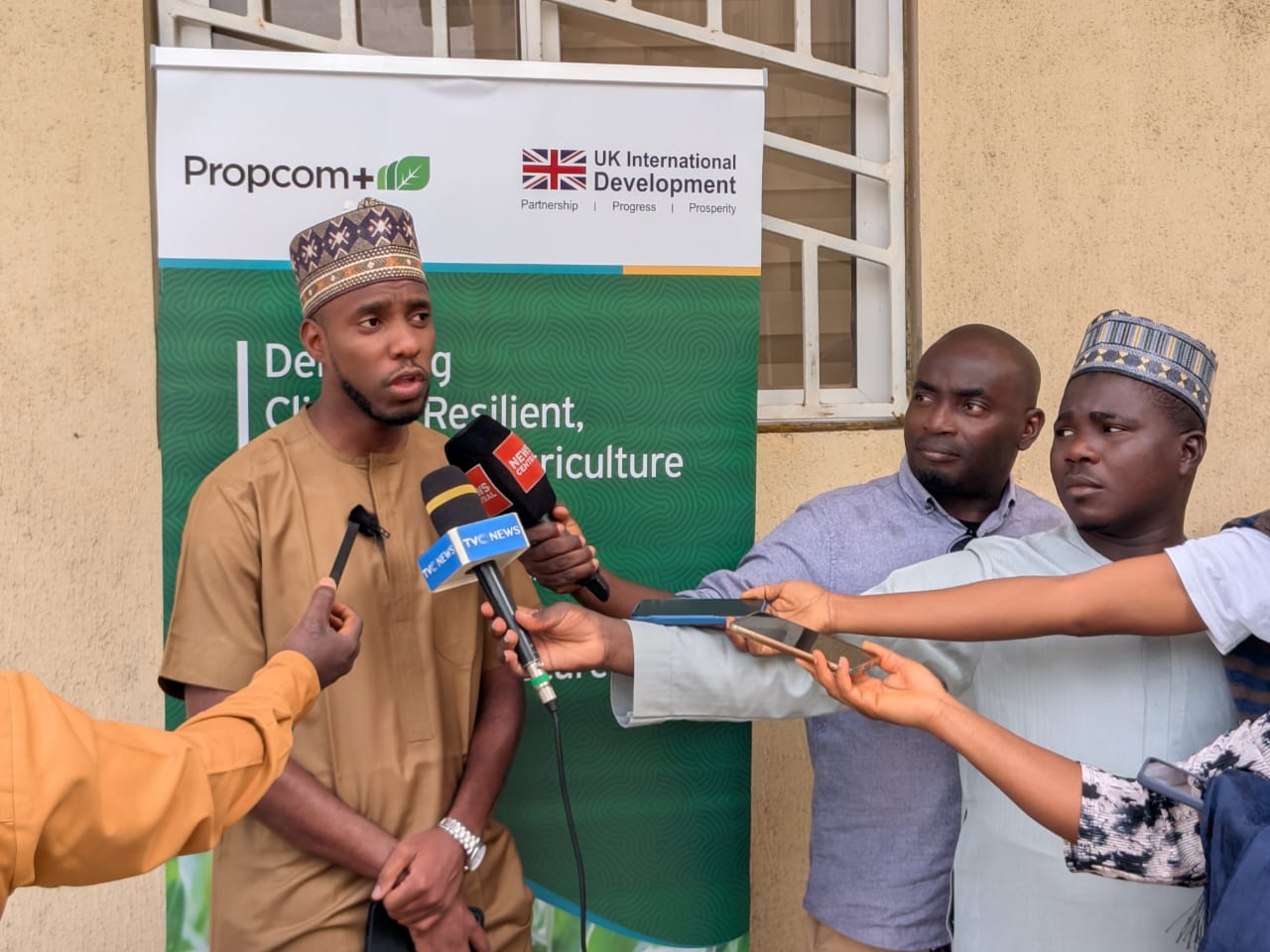
The Senior Portfolio Manager, Propcom+, Ahmad Nuhu, who also doubles as the manager for the Climate Adapted Livestock Feed and Fodder Intervention, explained that the intervention is unlocking the productivity in Nigeria’s livestock sector.
Nuhu also said the targeted systemic change that the programme is looking at is “the weak supply of nutritious and quality fodder currently in Nigeria.”
Speaking further about the programme’s activities at Matura Agro Limited which had ignited the Alfalfa revolution in Jigawa State, he made it known that, “When the programme identified Matura Agro as the private sector partner, the company was into the love-grass aggregation and processing, but they had a vision to backward integrate into commercial fodder production.
“They had already secured a hundred hectares of land from the Jigawa State Government, but it was underutilized. They couldn’t make it productive. So the programme co-created this commercial fodder production model, but particularly focusing on alfalfa grass, which is considered the ‘king of forage’ because of its high nutritious content and also high palatability.
“So we created the model where the programme basically supported with the catalytic funding to enable the partner to install irrigation equipment and also to secure seeds and agronomical expertise to really test this model.”
Meanwhile, he said the programme had recorded amazing success “even faster than we thought initially, because we have been with Matura Agro for just two years now and already we are seeing crowding in by other private sector actors trying to copy the model.”
According to him, the Jigawa State Government is adapting their policies in response to the success the programme by Propcom+, “because Matura Agro, we believe, has already provided the proof of concept that commercial alfalfa production is indeed commercially viable in Nigeria, and it’s very promising.”
Speaking on the impact of the programme on women and youth in the communities where Matura Agro is operating, he (Nuhu) said, “Smallholder farmers, especially women, have been integrated into the supply chain in various capacities as suppliers and also as those that provide post-harvest operations and also on the farm activities.
“So a lot of economic activities is being created for women and men in those localities.”
Meanwhile, he said the programme has significantly addressed “the issue of farmer-herder crisis, this intervention’s long-term vision is also aiming to reduce that or to solve that.
“What makes the farmers or the herders to roam about is because there is no availability of feeds and water for the animals. So when companies like Matura continue to succeed in this model, then it makes it easier for livestock farmers to be set in thrice, to stay in one place and be productive. So the model’s long-term vision will definitely be pivotal in solving this.”
Disclaimer
Comments expressed here do not reflect the opinions of Vanguard newspapers or any employee thereof.