By Ibrahim Hassan-Wuyo
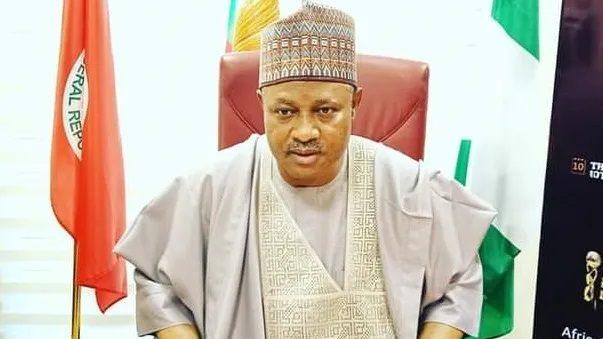
Politics, at its core, is about choices, consequences, and continuity. As Kaduna State gradually approaches the 2027 general elections, the political mood across the state points clearly in one direction: Governor Uba Sani has emerged not merely as an incumbent seeking re-election, but as a leader whose style of governance has restored confidence, reduced fear, and rekindled hope among a broad spectrum of Kaduna citizens.
From Fear to Relief: A Change in Governing Style
For many Kaduna residents, life under the previous administration was marked by tension and anxiety. Several political opponents of the former governor publicly complained of what they described as a hostile political climate. There were widely reported cases where properties belonging to perceived opponents were demolished by government agencies, often justified as enforcement of planning regulations, but viewed by critics as selective and punitive.
Journalists and civil rights activists were not spared. Some media practitioners were arrested, arraigned, and remanded in correctional facilities over reports critical of government policies, creating a chilling effect on press freedom. These incidents, whether justified or not, contributed to an atmosphere in which dissent was equated with disloyalty.
Under Governor Uba Sani, that climate has noticeably changed. Citizens who once felt as though Kaduna had become an open-air prison now breathe easier. People go about their legitimate businesses without fear of intimidation or harassment. Small-scale businesses have sprung up across Kaduna metropolis and satellite towns, a clear sign of renewed public confidence.
Reuniting a Divided Kaduna
Perhaps one of the most profound achievements of the Uba Sani administration is the rebuilding of social cohesion. For years, the Kaduna bridge symbolized more than geography; it represented deep religious and ethnic divisions. Today, that invisible line is fading. People of different faith now interact freely again, restoring the spirit that once earned Kaduna the reputation of being a liberal and cosmopolitan state.
This healing is particularly significant for Southern Kaduna. The previous administration was frequently accused by community leaders and civil society groups of being antagonistic toward the area. There were prolonged disputes over land, traditional institutions, and security responses, with many Southern Kaduna communities feeling alienated and unfairly treated.
Governor Uba Sani adopted a different approach. Through dialogue, inclusion, and visible engagement with community leaders, his government has reduced long-standing tensions and fostered a sense of belonging among communities that once felt marginalized.
Security: From Epicenters of Terror to Relative Calm
Security remains a defining issue in Kaduna politics. Areas such as Kajuru (Katari axis), Rijana, Birnin Gwari, Giwa, and parts of Chikun Local Government were once epicenters of banditry and kidnappings. Uba Sani’s administration has not claimed magic, but it has demonstrated consistency and coordination.
His government works closely with the Nigerian Army, Police, DSS, Civil Defence, and local intelligence networks. Joint operations, improved logistics support, and constant engagement with security commanders have led to the reopening of roads once considered death traps, including the Abuja–Kaduna corridor. While pockets of criminality still exist, they are increasingly confronted swiftly rather than allowed to fester.
Education, Investment, and Economic Confidence
One of Governor Uba Sani’s most applauded policies is his intervention in tertiary education. By reducing tuition fees in state-owned tertiary institutions, his administration relieved parents and students who were previously burdened by some of the highest fees in the country. This policy reinforced the idea that education should be accessible, not elitist.
On the economic front, Kaduna has regained investor confidence. The administration has actively wooed foreign investors and donor agencies, emphasizing stability, transparency, and partnership. A notable example is the Sanabil Qatar investment initiative, which signals renewed international confidence in Kaduna’s economic direction. Development partners and NGOs have also increased engagement in agriculture, health, and social protection programs across the state.
Respect for Institutions and Party Unity
Another quiet but significant shift is the restoration of dignity to traditional institutions. Unlike the frequent confrontations of the past, traditional rulers under Uba Sani are treated as partners in governance, not adversaries.
Politically, the All Progressives Congress (APC) in Kaduna is more united than it has been in years. While opposition parties struggle with internal conflicts and endless litigations, Uba Sani has managed party affairs with inclusiveness, consultation, and restraint, reducing internal sabotage and factional warfare.
Accountability Without Vengeance
Governor Uba Sani has also demonstrated commitment to recovering public funds allegedly misappropriated under previous administrations. Rather than loud media trials, his government has supported lawful processes aimed at recovering money and assets belonging to Kaduna people. This approach sends a strong message: accountability is necessary, but governance should not be driven by vendetta.
A Politics of Trust and Continuity
In a political environment where betrayal often defines leadership, Uba Sani has built a reputation for consistency and fairness. He has focused on governance, not persecution; reconciliation, not revenge.
As 2027 approaches, the evidence suggests that the people of Kaduna State are not merely looking backward at past grievances but forward toward stability and continuity.
The prevailing sentiment across
communities, faiths, and political divides is clear: Governor Uba Sani represents a politics of healing, inclusion, and steady progress.
For many in Kaduna, the choice is no longer about party loyalty alone, but about preserving a fragile peace and consolidating the gains already made. That is why, increasingly, the people appear ready to rally behind Uba Sani and ensure his return to Sir Kashim Ibrahim House in 2027.
Disclaimer
Comments expressed here do not reflect the opinions of Vanguard newspapers or any employee thereof.