By Marie-Therese Nanlong
Jos – The Nigeria Food Security Project (NFSP), through its Supply Chain Research and Innovation Hub (SCRIH), has commenced the pilot phase of an inclusive food security planning initiative in Plateau State, with support from the United Kingdom International Development–funded Strategic Planning for Resilience in Nigeria (SPRiNG) Project.
The initiative, titled “Enhancing Food Security and Peacebuilding in Nigeria through Strategic Planning,” is being implemented in partnership with the Plateau State Government, and designed to address the interconnected challenges of food insecurity, climate change and conflict, particularly in communities whose livelihoods have been disrupted by conflict.
The project adopts a development-focused approach that integrates agricultural resilience with peacebuilding strategies.
At the core of the SPRiNG Project is inclusive planning that prioritises women, youths and persons with disabilities, acknowledging their vital roles in food systems and community stability, and the pilot phase is being implemented in the Shendam, Mangu and Pankshin Local Government Areas (LGAs) of Plateau State.
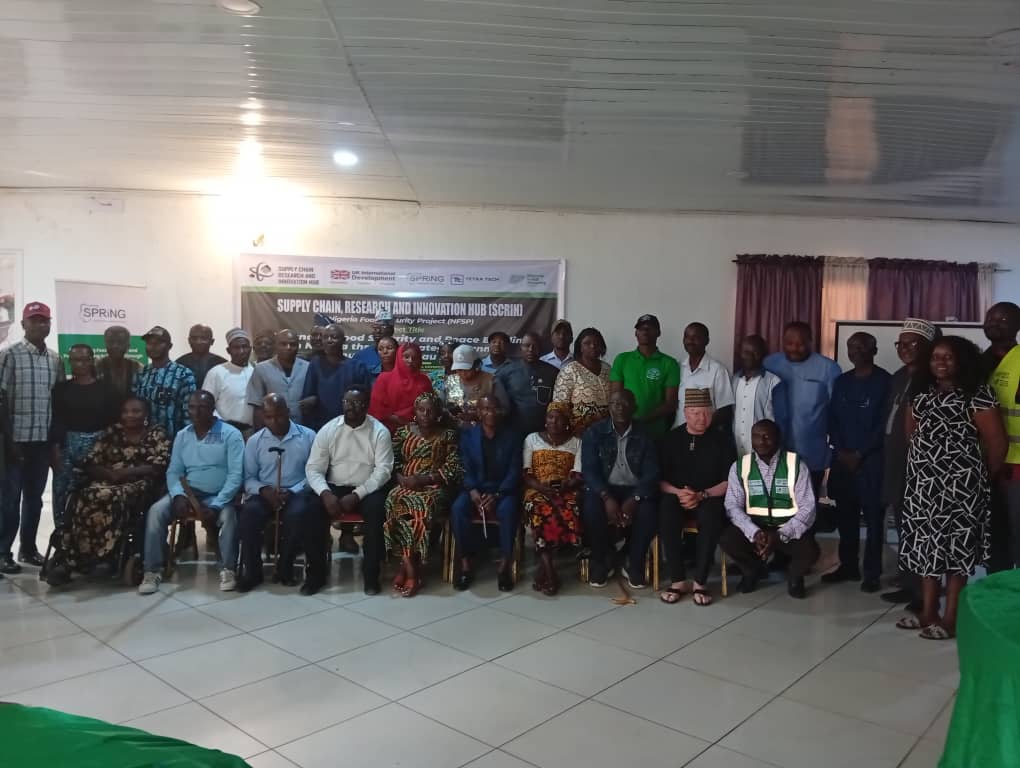
Speaking at a stakeholders’ consultative workshop and Memorandum of Understanding (MoU) briefing in Jos, the National Coordinator of the project, Dr Shalem Shiekuma, said the initiative was designed to support communities, and explained that the pilot phase, which commenced in November, 2025 will run for five months and is intended to test approaches that can be scaled up by the State government.
According to him, the project applies a holistic framework that combines policy support, community-level interventions and data-driven analysis to address the root causes of food insecurity and conflict.
“Food security is central to stability. When farmers cannot safely access their land or transport produce to markets, the consequences are quickly reflected in shortages, rising prices and deepening insecurity,” he said.
Plateau State Coordinator of SCRIH, Samson Iornongu, noted that the selected LGAs would serve as testing grounds for a scalable model capable of evolving into a state-wide and national action plan.
He disclosed that extensive consultations had already been held with the Plateau State Ministry of Agriculture and Food Security, relevant State institutions, academia, traditional leaders and community stakeholders.
Iornongu observed that sustained attacks on farming communities have significantly undermined agricultural productivity across the State, stressing that inclusive stakeholder participation was essential to strengthening existing policies and extending interventions to underserved areas.
Also speaking, the Deputy Director of Agricultural Services at the Federal Ministry of Agriculture and Food Security, Plateau State Office, Hannatu Ishaku, described food security as a critical response to prevailing security challenges.
She emphasised the need to protect farming communities, noting that they remain central to sustaining food production and rural livelihoods.
The MoU underpinning the project provides for the establishment of a Joint Technical Working Group to among other things, coordinate implementation, develop a clear roadmap, monitor progress, and the agreement will remain in force until the adoption of a State Strategic Food Security Plan on March 31, 2026.
Stakeholders from the State Ministries, people with disabilities, and others at the workshop expressed optimism that the SPRiNG Project would deliver practical, evidence-based solutions to food insecurity while contributing to lasting peace, resilience and inclusive development in Plateau State.
Disclaimer
Comments expressed here do not reflect the opinions of Vanguard newspapers or any employee thereof.