By Providence Ayanfeoluwa
Emuobosa Ojoboh, a Nigerian geoscience researcher, has drawn attention to the growing vulnerability of groundwater systems in oil-producing communities through field-based, data-driven research carried out in the Niger Delta.
As an undergraduate geoscience student, Ojoboh conducted a detailed study of shallow groundwater systems within the Warri–Sombreiro depositional environment, a region where millions of residents depend on groundwater for drinking, domestic use, and agriculture. The area is also a hub of petroleum activity, rapid urbanisation, and waste disposal, factors that collectively heighten the risk of groundwater contamination.
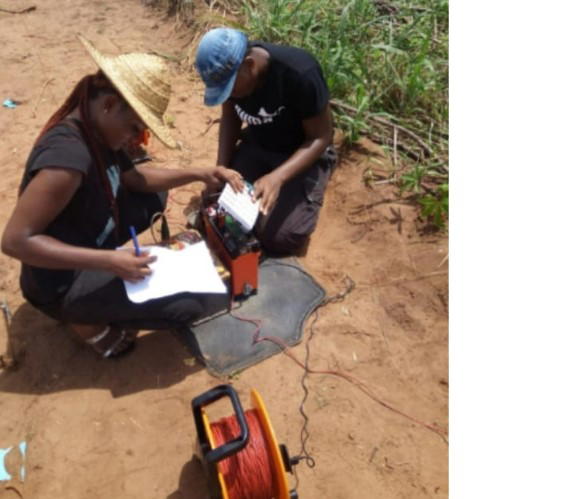
Her research focused on assessing the protective capacity of shallow aquifers in the region using geophysical resistivity methods. Through systematic field data collection and analysis of electrical resistivity measurements, Ojoboh investigated subsurface lithology, identified zones of higher permeability, and mapped potential pathways through which contaminants could migrate into groundwater reserves.
Ojoboh said, “The findings provided empirical insight into how shallow aquifers in oil-producing areas respond to environmental pressure, offering data that could inform environmental monitoring, land-use planning, and groundwater protection strategies”
According to the study, integrating subsurface data into environmental management is critical in regions where industrial activity coexists with residential settlements and where regulatory frameworks may be weak or inconsistently enforced.
Experts note that such research is particularly relevant in communities like Warri, where petroleum operations are located in close proximity to homes and farmlands. Understanding groundwater vulnerability in these settings is widely regarded as essential for safeguarding public health and ensuring the long-term sustainability of energy development.
Beyond its immediate environmental implications, Ojoboh’s work demonstrated the broader application of geophysical and data-driven techniques in the energy sector. The same analytical approaches used to assess aquifer vulnerability are also central to reservoir characterisation, environmental risk assessment, and sustainable field development planning in petroleum engineering.
Her undergraduate research gained international recognition following its peer-reviewed publication by the Society of Petroleum Engineers (SPE), a globally respected professional body whose technical publications are widely used by engineers and geoscientists. The publication elevated the study from a local field investigation to part of the global technical literature on groundwater protection and subsurface characterisation in deltaic petroleum provinces.
Ojoboh has since continued to build on this foundation, pursuing advanced training in geoscience and data science. Her current academic and professional trajectory reflects a continued focus on the integration of subsurface data, analytics, and energy systems, illustrating how early-stage field research can evolve into globally relevant contributions within applied geoscience and petroleum data science.
Her work underscores a broader lesson within the energy and environmental sectors: that impactful innovation often begins at the community level, where scientific inquiry, data analysis, and societal needs intersect beneath the surface.
Disclaimer
Comments expressed here do not reflect the opinions of Vanguard newspapers or any employee thereof.