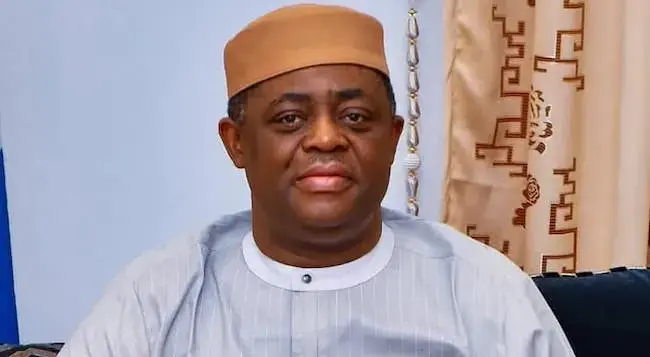
Fani-Kayode
By KALU OKORONKWO
More than 60 years after surviving a civil war that nearly shattered its fragile unity, Nigeria deserves truth, context and healing, not narratives that inflame ethnic suspicion. History must be approached with care and intellectual honesty, supported by evidence from multiple credible sources, not deployed as a weapon of political convenience.
Divisive claims, especially when widely circulated, threaten to undo the fragile progress toward national cohesion. A cursory review of an article published in Vanguard on Sunday, January 18, 2025, titled “60 Years of Coup: I saw hell on January 16, 1966 with a rider, … a witness to a morning of carnage” and attributed to Femi Fani-Kayode, reveals multiple distortions and historical inaccuracies particularly concerning the January 15, 1966 coup and its alleged ethnic character.
Fani-Kayode wrongly asserts that the military takeover was led by a single ethnic nationality. This claim reflects a fundamental misunderstanding of how military coups occur. Coups are conspiracies of individuals operating within a command structure; they are not ethnic plebiscites. No tribe is consulted, and no ethnic congress endorses such actions. To impose collective guilt on an entire people simply because some officers shared an ethnic origin is to misread both the military institution and the Nigerian state.
In his autobiography, A Journey in Service, former Head of State, General Ibrahim Badamasi Babangida, addresses the January 1966 coup with the sobriety of an insider and the benefit of historical distance. His account makes clear that the coup’s ethnic profile was far more complex than the simplistic labels often attached to it. The acknowledged leader of the coup, Major Kaduna Nzeogwu, was “Igbo by name” but born and raised in Kaduna, culturally immersed in Northern Nigeria, and fluent in Hausa.
Such details underscore how crude ethnic categorisations fail to capture historical reality. While Babangida acknowledged that the coup “took on an unmistakable ethnic coloration” in perception and outcome, he did not equate this with ethnic intent or design. His reflections suggest that ethnicity became layered, politicised, and misunderstood in the aftermath. Many historians agree that reducing the January 1966 coup to a single ethnic motivation obscures the broader military, political, and institutional failures that shaped the crisis.
By situating the events within a fractured military, a polarised polity, and a volatile post-independence Nigeria struggling to define itself, Babangida’s account decisively complicates the careless label of an “Igbo coup”. In contrast, Fani-Kayode relies heavily on emotive recollections from childhood. Personal memories or family anecdotes, especially from the perspective of a six-year-old cannot substitute for rigorous historical documentation. Presenting such recollections as eyewitness testimony, without corroborating evidence, only deepens confusion and distorts public understanding. The contradictions within his narrative are equally troubling.
On the one hand, he claims that the coup plotters intended to execute all those they arrested; on the other, he concedes that his own father, who was abducted that night, was released unharmed. Such inconsistencies reveal weak sourcing and a preference for emotional drama over factual accuracy Equally significant is what Fani-Kayode omits. He fails to acknowledge the role of the officers, many of them Igbo who moved decisively to contain the coup. Major General Johnson Aguiyi-Ironsi acted in Lagos and the Western Region to suppress the mutiny, while Colonel Chukwuemeka Odumegwu Ojukwu stabilised the North, prevented wider bloodshed, and ensured the arrest of the plotters.
A police investigation was ordered, and due process initiated, before the tragic events of the July 1966 counter-coup intervened. These facts are essential to any balanced, nonsectarian account of history. Fani-Kayode also avoids another uncontested fact that severely weakens the ethnic thesis: the stated political objective attributed to the coup plotters was the release of Chief Obafemi Awolowo, a Yoruba leader from prison and his installation as Prime Minister.
No proclamation sought to enthrone an Igbo leader; no manifesto declared ethnic supremacy. If anything, the mismatch between the alleged ethnic motive and the intended political outcome invites deeper scrutiny. Who benefited? Who shaped the post-coup narrative? And why did perception harden into dogma? Why, then, does the ethnic label persist? Because it serves politics more than truth. Ethnic scapegoating offers emotional simplicity in place of historical accuracy. It absolves failed systems by blaming entire communities and mobilises resentment rather than understanding.
But this false clarity has come at an enormous cost. The mischaracterisation of 1966 fed reprisals, legitimised mass violence, and entrenched mistrust that continues to echo across generations. Other societies scarred by internal and ethnocentric conflicts have learned, often painfully that healing begins with truth. South Africa’s Truth and Reconciliation Commission did not erase the crimes of apartheid, but it refused to allow falsehood to become the foundation of a new nation.
Rwanda’s post-genocide recovery combined accountability with a deliberate rejection of ethnic demonisation, choosing national identity over inherited hatred. In Northern Ireland, the Good Friday Agreement acknowledged grief on all sides while building institutions to prevent the past from imprisoning the future. In each case, the lesson is clear: memory must be honest to be redemptive. Nigeria’s own path to restoration demands similar courage. The wounds of 1966 cannot be healed through denial or by recycling accusations that turn citizens into suspects by birth.
•Okoronkwo, a communications strategist, leadership and good governance advocate, wrote via: [email protected]
Disclaimer
Comments expressed here do not reflect the opinions of Vanguard newspapers or any employee thereof.