By Ike Uchechukwu, Calabar
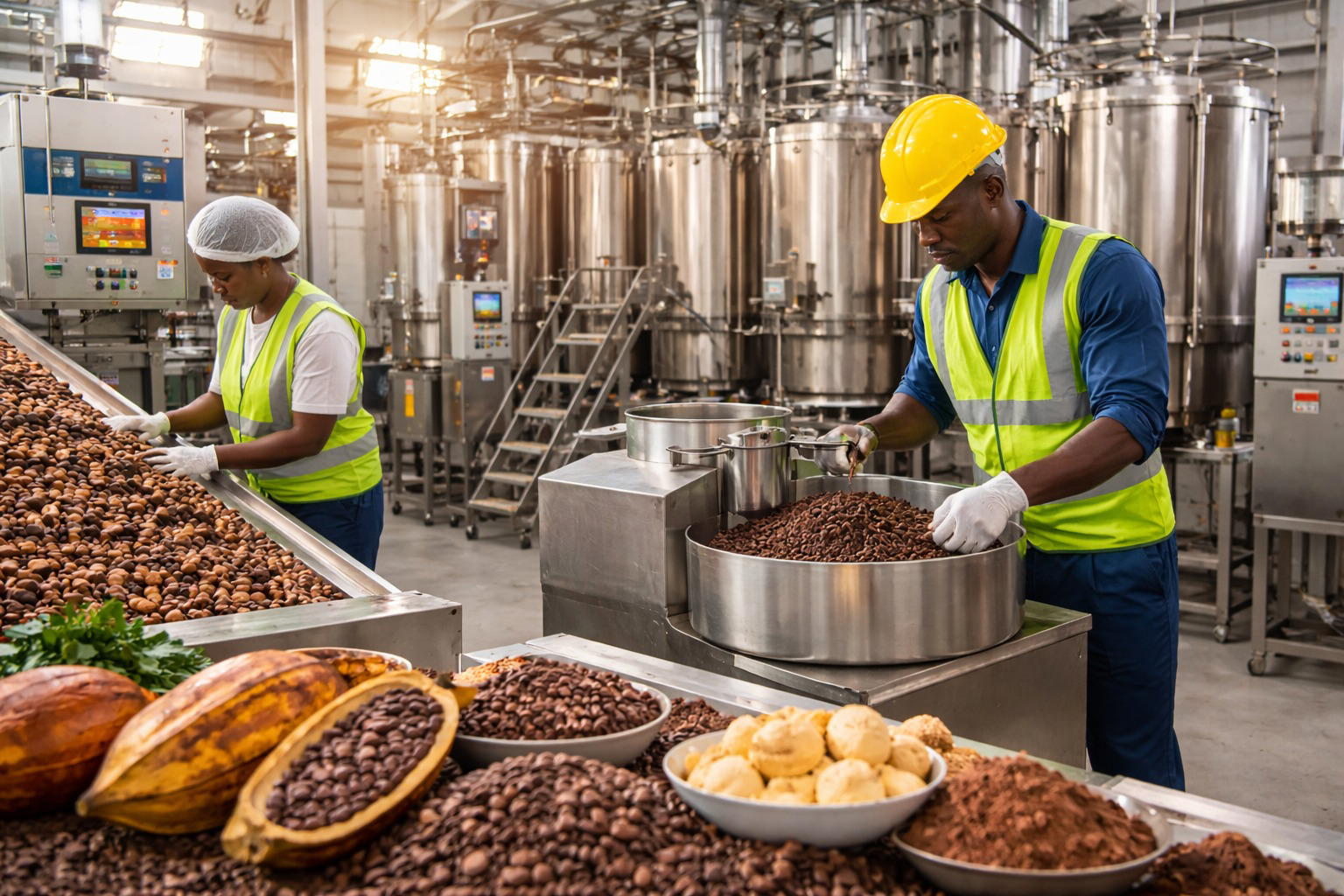
An indigenous manufacturing firm, Ifere Manufacturing Company, has announced plans to establish a cocoa processing factory in Calabar, the Cross River State capital, a development expected to create up to 100 jobs for youths in the state.
Founder of the company, Mr. Kebesobase Onen-Ifere, made this known on Monday while speaking with journalists in Calabar after a stakeholders’ roundtable.
He said the project would be implemented through a partnership with a United Kingdom-based firm, Palm and Oak, adding that the investment would make Ifere Manufacturing Company one of the first large-scale cocoa processors in Cross River State.
According to him, the initiative is designed to support Nigeria’s drive towards value-added agricultural production, rather than the continued export of raw cocoa beans.
Onen-Ifere disclosed that the partnership agreement was formalised at the Cross River Investment Summit held in London, where both firms signed a Memorandum of Understanding.
He explained that the deal was facilitated through collaboration with the Cross River State Diaspora Commission, with the Commissioner for Technology Transfer, Innovation and Investment, Hon. Ignatius Oli, playing a central role in driving the engagement and ensuring the successful conclusion of the agreement.
Under the arrangement, Palm and Oak will provide supply support and facilitate access to international markets once the Calabar processing facility becomes operational.
The company’s chief executive said the factory would contribute to employment generation and skills development within the state’s emerging agro-industrial sector.
He added that the facility would focus on innovation and product diversification, including the development of proprietary products such as Cocoapill, a cocoa-based innovation aimed at expanding cocoa usage beyond traditional applications.
According to him, the factory will produce both finished and semi-finished cocoa products. Finished products will include organic cocoa body butter, cocoa beverages for luxury, children, sports and indulgence markets, as well as organic cocoa soap.
Semi-finished outputs will include cocoa nibs, liquor, powder and butter, targeted at food, cosmetics and industrial buyers.
Onen Ifere further revealed that the company is targeting expanded trade across West and Southern Africa, driven by rising regional demand for processed cocoa products.
He said part of this strategy includes a planned alliance within the Southern African Development Community (SADC), with Botswana identified as a key distribution hub. The arrangement, he noted, is expected to strengthen cross-border trade and reduce reliance on raw cocoa exports.
He also disclosed plans to introduce a Production-as-a-Service model, which will allow brands, cooperatives and exporters to access cocoa processing facilities without owning factories. The model, he explained, is intended to lower entry barriers for African cocoa entrepreneurs and exporters.
Speaking further, the founder lauded the State Director of Cocoa and Coffee, Mr Williams Ifere for contributing his sector expertise and bringing in practical experience to Ifere Manufacturing Company during an initial consultative forum
While also commending him for providing guidance on cocoa quality standards, sourcing frameworks, and value-chain development that made the process possible.
Reacting to the development, the Commissioner for International Development Cooperation in Cross River State, Dr. Inyang Asibong, described the project as a significant step in the state’s industrial development.
She said the planned cocoa processing factory represents a strategic investment for both Cross River State and Nigeria’s agro-industrial sector.
Dr. Asibong noted that the emphasis on local processing, innovation and regional market integration aligns with efforts to reposition Africa within the global manufacturing value chain.
She added that the employment opportunities, skills development and export potential associated with the project would deliver long-term benefits to local communities and strengthen Nigeria’s participation in the global cocoa industry.
Disclaimer
Comments expressed here do not reflect the opinions of Vanguard newspapers or any employee thereof.