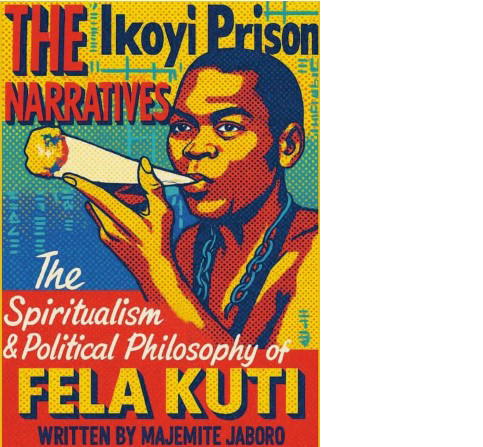
In the cramped confines of an Ikoyi prison cell, a legend and a nation’s reckoning, was forged. Majemite Jaboro’s “The Ikoyi Prison Narratives” unlocks those doors, blending intimate conversations with Fela Kuti, history, music, and raw resistance.
Shared between January and April 1993 as cellmates awaiting trial for a murder case, Jaboro captured Fela’s torrent of philosophy, politics, and life stories. This oral testament transforms the prison into a metaphor for Nigeria’s contradictions: a crucible where brutality meets beauty, silence clashes with song.
Roots of Rebellion: Yoruba Soul and Afrobeat as Manifesto
Jaboro roots Fela in Yoruba cosmology, Oduduwa, Obatala, Shango and Ifa revealing his “Blackism” as a quest for epistemic liberation, rejecting Christianity, Marxism, and Western models for authentic African traditions.
His type of music, Afrobeat, emerges not as mere music, but a philosophical weapon: a sonic critique of colonial, postcolonial, and psychological power. Fela’s U.S. awakening in 1969, fueled by Black Power radicals and Malcolm X’s autobiography, forged this sound into a tool for education and mobilization.
Scar Tissue: Nigeria’s Wounds and State Violence
Anchored in Nigeria’s turbulent history from colonial legacies and the First Republic’s collapse to 1966 coups and the civil war, Jaboro exposes elite corruption and military brutality. The 1977 Kalakuta Republic raid stands out. Soldiers looted, raped, burned, and threw Fela’s mother, Funmilayo Ransome-Kuti, from a window. Fela responded with Sorrow, Tears and Blood and a lawsuit, turning trauma into defiance. Songs like Zombie, Alagbon Close, and Expensive Shit became counter-archives, subverting state narratives.
The Shadow of a Legend: Flaws and Human Complexity
Jaboro confronts Fela’s paradoxes without hagiography: sexual excesses, drug use, authoritarianism in Kalakuta, and messianic hubris. This honesty paints a flawed visionary, a liberator who could also tyrannize, elevating the book beyond myth to messy truth.
Raw Rhythms: Style as Rebellion
Jaboro’s unruly prose; repetitive, digressive, temporally looped, mirrors Fela’s chaos, prioritizing lived authenticity over polished scholarship. It’s a pulsing counter-archive, defiant like Afrobeat itself.
Echoes Today: Nigeria’s Unresolved Crises
Timely and haunting, the book reframes Fela as a symptom of unhealed wounds: elite impunity, cultural loss, colonial psyche. The prison cell symbolizes enduring faultlines, demanding Nigeria confront dissent, power, and identity.
The Ikoyi Prison Narratives transcends biography, becoming a mirror to Nigeria’s soul, a vital intervention blending music, memory, and resistance. Jaboro demands engagement, illuminating a destiny still in flux.
Disclaimer
Comments expressed here do not reflect the opinions of Vanguard newspapers or any employee thereof.