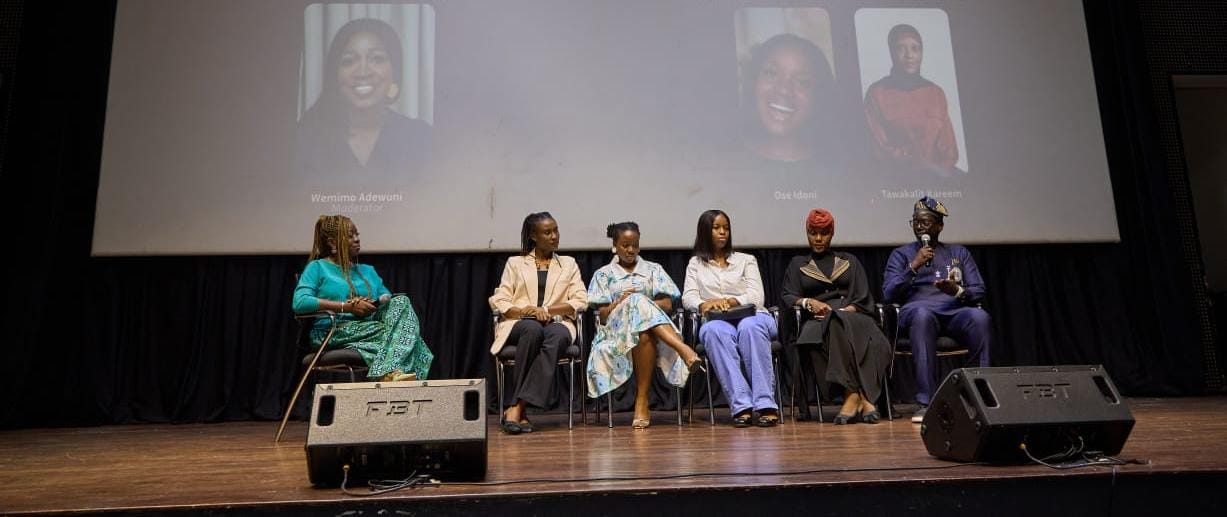
Professionals in filmmaking, healthcare and the creative industries have demanded that more attention be paid to maternal mortality, medical ethics, safe and unsafe abortion, consent and the social pressures that often limit women’s agency in healthcare settings.
The experts spoke at a film and dialogue event held in Lagos to foster more informed and nuanced conversations around women’s health and bodily autonomy in Nigeria.
The event, ÀJOSE: The Stories That Bind Us, featured film screenings and moderated conversations examining women’s reproductive health through cultural and lived experience.
Presented by Ajose Nigeria, the event used storytelling as its central framework, placing film, medical insight and cultural reflection side by side to explore how silence and stigma continue to influence women’s health outcomes in Nigeria.
The programme’s centrepiece was the screening of Silence Is Loud, a short film directed by Abba Makama. The film received strong audience engagement for its understated but emotionally resonant portrayal of unspoken realities surrounding women’s bodies, healthcare decisions and family dynamics.
The event also featured preview screenings of two other major works in the presence of the creative teams:
Chika Okoli’s gripping documentary ‘Care or Control?’ and the original animated series ‘Dr Majek and the Ghost’, produced by Magic Carpet.
The discussions that followed these screenings provided an opportunity to explore the themes of bodily autonomy and the tension between cultural norms and medical ethics, as seen through the unique vision of these creators.
Participants also engaged with the ‘Truths and Myths’ installation, an immersive visual exhibition juxtaposing commonly held beliefs about women’s reproductive health with medically grounded facts. Many attendees described the experience as both confronting and familiar, reflecting narratives they had encountered throughout their lives.
Panel conversations, including the session titled Care or Control, brought together medical professionals, filmmakers, and cultural voices to examine the fine line between care and coercion in women’s health experiences. Topics discussed included maternal mortality, medical ethics, safe and unsafe abortion, consent, and the social pressures that often limit women’s agency in healthcare settings.
Speaking after the event, Project Manager for Pamoja, Rumunse Obi, said ÀJOSE was intentionally reflective in tone.
“The conversations confirmed a readiness to speak more openly,” the organising team said. “ÀJOSE demonstrated that film can hold space for difficult subjects without spectacle, allowing complexity, discomfort, and empathy to coexist.”
Disclaimer
Comments expressed here do not reflect the opinions of Vanguard newspapers or any employee thereof.