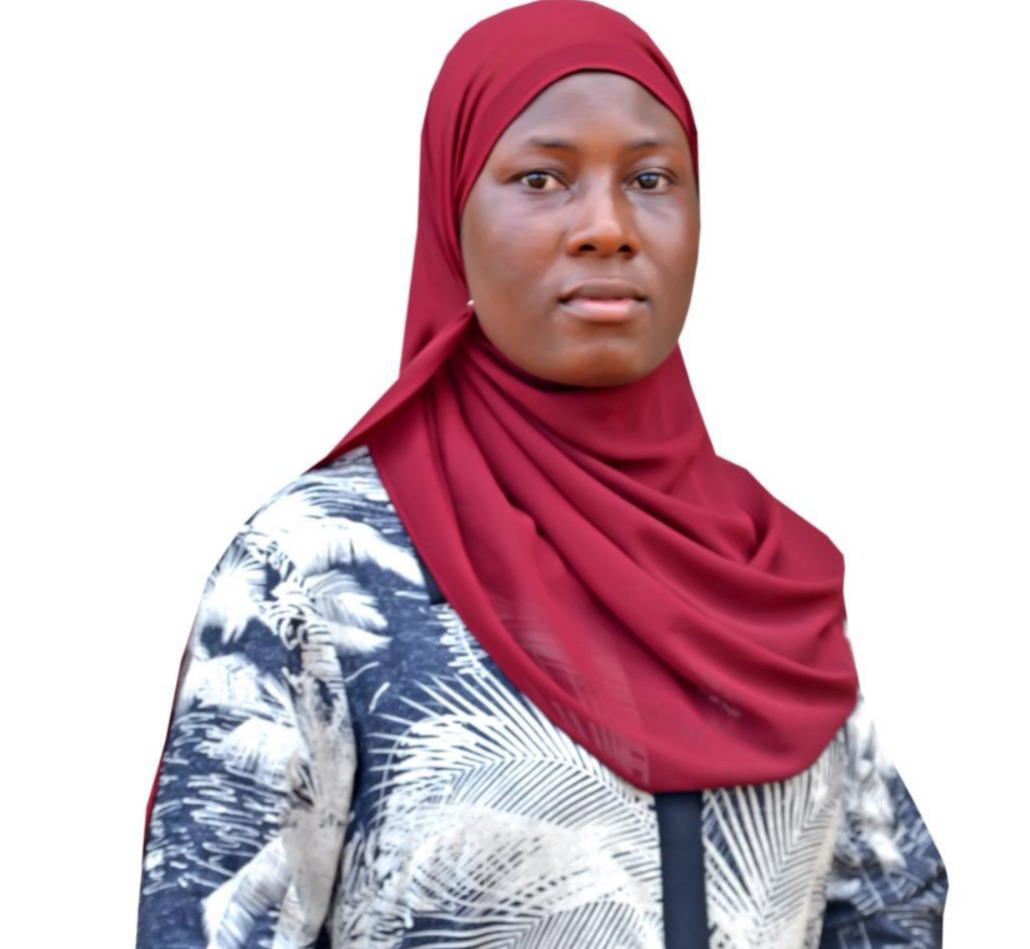
A Nigerian pharmaceutical researcher, Opeyemi Alaka has called for renewed scientific attention to indigenous medicinal plants, saying traditional knowledge could hold promising answers to Alzheimer’s disease if properly investigated and developed.
Alaka was recently named one of 30 recipients of the 2025 L’Oréal-UNESCO For Women in Science Young Talents Sub-Saharan Africa Award, an honour that celebrates exceptional young scientists whose research is advancing scientific progress and social impact across the region. The announcement was made in Johannesburg, South Africa, on 11 December.
Speaking in an interview, the researcher explained that her work focuses on scientifically validating Nigerian medicinal plants traditionally used for memory-related conditions, with the long-term aim of discovering compounds that could help manage or potentially treat Alzheimer’s disease.
“Well, conventional medicines currently being used for management are all symptomatic; they really don’t address the use of the root cause of the diseases,” she said.
According to her, existing treatments largely manage symptoms rather than tackling the underlying causes of memory loss associated with the condition.
Alaka noted that across different communities, traditional practitioners already use certain plants for memory-related complaints, even if they are not explicitly identified as Alzheimer’s disease.
“The problem is with the individuals who have the disease, it’s memory loss. So they’ll come, the individual symptoms they don’t present, then it’s memory loss,” she explained.
The researcher said her approach is to bring scientific rigour to this traditional knowledge.
“What exactly I’m trying to do is to scientifically investigate this medicinal plant at large, and if possible, to find a cure for Alzheimer’s disease from this medicinal plants,” she said.
She added that the first stage of her work involved documenting and preserving knowledge of these plants to prevent it from being lost.
“The first thing that I’ve done so far is to collate these medicinal plants together so that the knowledge will not be lost,” she said, noting that preliminary screening is already underway to identify plants with potential activity against memory loss.
Using laboratory screening methods, she said her team is assessing which plants show promise.
“This asset, specifically, it helps us to determine the plants that have the potential of inhibiting this memory loss,” she explained, stressing that the research is still in progress.
Beyond the laboratory, the researcher emphasised the importance of respecting and strengthening ethno-medicinal knowledge in Nigeria. “Let me just say, we shouldn’t throw away our ethno-medicinal knowledge. Some of these plants will serve the purpose better than these orthodox medicines,” she said.
However, she acknowledged challenges within the traditional medicine space, particularly the lack of formal scientific training among some practitioners.
“Some of these herbal practitioners, they just mix things all together. They don’t understand research,” she said, while also recognising that many practitioners possess deep, generational knowledge of specific plants.
She argued that both the plants and the sources of knowledge behind them deserve proper study.
“Some of these plants or some of these herbal practitioners: their source of knowledge should be explored,” she said, calling for closer alignment between traditional wisdom and scientific research.
The researcher believes her work could also improve awareness of Alzheimer’s disease in Africa, where the condition is often misunderstood or underdiagnosed. If successful, she hopes to return to the communities where the knowledge originated.
She also highlighted the importance of collaboration with the pharmaceutical industry, adding that partnerships could help transform validated plant compounds into safe and effective dosage forms.
Reflecting on her personal journey, the researcher traced her passion for medicinal plants to a childhood experience with a traditional healer after conventional treatments failed.
“I was given herbal medicine, herbal concoction. Within three days, symptoms disappeared and I was okay,” she recalled. “How could it be that plant? The mind stayed.”
That experience, she said, shaped her academic path. “Yes, so from there I… I decided to go study pharmacy, after pharmacy, Master of Science in Pharmacognosy and Herbal Medicine, and here I am, studying for my PhD in Herbal Medicine,” she said.
She described the recent award as a major source of encouragement at a critical stage of her career.
“When I was told that I won this award, I felt validated, I felt, within myself, that finally, I think I’m on the right path,” she said, noting that recognition and visibility are especially important while she is in the middle of her PhD research, where funding and support are crucial.
Looking ahead, she said her long-term dream is to change perceptions around medicinal plants and strengthen local drug development.
“If I can achieve my aim of isolating and characterizing, especially new drug compounds from one of these plants in Nigeria… I believe it’s going to go a long way,” she said.
Disclaimer
Comments expressed here do not reflect the opinions of Vanguard newspapers or any employee thereof.