By Chinedu Adonu
ENUGU — The University of Nigeria, Nsukka (UNN) has urged the Federal Government to strengthen national policies on natural capital management, water security, climate-smart agriculture and food system resilience, as Nigeria continues to grapple with climate change, environmental degradation and rising insecurity.
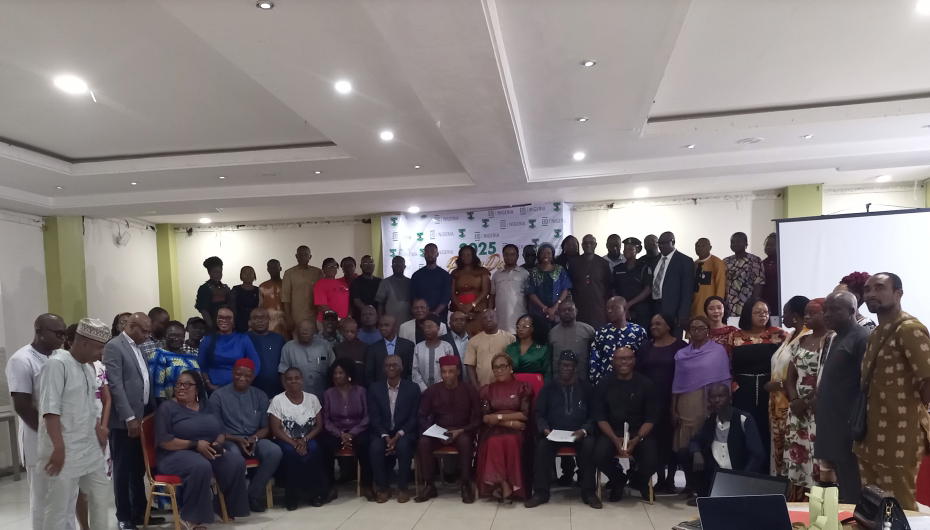
The call was made on Tuesday in Enugu during UNN’s annual Policy Day, organised by the Resource and Environmental Policy Research Centre – Environment for Development (REPRC-EfD Nigeria). The event brought together top policymakers, academics, security agencies and development partners to review new research findings on water scarcity, climate agriculture and the impacts of armed banditry on food production.
Declaring the event open, UNN Vice Chancellor, Prof. Simon Uchenna Ortuanya — represented by the Deputy Vice Chancellor (UNEC), Prof. J.U.J. Onwumere — said the theme, “Sustaining Natural Capital: Policy Strategies for Sustainable Agriculture and Urban Water Systems,” reflects the university’s commitment to generating evidence-based research for national development.
He described water, agriculture and security as “three critical pillars of Nigeria’s food system,” warning that climate change, degraded ecosystems and insecurity are putting each of them under severe pressure.
“Water scarcity threatens agricultural productivity, climate change has disrupted rainfall patterns, and banditry has displaced thousands of farmers. These realities are directly undermining food security, peace, health and economic stability,” he said.
Prof. Ortuanya commended REPRC-EfD Nigeria for producing research that supports policy solutions in water resource management, climate-smart agriculture and the socio-economic impacts of insecurity. He also acknowledged support from the Swedish International Development Cooperation Agency (SIDA), noting that the centre’s work contributes to a global Environment for Development (EfD) network spanning Africa, Asia and Latin America.
He expressed hope that deliberations from the Policy Day would “chart new pathways for sustainable water, agriculture and food security policies in Nigeria.”
‘Our findings are for policymakers to act on’ — REPRC Director
Director of REPRC-EfD Nigeria, Prof. Nnaemeka Chukwuone, said the Policy Day serves as the centre’s annual platform to present research to policymakers at federal and state levels. He outlined the three major studies discussed at the event:
Water scarcity and households’ willingness to pay for improved water supply in Enugu
Gendered impacts of climate-smart agriculture on nutrition and poverty among cassava farmers
Gender-differentiated effects of armed banditry on agricultural productivity
“These studies were conducted with relevant ministries and supported by our development partners. Today, we expect policymakers to draw from the evidence presented to improve policy formulation and implementation,” he said.
Environment Ministry: Climate impact too serious to ignore
Representing the Federal Ministry of Environment, Deputy Director, Vulnerability and Adaptation, Jonah Barde, praised the collaboration with UNN’s research centre and stressed the urgency of strengthening national climate policies.
“We must formulate strong policies and instruments to ensure our environment is not damaged further,” he said, announcing the ministry’s updated National Adaptation Plan to address flooding, erosion and other climate threats.
NCCC: Natural capital restoration crucial to Nigeria’s climate goals
In her goodwill message, Director-General of the National Council on Climate Change (NCCC), Barr. Omotenioye Majekodunmi — represented by Ms. Chinwe Adindu — said the research aligns with Nigeria’s updated Nationally Determined Contribution (NDC) 3.0 and recent COP30 commitments.
She emphasised that climate change is worsening water scarcity, degrading soils and heightening insecurity in rural communities.
“We must strengthen the climate-security nexus because the resilience of agriculture and water systems depends on a safe and stable environment,” she said.
Majekodunmi highlighted new opportunities under the National Carbon Market Framework and the National Climate Change Fund to finance watershed restoration, efficient irrigation, regenerative agriculture and nature-based community solutions.
Enugu State pledges continued collaboration
Permanent Secretary of the Enugu State Ministry of Water Resources, Dr. Ada Joy Nwaoye, commended the centre’s work and reaffirmed the state’s commitment to partnering with UNN to tackle water scarcity and climate impacts.
Stakeholders agreed that the evidence presented — combined with dialogue involving security agencies, climate bodies and government ministries — provides actionable insights for improving Nigeria’s water systems, agricultural resilience and climate adaptation strategies.
The event ended with a renewed commitment to deeper collaboration between academia and government to ensure that research continues to shape effective policies in Nigeria’s agricultural and environmental sectors.
Disclaimer
Comments expressed here do not reflect the opinions of Vanguard newspapers or any employee thereof.